Khaskhas Badam Gond Halwa - Winter Special
Recipe by Healthy Recipes Home by Malika Khurana
Ingredients
Main Ingredients
- 1/2 cupKhaskhas (Poppy Seeds)
- 1/2 cupBadam (Almonds)
- 1/2 cupGond (Edible Gum)
- 2 cupMilk
- a pinchSaffron
- 1/2 cupGhee
- 2 tspCream
- 1/4 tspWhite Pepper Powder
- 1/2 tspGreen Cardamom Powder
- 1/4 gratedNutmeg
- 1/2 cupDesi Khand (Unrefined Sugar)
Step-by-Step Instructions
- 1.Prepare Almonds and Saffron
Pour hot water over the almonds and let them soak for a while to easily peel their skin. In a separate small bowl, add a pinch of saffron and a little milk, then set aside.
- 2.Dry Roast Khaskhas
In a thick-bottomed pan, dry roast the khaskhas on a low to medium flame for 5-6 minutes until its color changes to a light golden brown. Keep stirring continuously to prevent burning. Once roasted, transfer the khaskhas to a bowl.
- 3.Heat Milk and Soak Khaskhas
Pour 1 cup of milk into a separate small pan and heat it. Once hot, pour this milk over the roasted khaskhas in the bowl and cover it to allow the khaskhas to swell quickly. If you have more time, you can soak khaskhas in cold milk for 2-3 hours.
- 4.Fry Gond
In the same pan, add 1/2 cup of ghee. Once the ghee is hot, add the gond and fry it on a low to medium flame until it puffs up and becomes crispy. Remove the puffed gond with a slotted spoon to drain excess ghee and transfer it to a plate. Lightly crush the fried gond; if you prefer a crunchy texture in your halwa, you can leave it uncrushed.
- 5.Prepare Almond-Khaskhas Paste
Peel the skin off the soaked almonds. Transfer the soaked khaskhas along with the milk to a mixer grinder jar. Add the peeled almonds to the jar. Blend the mixture to form a smooth and thick paste. Add a little more milk if needed to achieve the desired consistency, ensuring it remains thick for easier roasting.
- 6.Roast the Paste
Add the blended khaskhas and almond paste to the pan with the remaining ghee. Roast the paste on a low to medium flame, stirring continuously. Initially, the paste will absorb the ghee, but as it roasts, it will gradually release the ghee and change color from white to golden. This process will take about 15-20 minutes. Patience is key to achieve a perfectly roasted halwa.
- 7.Add Milk, Cream, and Spices
Once the paste is well-roasted and golden, add 1 cup of milk and 2 tablespoons of milk cream. Mix well. Add the saffron milk, 1/4 teaspoon of white pepper powder (or black pepper powder), and 1/2 teaspoon of freshly made green cardamom powder. Grate 1/4 of a nutmeg into the mixture. Continue stirring to combine all ingredients.
- 8.Sweeten and Finish Halwa
Add 1/2 cup of desi khand (or mishri, jaggery, or sugar) to the halwa and mix thoroughly until it dissolves. Finally, add the crushed fried gond. Continue stirring the halwa on low to medium flame until it thickens, comes together, and starts leaving the sides of the pan, indicating it's perfectly cooked.
- 9.Serve and Garnish
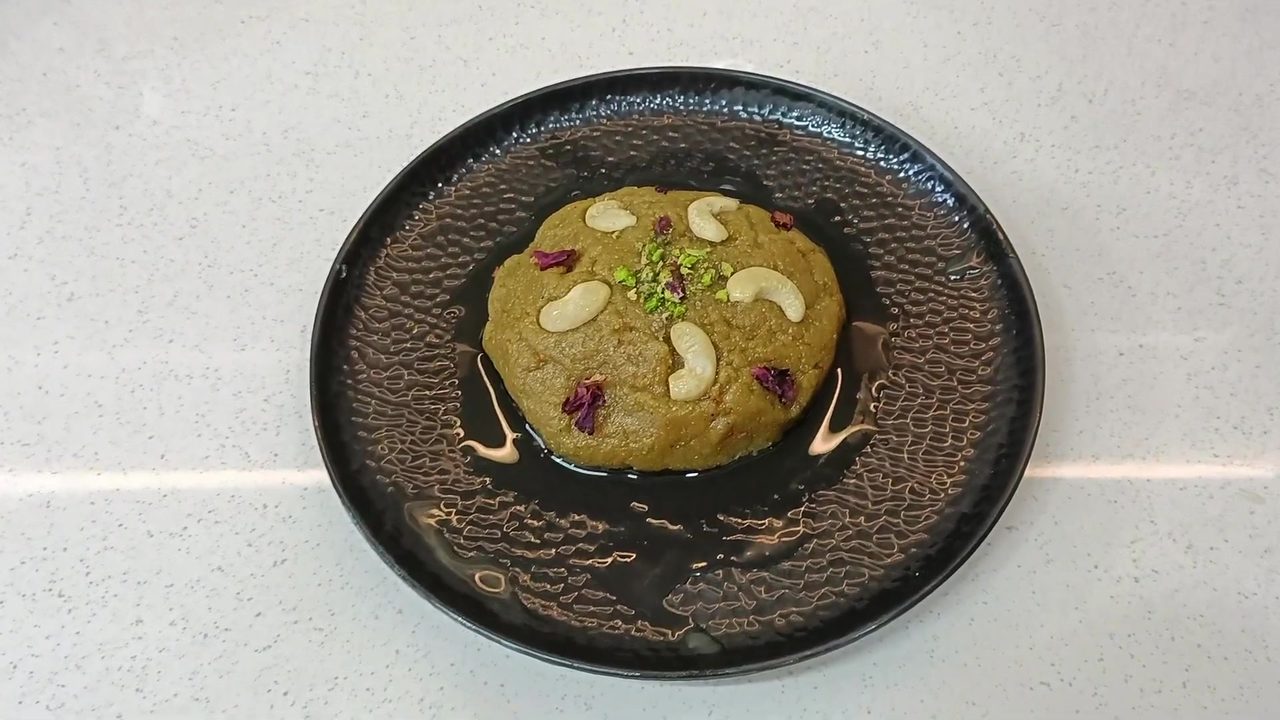
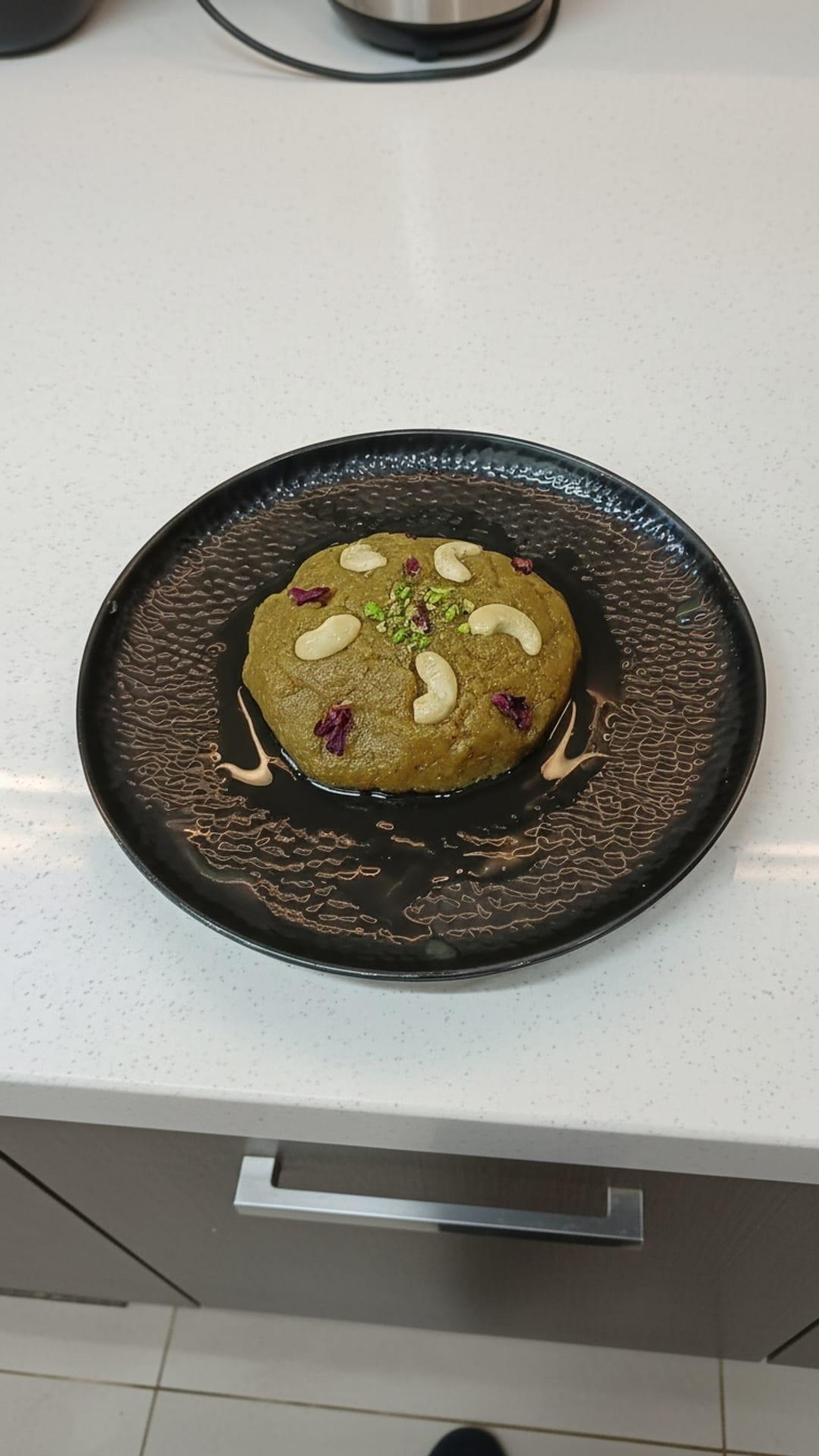
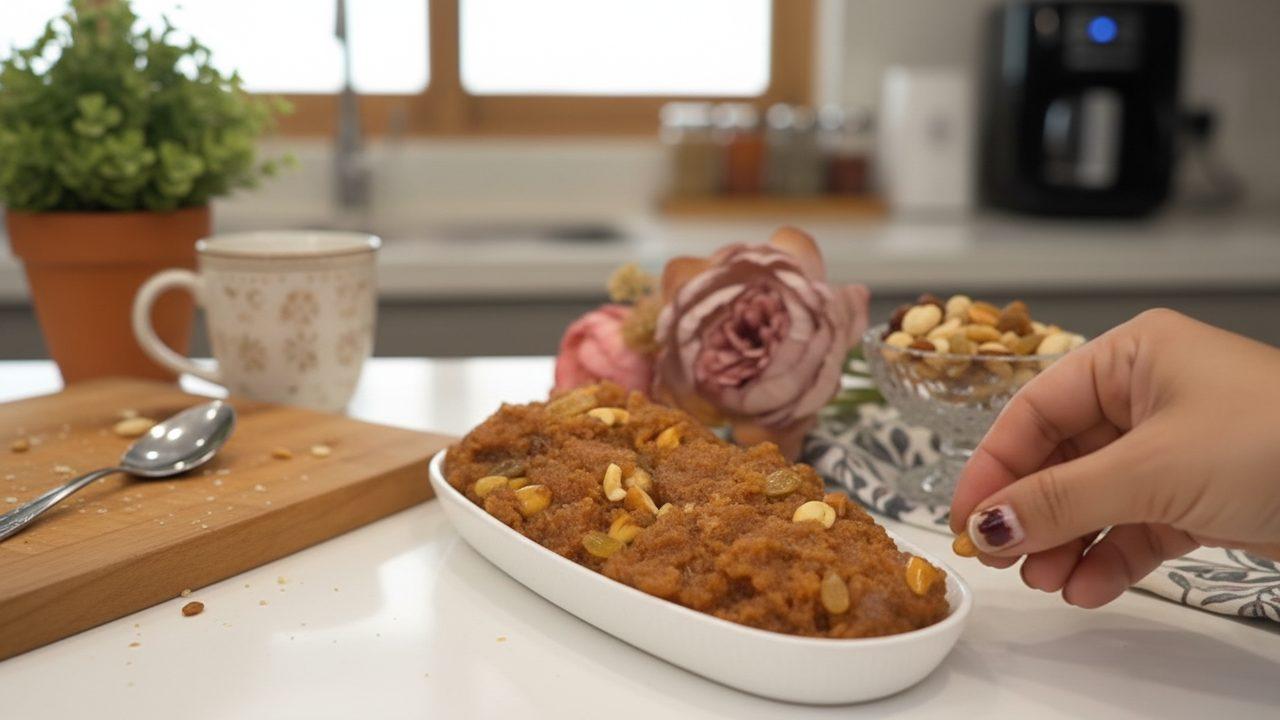
Once the halwa is ready, scoop it into a small bowl and invert it onto a serving plate for an appealing presentation. Garnish with cashew nuts, chopped pistachios, and dried rose petals. Serve warm.

Comments (0)
Sign in to leave a comment on this recipe.
Loading comments...