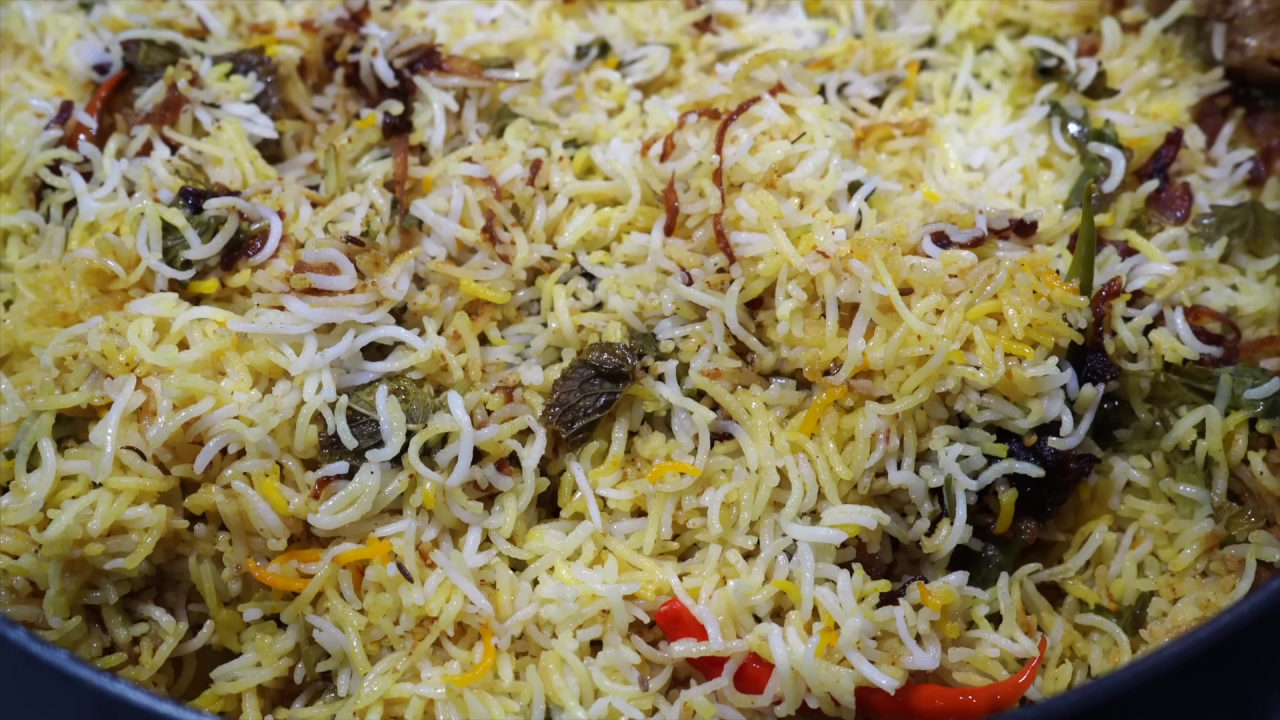
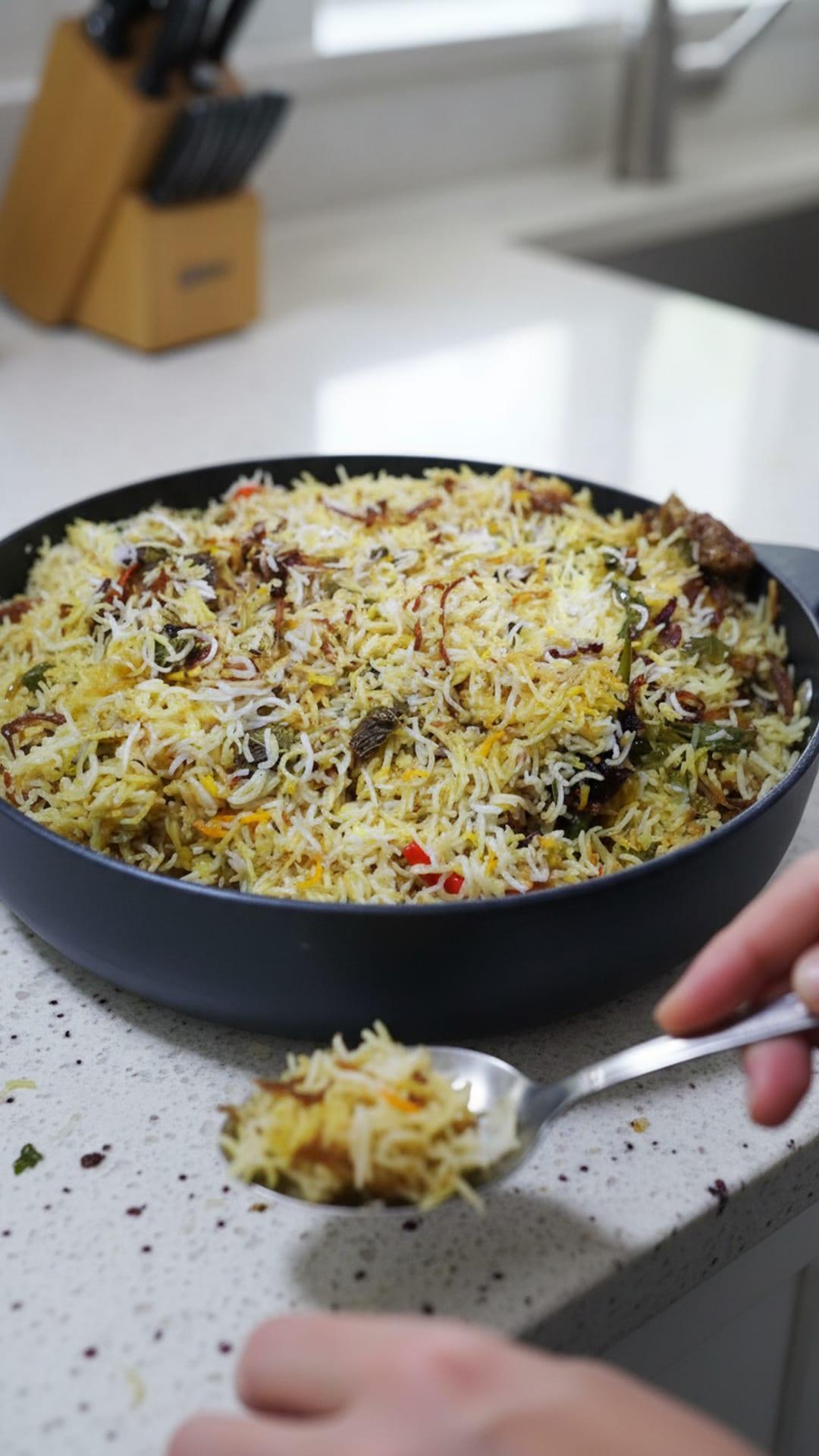
Restaurant Style Chicken Biryani
Ready in
105 mins
Cuisine
Indian · North Indian
Prep Time
45 min
Cook Time
60 min
Serving
8-9 People
Difficulty
Medium
Spicy Level

For the Marinade & Chicken
For the Rice & Layering
Step-by-Step Instructions
Follow each step to make the recipe successfully.
Prepare Ginger-Garlic Paste and Marinate Chicken
In a blender, combine chopped ginger, garlic cloves, and a green chili with 1/3 cup of water. Blend to a smooth paste. In a separate large bowl, together plain yogurt, Kashmiri red chili powder, turmeric, ground coriander, 2 tbsp biryani masala, 1 tsp salt, and 1 tbsp oil until smooth. Add the chicken pieces, the prepared ginger-garlic paste, a handful of chopped coriander, and a few torn mint leaves. Mix everything thoroughly with your hands to coat the chicken well. Let it for to .
Prepare Fried Onions (Beresta)
In a bowl, toss the thinly sliced onions with 1 tsp of salt and let them sit for to release moisture. Squeeze out as much water as possible from the onions. Heat 1 cup of oil in a wide, heavy-bottomed pot over medium heat. The oil should be warm, not smoking. Add the squeezed onions and fry, stirring frequently. As they start to turn golden at the edges, lower the heat and stir continuously until they are a uniform golden brown. Quickly remove them from the oil onto a plate lined with paper towels. Spread them out to cool and crisp up.
Prepare Rice and Infusions
Wash the basmati rice thoroughly until the water runs clear. Soak the rice in water for exactly , then drain completely. While the rice is soaking, prepare the infusions. Crush a few saffron strands in a mortar and pestle, then add to 1/4 cup of warm milk along with 2 tsp of kewra water. In a separate small bowl, mix a pinch of food color with 2 tbsp of water.
Cook the Chicken Curry
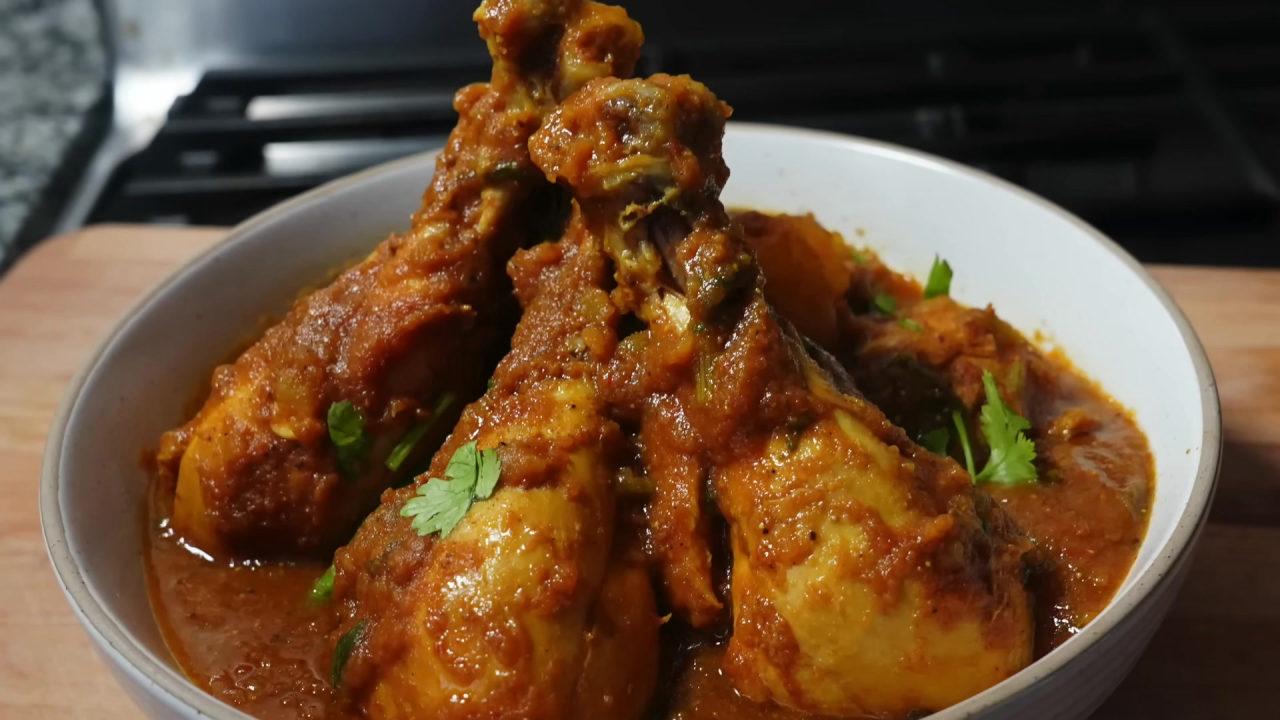
In the same pot with the leftover oil from frying onions, add the chicken. Cook on medium-high heat, stirring occasionally, until the juices come to a boil. Add 2 bay leaves. Continue to cook on high heat for , stirring from time to time. After , add the halved potatoes, half of the fried onions, and 1 tsp of garam masala powder. Stir to combine, then cover the pot with a lid, the heat to low, and for until the potatoes are soft and the chicken is cooked through.
Cook the Rice
While the chicken is , bring a large pot of water to a rolling boil. Add the whole spices (from the biryani masala packet or separate spices), 1 tsp shahi jeera, 2 bay leaves, 1 tbsp oil, 1 tbsp vinegar, and 1 tbsp salt. Add the drained rice to the boiling water. Cook on high heat initially. Once the water starts bubbling again, heat to medium. Cook the rice until it is 70% done (it should have a slight bite). This will take approximately . Immediately drain the rice in a colander.
Layer and 'Dum' Cook the Biryani
Once the chicken is cooked, turn off the heat. Skim off some of the red oil from the top of the curry and set it aside. Begin layering by adding half of the cooked rice over the chicken. Sprinkle with some chopped coriander and mint leaves. Add the remaining rice to form the top layer. Sprinkle 1 tbsp of biryani masala, the saffron-kewra milk, and the food color water in different spots. Add whole chilies, a squeeze of lemon juice, the remaining fried onions, and drizzle the reserved skimmed-off oil. Cover the pot with a tight-fitting lid. Place the pot on a flame tamer or a flat pan over the burner. Cook on high heat for , then the heat to the absolute lowest setting and cook for another . Turn off the heat and let the biryani rest, undisturbed, for at least .
Fluff and Serve
After the resting period, open the lid. Using a flat spoon or spatula, gently fluff the rice from the sides, mixing the layers from the bottom up. Be careful not to break the rice grains. Serve the hot and aromatic chicken biryani on a platter.
Before You Cook
Helpful details before you startIngredient SubstitutionsMissing something? View suitable alternatives.View 9 swaps
No Garlic (fresh)?
- 1/4 tsp garlic powder (per clove)
- 1/2 tsp garlic granules (per clove)
No Yogurt?
- Sour cream (1:1)
- Buttermilk (1:1, slightly thinner result)
No Cilantro?
- Flat-leaf parsley (1:1, milder)
- Fresh mint (in chutneys, salads)
No Bay leaf?
- 1/4 tsp dried thyme (per leaf)
- Pinch of dried oregano
No Garam masala?
- 1 tsp cumin + 1/2 tsp coriander + 1/4 tsp cinnamon + 1/4 tsp cardamom
No Onion?
- 1 tbsp onion powder (per medium onion)
- 3 tbsp dried minced onion
- Shallots or leeks (1:1)
No Saffron?
- 1/4 tsp turmeric (color only, no flavor match)
- 1/2 tsp safflower threads
No Milk?
- Unsweetened almond / soy / oat milk (1:1)
- 1/2 cup evaporated milk + 1/2 cup water (per 1 cup)
No Lemon juice?
- Lime juice (1:1)
- 1/2 the amount white vinegar — In dressings, savory dishes.
Plan Ahead
Complete this step earlier to save time later.
- View Step 3Prepare Rice and Infusions30 minutes
Wash the basmati rice thoroughly until the water runs clear. Soak the rice in water for exactly 30 minutes, then drain completely. While the rice is soaking, prepare the infusions. Crush a few saffron strands in a mortar and pestle, then add to 1/4 cup of warm milk along with 2 tsp of kewra water. In a separate small bowl, mix a pinch of food color with 2 tbsp of water.
- View Step 6Layer and 'Dum' Cook the Biryani30 minutes
Once the chicken is cooked, turn off the heat. Skim off some of the red oil from the top of the curry and set it aside. Begin layering by adding half of the cooked rice over the chicken. Sprinkle with some chopped coriander and mint leaves. Add the remaining rice to form the top layer. Sprinkle 1 tbsp of biryani masala, the saffron-kewra milk, and the food color water in different spots. Add whole chilies, a squeeze of lemon juice, the remaining fried onions, and drizzle the reserved skimmed-off oil. Cover the pot with a tight-fitting lid. Place the pot on a flame tamer or a flat pan over the burner. Cook on high heat for 10 minutes, then reduce the heat to the absolute lowest setting and cook for another 15 minutes. Turn off the heat and let the biryani rest, undisturbed, for at least 30 minutes.
Storage & Leftovers
Keep your leftovers fresh and ready to enjoy.
- Store
In the same pot with the leftover oil from frying onions, add the marinated chicken.
Variations
Simple ways to adapt this recipe.
- Rose water can be usedIngredient swap
Rose water can be used as a substitute for Kewra water.
- Potatoes are optional and canCustomise
Potatoes are optional and can be omitted if you prefer a traditional biryani without them.
Helpful Tips
Small details that can improve the final result.


Comments (0)
Sign in to leave a comment on this recipe.
Loading comments...