How to Make Perfect Chapati/Roti
Recipe by My Little Kitchen
Ingredients
For the Dough
- 250gChapati Flour (Atta)
- 150mlWater
Step-by-Step Instructions
- 1.Prepare the Dough
In a large bowl, combine 250g of chapati flour and 150ml of water. Mix and knead with your hand for a few minutes until a soft, but not sticky, dough is formed.
- 2.Rest the Dough
Cover the bowl with a clean tea towel and let the dough rest for 30 minutes.
- 3.Final Knead and Portion
After 30 minutes, give the dough a final knead for about a minute. Transfer the dough to a lightly floured surface and divide it into 4 equal portions.
- 4.Shape the Dough Balls (Pedas)
Take one portion of dough. Dip it in dry flour. Using your fingers, tuck the edges of the dough into the center and pinch to seal. Then, roll it between your palms to form a smooth, crack-free ball. Repeat for all portions.
- 5.Roll the Chapati
Preheat a tawa (flat pan) on a low to medium flame. Take one dough ball, flatten it, and coat it generously in dry flour. Place it on your work surface and use a rolling pin to roll it into a thin, even circle, turning and flouring as needed to prevent sticking.
- 6.Cook the Chapati - First Side
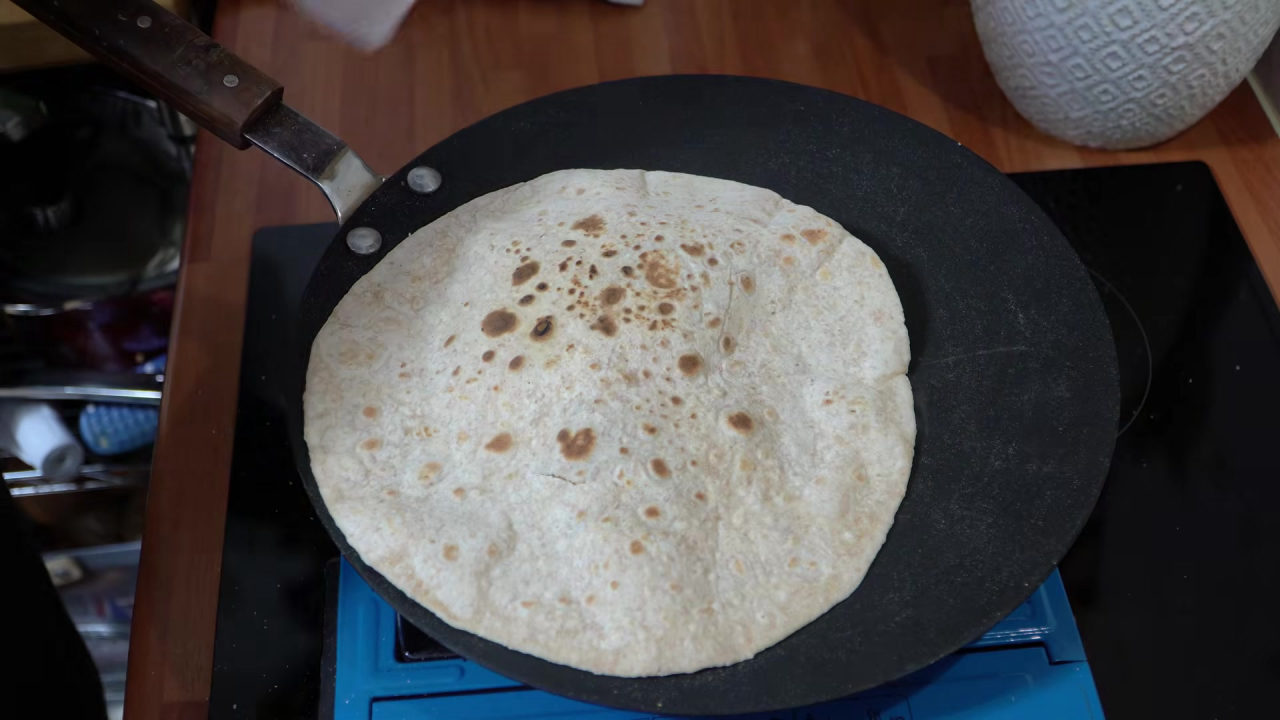
Shake off any excess flour from the rolled chapati and place it on the hot tawa. Cook for about 30 seconds, or until you see the color on top start to change.
- 7.Cook the Chapati - Second Side
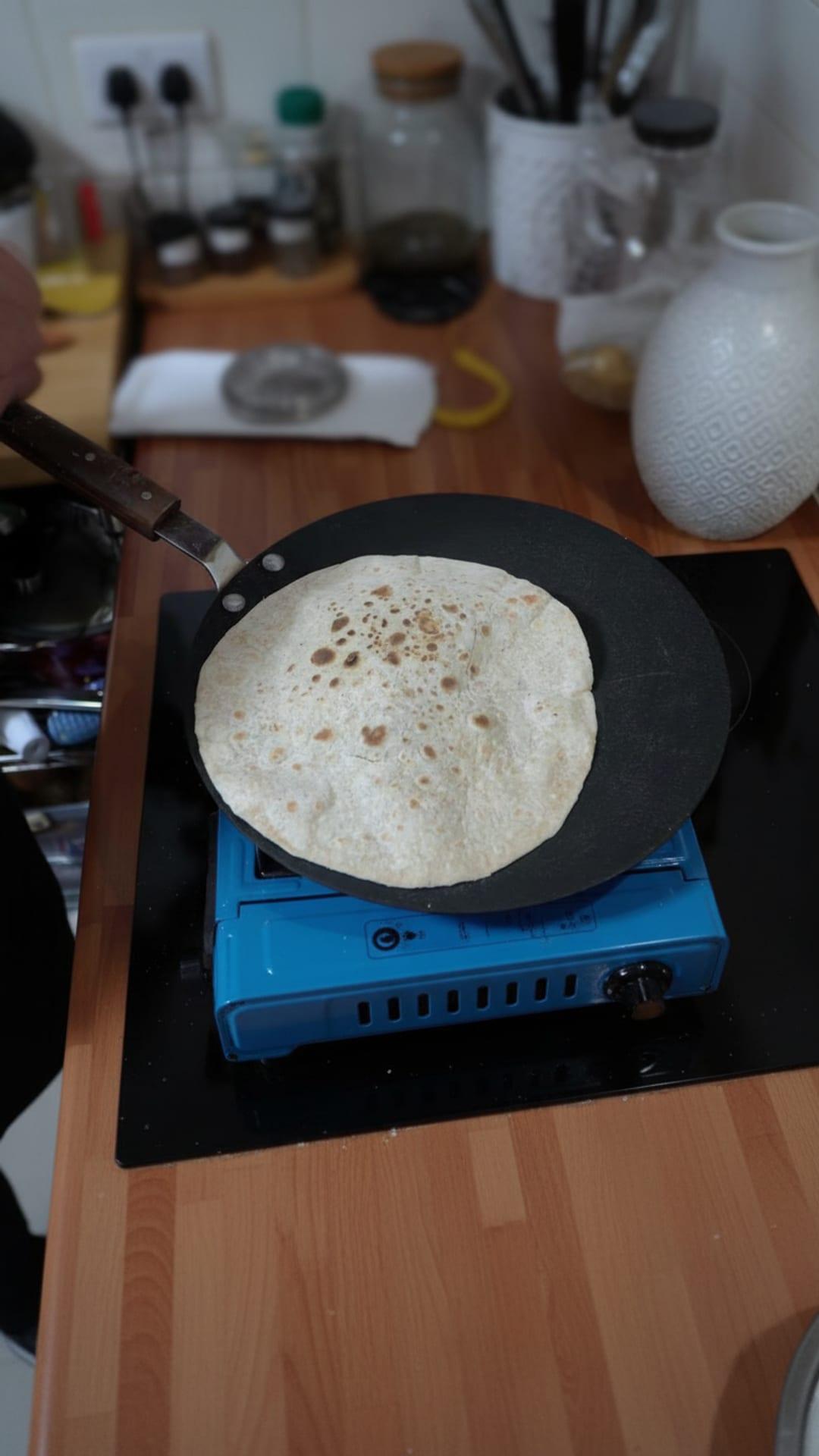
Flip the chapati and cook the other side for another 30 seconds until light brown spots start to appear.
- 8.Puff the Chapati on Direct Flame
Flip the chapati one more time. Remove the tawa from the gas hob. Turn the flame to high. Using tongs or a roti flipper, place the chapati directly over the flame. It will puff up into a ball. Keep turning it over the flame for a few seconds to cook evenly and get some charred spots. Place the cooked chapati in a clean tea towel to keep it warm and soft.
- 9.Alternative Method: Puffing on the Tawa
If you don't have a gas hob, after cooking both sides, flip the chapati again. Use a folded, clean tea towel to gently press down around the edges of the chapati. This pressure will cause it to puff up on the tawa itself. Keep turning and pressing until cooked through.

Comments (0)
Sign in to leave a comment on this recipe.
Loading comments...