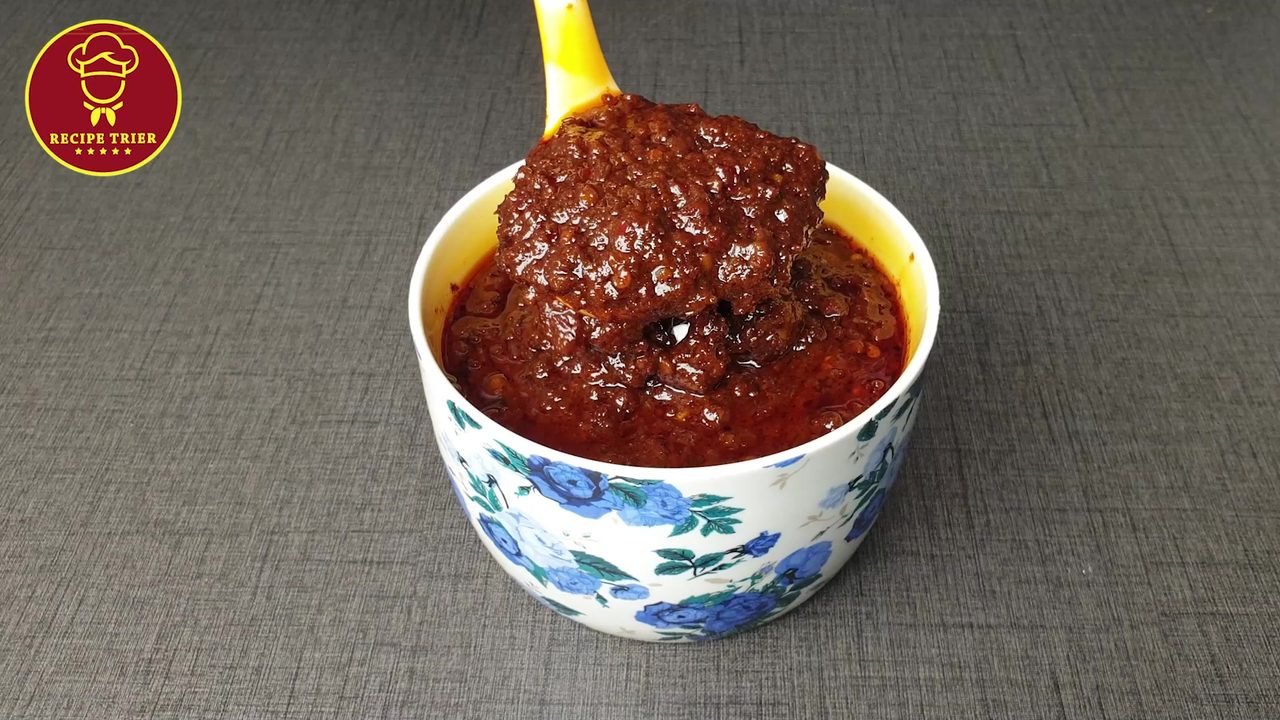
Chinese Chili Paste (Instant Recipe)
Ready in
35 mins
Cuisine
Chinese · Asian
Prep Time
5 min
Cook Time
30 min
Serving
Multiple servings (approx. 500g paste)
Difficulty
Medium
Calories / Serving
~150 kcal
Spicy Level
Spicy
Chili Paste Ingredients
Step-by-Step Instructions
Follow each step to make the recipe successfully.
Prepare the Chili Base
Place a pan on the stove and turn on the heat. Add 1 glass of water to the pan. Then, add 50 grams of crushed red chili and 50 grams of red chili powder. Mix these ingredients well with a spatula.
Simmer the Chilies
Cook the chili mixture on very low heat for approximately , stirring occasionally. Add another half glass of water to adjust consistency and continue until the chilies soften.
Add Aromatics and Seasonings
Once the chilies are soft and the water has , add 1 teaspoon of garlic paste and 1 teaspoon of ginger paste. Follow with 2 tablespoons of soy sauce, 2 tablespoons of vinegar, 60 grams (4 tablespoons) of sugar, 1 heaped teaspoon of salt, and 2 to 2.5 tablespoons of ketchup. Mix all ingredients thoroughly.
Cook Until Water Evaporates
Increase the heat slightly and continue cooking the mixture, stirring constantly, until all the water has evaporated and the paste thickens. The goal is to thoroughly cook and blend all the added flavors.
Prepare Hot Oil
While the chili paste is cooking, place a separate small pan on another burner. Add 1 cup of cooking oil to this pan and heat it until it is very hot.
Temper the Chili Paste with Hot Oil
Carefully pour the hot oil over the chili paste in small batches, using a ladle. The oil will sizzle and create . Stir the paste continuously as you add the oil to incorporate it evenly. Continue until all the hot oil is mixed into the chili paste.
Cool and Store
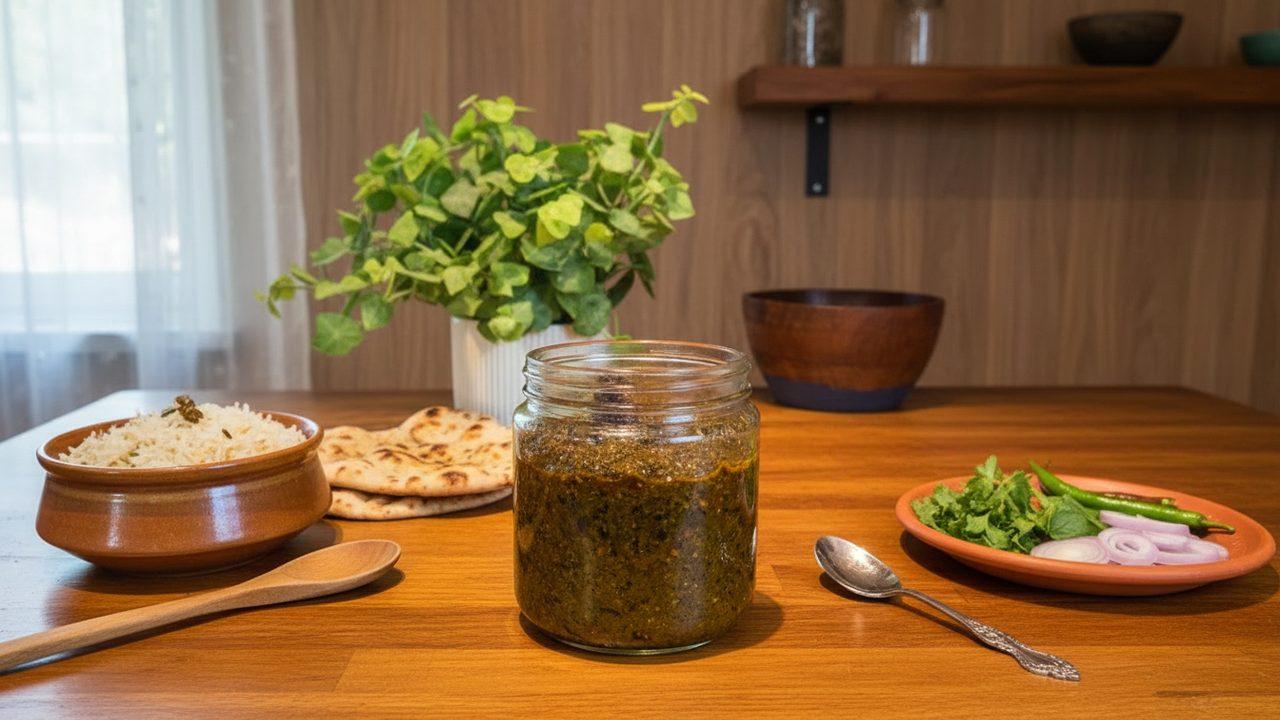
Once all the oil is incorporated, turn off the heat and let the chili paste cool down completely. After cooling, transfer the Chinese chili paste into a clean, airtight container for storage. It can be stored for several months.
Before You Cook
Helpful details before you startIngredient SubstitutionsMissing something? View suitable alternatives.View 2 swaps
No Garlic (fresh)?
- 1/4 tsp garlic powder (per clove)
- 1/2 tsp garlic granules (per clove)
No Soy sauce?
- Tamari (1:1) — Gluten-free option.
- Coconut aminos (1:1, milder & sweeter)
- Worcestershire sauce + a pinch of salt
Storage & Leftovers
Keep your leftovers fresh and ready to enjoy.
- Store
Store the chili paste in an airtight container after it has completely cooled down to preserve its freshness and flavor.
- Store
After cooling, transfer the Chinese chili paste into a clean, airtight container for storage.
Variations
Simple ways to adapt this recipe.
- For a more authentic taste
Use whole dried red chilies and grind them yourself.
- Adjust the amount of sugar
Adjust the amount of sugar and salt according to your preference.
- Add a pinch of MSGCustomise
Add a pinch of MSG (monosodium glutamate) for an umami boost, common in Chinese cuisine.
- Experiment with different types ofCustomise
Experiment with different types of chili peppers for varying heat levels and flavor profiles.
Helpful Tips
Small details that can improve the final result.

Comments (0)
Sign in to leave a comment on this recipe.
Loading comments...