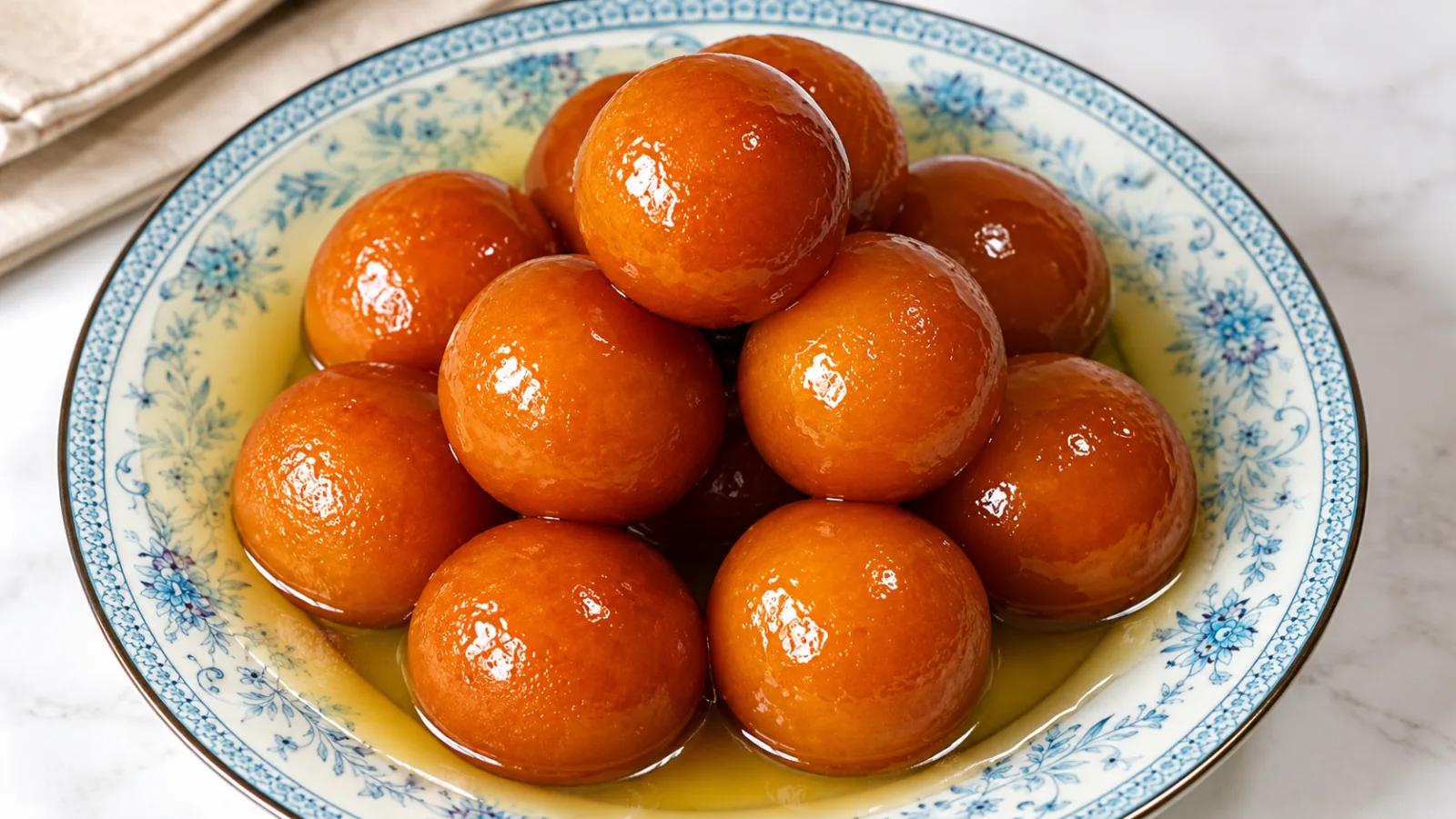
Gulab Jamun turning hard, breaking in oil or refusing to soak up syrup? Find the likely cause and learn what you can fix — and what to do differently next time.
Gulab Jamun can look beautifully golden outside yet turn hard in the middle, crack in the oil, or stay dry after soaking. These problems happen at different stages, so the useful first step is to identify when the batch went wrong.
The exact correction depends on the recipe and dough ingredients. Milk-powder dough, packaged instant mix and sweet-potato dough do not behave alike. Use the instructions for your chosen method as the main reference.
1. Why is Gulab Jamun hard or dense inside?
A tight dough is a common cause. Too much kneading can develop the flour’s gluten and make the cooked center firm; adding extra dry mix or flour to a sticky dough can also make it dense. For instant mix, add liquid gradually and knead only until the dough comes together. For a milk-powder dough, follow its own liquid and resting directions rather than borrowing quantities from a packet mix.
Frying too hot can brown the outside before the center cooks through. Keep the oil at the gentle heat specified by the recipe and turn the sweets so they color evenly. If they darken quickly, lower the heat and let the oil settle before the next batch. Avoid crowding the pan, which makes the temperature harder to manage.
If the dough is already shaped, a small test ball can help: fry one slowly and check the center before committing the whole batch. If it is still raw, reduce the heat and cook the rest more gently. A fully cooked but dense batch cannot be made tender by soaking alone.
2. Why does Gulab Jamun crack or break in oil?
Visible cracks in the raw balls can widen in hot oil. Dry or unevenly mixed dough, rough shaping, or too much added flour can leave seams that split as the ball expands. Work with small portions, shape them gently until the surface is smooth, and cover waiting dough so it does not dry out. Do not keep kneading to chase every mark; use the recipe’s method to bring the dough together.
Oil that is too hot can set the outside rapidly while the inside is still expanding. Start with the recipe’s heat cue, add only a few pieces at a time and turn them carefully. If a ball breaks apart, remove the pieces safely with a slotted utensil and let the oil settle; loose crumbs can burn and darken later batches. Keep water away from hot oil.
3. Why is Gulab Jamun dry or not absorbing syrup?
Check both the sweets and the syrup. A very thick, over-reduced syrup may cling to the outside instead of moving readily around the sweets. For the FullMeals instant-mix recipe, the syrup is simmered until slightly sticky and kept warm; the fried jamuns are added to warm syrup and soaked for at least 30 minutes. Use the target consistency and temperature in your own recipe, since syrup instructions vary.
Very hot syrup can cause problems too, and cool syrup may slow absorption. Make sure the sweets are cooked through and the syrup is warm as directed; keep the jamuns submerged, and allow the full resting time. A dense or over-fried center will still absorb less, even when the syrup is right. Don’t prick or squeeze them to force syrup in: they can break apart.
Can you fix a failed batch?
If the jamuns are cooked through but only slightly dry, return them to warm, appropriately thin syrup and give them more time to rest. If they are pale or undercooked, gently continue cooking in moderately warm oil before soaking, if they still hold together. Handle them with a slotted spoon. If they are burnt, raw in the middle, or falling apart, syrup will not repair the texture; serve only if fully cooked and safe, or repurpose intact pieces as a crumble over another dessert.
A quick dough, frying and syrup checklist
- Follow one recipe’s ingredient ratios and sequence from start to finish.
- Add liquid as directed; aim for a soft dough and avoid unnecessary kneading or extra flour.
- Shape smooth portions and cover dough while you work.
- Fry a test piece at the recipe’s gentle heat; brown slowly and evenly.
- Keep syrup at the consistency and warmth specified in that recipe, and allow its full soak.
- Use a slotted spoon around hot oil and syrup; both can cause serious burns.
How much time should you allow?
Active prep and cooking do not include resting or soaking. FullMeals’ Instant Mix Style lists 10 minutes prep and 15 minutes cooking (25 minutes total), then calls for at least 30 minutes in syrup, so plan for at least 55 minutes before serving. Its listed 5–7 minute frying and 5–7 minute syrup simmer are method cues, not guarantees for every pan or batch. The Sweet Potato variation lists 20 minutes prep, 40 minutes cooking and 105 minutes ready time; follow that page’s full timeline. The time for other recipes depends on their own instructions.
Frequently asked questions
Should Gulab Jamun go into hot or warm syrup?
Follow the recipe’s directions. The FullMeals instant-mix method transfers freshly fried jamuns to warm syrup; other doughs may specify different cues.
Can I use the same fixes for instant mix and milk-powder dough?
Use shared cues such as gentle frying and smooth shaping, but keep liquid amounts, kneading and resting specific to the recipe. The doughs are not interchangeable.
Why are my jamuns dark outside but raw inside?
The oil may be too hot for the size of the balls. Lower the heat and fry slowly enough for the center to cook before the outside gets too dark.
How should I store leftover Gulab Jamun?
Because recipes contain dairy and handling varies, refrigerate leftovers promptly in a clean covered container and follow the recipe’s storage guidance. Reheat only the portion you plan to eat, and discard food left out for an extended time.
When preparing Gulab Jamun for a celebration such as Diwali or for an ordinary family dessert, allow enough time for gentle frying and the full syrup rest. Small test batches make it easier to adjust the technique before serving.