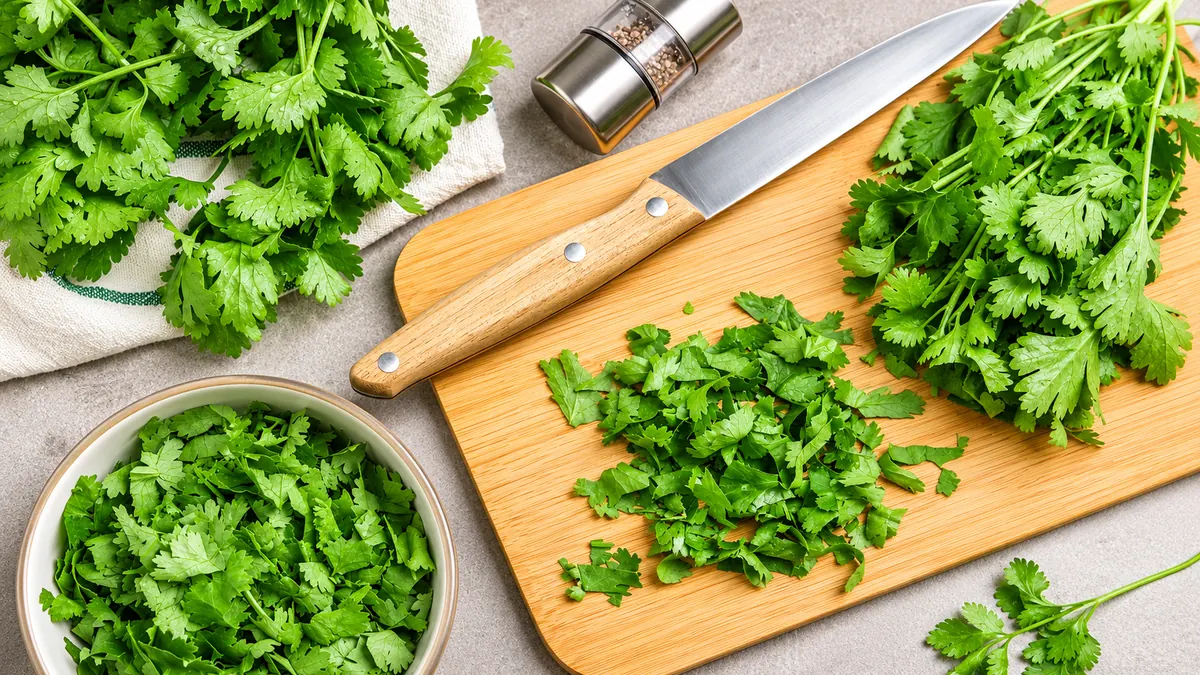
For one diner, fresh coriander brightens a bowl of dal. For another, the same leaves taste soapy. Here is what food science says about aroma, smell-receptor genes and individual preference.
A bowl of dal arrives with a generous scatter of fresh coriander. You breathe in its bright, green aroma. Someone beside you takes a bite and asks, “Why does this taste like soap?” They may be sincere: the same leaves can taste very different. Smell, genes and experience all play a part, but no single factor explains everyone’s reaction.
Why does coriander taste like soap to some people?
Coriander leaves contain volatile aroma compounds, including aldehydes. Some of these compounds contribute sharp, green or soapy notes. When a person is especially sensitive to parts of that aroma, the herb can seem unpleasantly detergent-like; another person may notice freshness or citrus instead. That difference is a real sensory response, not proof that someone is being fussy.
What we call flavour is a blend. The tongue detects basic tastes such as sweet, salty, sour, bitter and umami, while smell supplies much of a food’s aroma. Coriander’s soapy character is therefore not simply a taste-bud reaction.
The science behind coriander’s soapy aroma
Aldehydes are a broad family of molecules; their smells vary, and the precise compounds behind coriander’s soapy note are not settled as a single culprit. When you chew, aroma molecules travel from your mouth up to your nose through the back of your throat. This is called retronasal smell. Think of it as the aroma taking a second route to the same sensory system: that is why food can taste muted when your nose is blocked.
Smell receptors respond to airborne molecules, and people can differ in how strongly they respond to particular aromas. The mix of compounds in the herb, how it is cut or heated, and a person’s own sensitivity can all shape what reaches the plate—and what they perceive.
Is there really a gene that makes coriander taste like soap?
A 2012 genome-wide association study asked more than 14,000 people of primarily European ancestry whether coriander tasted soapy, then checked its findings in a separate group of nearly 12,000 people who reported whether they liked the herb. The researchers found an association near a cluster of olfactory-receptor genes on chromosome 11; that cluster includes OR6A2, a gene involved in smell detection.
An association means a genetic marker appeared more often alongside a reported experience in those study groups. It does not prove that OR6A2 alone causes the soapy perception, and it cannot predict every person’s preference. The study was based on self-reports and participants of primarily European ancestry, so its result is one clue about human variation—not a universal rule or a “coriander-hating gene.”
Wait, is coriander the same as cilantro?
Usually, yes: in India and many other countries, the fresh leaves are called coriander leaves; in the United States, they are commonly called cilantro. The dried fruits used as a spice are called coriander seeds in English-language cooking, even though botanically they are fruits. Leaves and seeds have different aromas and culinary uses, so a reaction to one does not automatically predict a reaction to the other.
Why do two people experience the same food differently?
Genes can influence smell and taste sensitivity, but experience also matters. Familiarity, memory, expectations and the foods someone grew up eating shape whether a flavour feels welcome. Culture influences which ingredients are familiar; that does not make cultural preference genetic. A blocked nose can temporarily change aroma too. Detecting a note and enjoying it are separate things: two people can recognise the same aroma and still feel differently about it.
Why does broccoli taste more bitter to some people?
The bitter-taste receptor gene TAS2R38 helps explain why people vary in how strongly they detect certain bitter compounds, including compounds related to those found in cruciferous vegetables. Broccoli’s bitterness also depends on the variety, growing conditions, preparation and other sensory factors. This gene contributes to one part of the picture; it does not explain every person’s response to broccoli.
Are some people born with more sensitive taste buds?
“Supertaster” is a popular research term for people who experience certain tastes—often the bitterness of a test compound such as PROP—as especially intense. It is not a diagnosis, and it does not mean someone tastes every food better. Taste sensitivity has several influences; counting visible bumps on a tongue cannot tell you whether a person will like coriander. Coriander dislike is not a supertaster test.
Can you learn to like coriander?
Familiarity can make some flavours more enjoyable, and a smaller amount may be easier to accept. Cooking changes coriander’s aroma, but it does not reliably erase a soapy note for everyone. Try it raw or cooked only if you want to; there is no need to train yourself to enjoy an herb you dislike.
Five surprising facts about how we taste food
- Much of a food’s aroma reaches the nose while you chew.
- Coriander leaves and seeds come from the same plant but smell different.
- Smell receptors help shape what people experience as flavour.
- A genetic difference can affect sensitivity without dictating liking.
- Familiarity can change enjoyment even when the flavour is still detectable.
Five coriander and taste myths—explained by science
- Myth: People who dislike coriander are just picky. Fact: Aroma sensitivity can make the herb genuinely unpleasant to someone. Preference is not a character test.
- Myth: Everyone tastes coriander the same way. Fact: People vary in smell and flavour perception. One person’s fresh garnish can be another person’s soapy bite.
- Myth: One gene decides whether you love or hate it. Fact: A genetic association near smell-receptor genes is one clue, not a complete explanation or a guarantee.
- Myth: Anyone who dislikes coriander is a supertaster. Fact: Supertasting describes sensitivity to certain stimuli; it cannot be diagnosed from a coriander preference.
- Myth: Cooking always removes its soapy flavour. Fact: Heat changes aroma, but the result varies. If a diner still notices the note, offer the leaves separately.
What can home cooks do if someone hates coriander?
- Serve it separately. Keep chopped leaves on the table so they can finish their own dal or rice. Our Spicy Toor Dal Tadka uses coriander as a garnish, which is easy to offer on the side.
- Start with less. A small amount can add colour and aroma without dominating a vegetable curry, soup or rasam.
- Offer a different chutney. Mint can be a useful alternative in some meals, although it changes the dish. In our Ragi Idli with Green Chutney, the chutney combines coriander and mint; serve a separate mint option if a guest prefers it.
- Choose herbs to suit the recipe. Mint or curry leaves can work in some dishes, but they are not exact replacements. Respecting a preference is often the simplest adjustment.
Frequently asked questions
Why does coriander taste like soap to me?
You may be more sensitive to some of the herb’s aroma compounds, including aldehydes. Smell contributes strongly to flavour, so a smell that seems fresh to one person can seem soapy to another. Sensitivity is only part of the story; preparation and experience also matter.
Is disliking coriander genetic?
Genetics may contribute. A study found an association between reporting a soapy taste and a marker near a cluster of smell receptor genes. That finding does not mean one gene determines everyone’s preference; familiarity, culture and other sensory differences can matter too.
What is the OR6A2 gene?
OR6A2 is one of many genes involved in olfaction, the sense of smell. It sits in a cluster of olfactory-receptor genes that drew attention in coriander research. The study did not show that this gene alone causes the soapy perception or determines whether someone likes coriander.
Can you learn to like coriander?
Some people become more comfortable with a flavour after trying it in small amounts or familiar dishes. Others continue to dislike its aroma, even when it is cooked. You can experiment if you are curious, but there is no need to force yourself to eat it.
Are coriander and cilantro the same thing?
In common usage, coriander leaves and cilantro are the same fresh herb. “Cilantro” is the usual U.S. term for the leaves; “coriander” is used in India and many other places. Coriander seeds are the dried fruits of that plant and have a different flavour.
The next time someone calls coriander soapy, believe their senses and pass the garnish bowl. A shared meal has room for more than one way of tasting it.