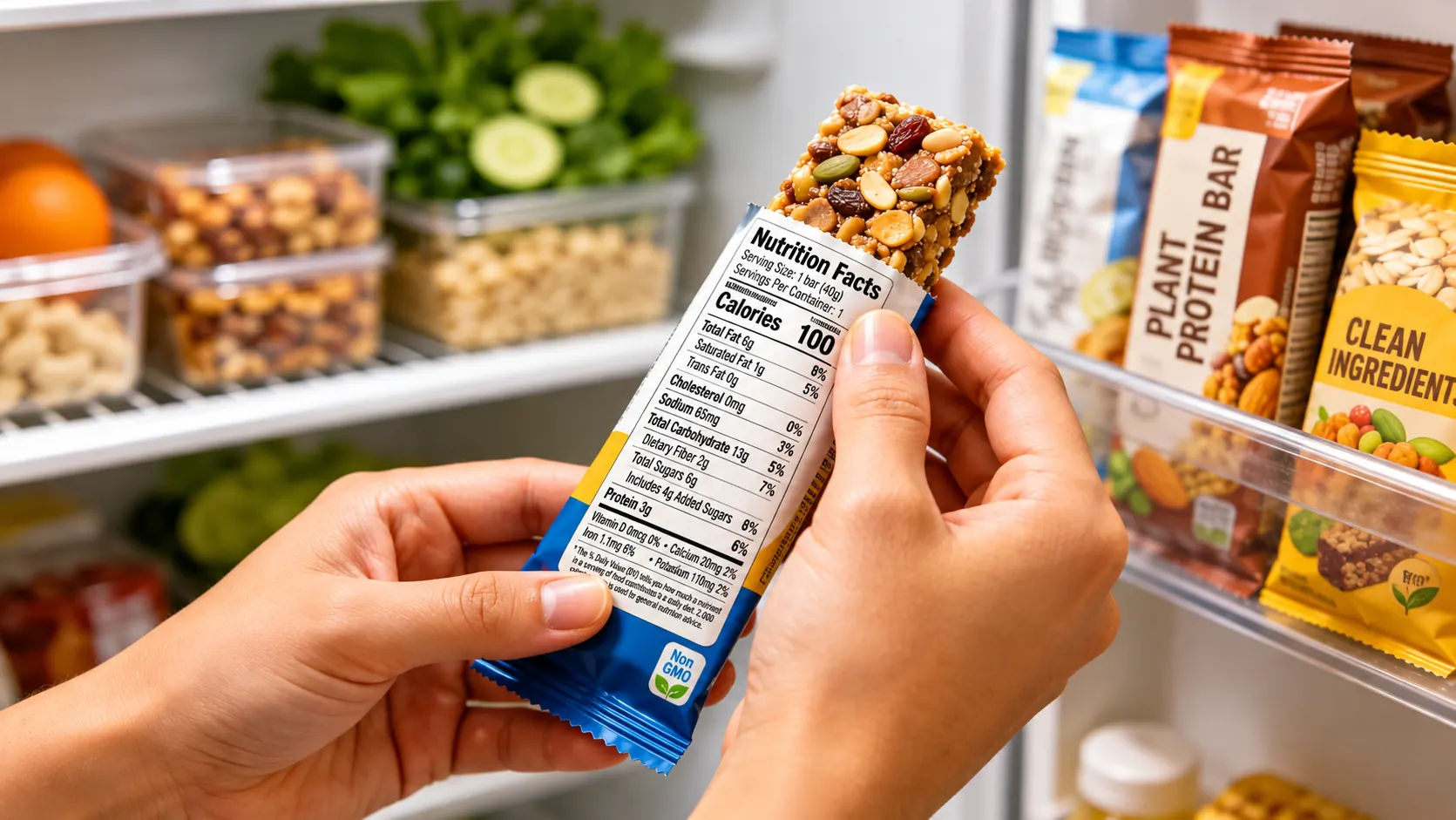
That bold protein claim is only one part of the packet. Here are seven practical checks for serving size, sugar, sodium, ingredients and value before you buy.
At the supermarket, a packet stamped “HIGH PROTEIN” can look like the smarter choice. But that phrase tells you only one part of the story. Protein matters; so do serving size, added sugar, sodium, saturated fat, fibre, ingredients and how the snack fits into the rest of your day. A protein snack is not automatically a poor choice—or a balanced one.
Why is everything suddenly labelled “high protein”?
Protein biscuits, bars, breakfast cereals, chips and drinks now sit beside familiar snacks. The front claim is easy to notice, but it is still only one nutrient. In India, food claims are governed by Food Safety and Standards Authority of India (FSSAI) rules. “High” has a defined nutrition-claim criterion; it does not certify that a product is low in sugar, salt, saturated fat or calories. Read the nutrition panel before deciding what the packet means for you.
What does “high protein” actually mean?
Protein supports body functions, including tissue maintenance. A food may contain protein without meeting the threshold for a “high protein” claim. Under FSSAI’s Advertising and Claims Regulations, “high” or “rich” protein claims must meet the prescribed percentage of the applicable recommended dietary allowance. For solids, “high” or “rich” means at least 20% of the RDA per 100 g; the rules also set criteria per 100 ml, per 100 kcal and per serving. A “source” claim has a lower threshold. Meeting a protein-claim threshold is not an overall health rating.
Seven checks to make before buying
1. Compare protein per serving and per 100 grams
Check serving size first. A small bar may contain less protein per serving than its large “per 100 g” number suggests. Compare per 100 g across products, then compare the portions you would actually eat.
Illustrative example—not real products: Product A has 20 g protein per 100 g and a 30 g serving, which works out to 6 g per serving. Product B has 12 g per 100 g and a 50 g serving, also 6 g per serving. The per-100-g figures differ, but the stated portions offer the same protein. Use the arithmetic: protein per 100 g × serving weight ÷ 100.
2. Look for added sugar, not just total sugars
A sweet protein cookie can still be a sweet snack. Where the label lists both total and added sugars, check both, then multiply the per- serving figure if you expect to eat more than one serving. Ingredients such as sugar, glucose, honey or syrups can contribute sweetness; their presence does not make a product automatically bad, but the amount and your usual diet matter. FSSAI requires added sugar to appear in the nutrition information for applicable packaged foods.
3. Check saturated fat and sodium
Protein content does not cancel out the rest of the panel. Compare saturated fat and sodium across similar snacks, and remember to account for the portion you will eat. WHO guidance recommends limiting salt, free sugars and unhealthy fats as part of an overall healthy diet; those are daily-pattern recommendations, not a reason to fear one snack. Sodium is the nutrient figure; salt is one source of it.
4. See whether fibre is part of the package
Fibre can help distinguish two otherwise similar bars, biscuits or cereals. A protein claim does not mean a snack is fibre-rich. Compare the listed amount, but treat fibre as one consideration rather than a health promise or substitute for reading the full label.
5. Read the ingredient list
In India, ingredients are listed in descending order by weight at manufacture, so the first entries make up most of the product. Look for protein source—such as milk, soy, peanuts or pulses—and check allergens if relevant. A long list is not proof of a problem, and an unfamiliar technical name is not proof that an ingredient is harmful. Judge the product by its full label, not by “natural” or “clean” language alone.
6. Work out whether the protein is worth the price
Compare cost with the protein you receive, not just packet price. Hypothetical calculation: If a snack costs ₹30 and provides 6 g protein per serving, then 10 g of protein costs ₹30 ÷ 6 × 10 = ₹50. This is a simple comparison, not a measure of total food quality. Taste, convenience, dietary needs and allergies still count.
7. Ask whether you need this snack today
Protein needs vary with age, body size, activity, health and the rest of a person’s diet. ICMR-NIN’s Dietary Guidelines for Indians (2024) describe daily requirements in relation to body weight and dietary context; one snack label cannot tell you what you personally need. A protein-enriched bar can be convenient when you are away from home. Other days, an ordinary meal or snack may do the job. Anyone with a medical condition or a prescribed diet should follow advice from their clinician or dietitian.
Five high-protein snack myths, fact-checked
- “High protein means low calorie.” Not necessarily. Energy depends on the whole recipe, including fats, sugars and serving size.
- “Protein biscuits are always healthier than regular biscuits.” No. Compare the whole nutrition panel and the portion you plan to eat.
- “More protein is always better.” No single snack should be judged in isolation from a person’s daily needs and overall diet.
- “Expensive protein snacks must be more nutritious.” Price may reflect branding, convenience or ingredients; it is not a nutrition score.
- “A high-protein claim means the whole product is healthy.” The claim concerns protein under defined rules. Sugar, sodium, fat, fibre and portion still deserve a look.
Everyday protein options in Indian kitchens
Roasted chana, plain curd, eggs, paneer, soy foods, milk, nuts and seeds all contribute protein, though amounts and portions vary. They differ in fibre, fat, energy and allergens: peanuts and tree nuts are common allergens, while milk and soy need consideration for people who avoid them. Pair an option with what makes a satisfying snack for you. For a home-cooked idea, try FullMeals’ homestyle chana dal or browse more recipes for everyday cooking inspiration.
The 60-second supermarket label check
- Confirm the serving size and servings in the pack.
- Compare protein using the same unit across products.
- Check added sugar, saturated fat and sodium per portion.
- Review fibre, the first ingredients and any allergen statement.
- Compare the cost with your needs and the amount you will eat.
The bottom line: protein is one part of the picture
High-protein packaged snacks can be useful and convenient. They can also vary widely, so the front claim is a starting point, not a verdict. Compare a realistic serving and decide whether the product suits your day. Don’t judge a snack by the biggest words on the front; read the smaller numbers on the back.
Frequently asked questions
Are high-protein biscuits actually healthy?
They may be a convenient source of protein, but the claim alone does not show their total nutritional quality. Check serving size, added sugar, saturated fat, sodium, fibre and ingredients, then compare them with biscuits you would otherwise choose.
Can protein bars contain too much sugar?
Some can contain notable added sugar, while others contain less. Read the added-sugars figure per serving and consider whether you will eat one bar or more. A bar’s protein content does not change the amount of sugar listed on its label.
How much protein should a snack have?
There is no single snack target that suits everyone. Daily protein needs depend on factors such as age, body size, activity and health, as well as what you eat across the day. Use the label to compare options, not as a personal prescription.
Are homemade protein snacks better than packaged snacks?
Not automatically. Homemade foods make ingredients easier to choose, while packaged options can be practical and clearly labelled. Compare the actual ingredients, portions, nutrition, safety and convenience of the specific options you have.
How can I check whether a high-protein label is trustworthy?
Check that the nutrition panel lists protein and serving information, then compare the stated amount with the applicable FSSAI claim criteria. If a claim seems inconsistent with the panel, choose another product or seek clarification from the manufacturer or food-safety authority.