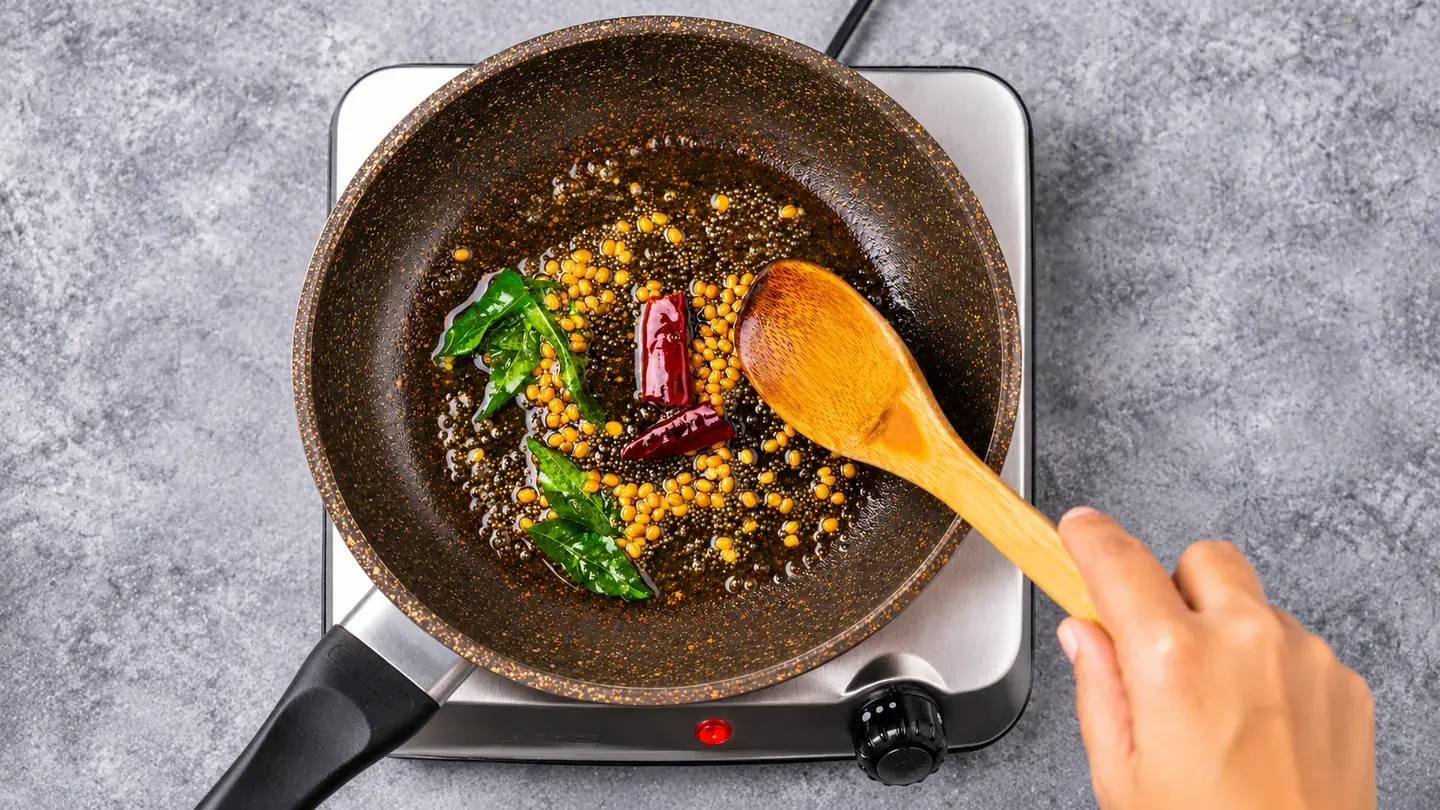
Mustard seeds pop, curry leaves crackle in hot oil, and the kitchen suddenly smells like dinner. Tadka is a small step with a big sensory effect: gentle heat frees aromas, while oil carries some of them into the dish. Here’s the science—and how to keep the spices fragrant instead of bitter.
Mustard seeds tick against the pan, curry leaves crackle, and the smell reaches the next room before dinner is ready. Why does tadka make food taste better? Brief heat releases spice aromas, while oil or ghee carries some through the dish. Too much heat, though, can turn fragrance into bitterness.
What exactly is tadka?
Tadka, baghar or tempering briefly heats selected spices, herbs or aromatics in oil or ghee. In Tamil cooking, this seasoning is often called thalippu. It can begin a dish or finish dal, sambar, rasam, chutneys and vegetables. Ingredients vary across regions and homes.
Why does heating spices in oil make food taste better?
Spices contain many aroma compounds. Some are volatile, meaning they readily escape into the air and reach your nose. Heat releases some from seeds and leaves; that smell is a big part of flavour. Some aroma molecules also dissolve more readily in fat than water, so seasoned oil can distribute them through a dish. Compounds behave differently, and water-based cooking draws out other flavours too.
Prolonged or fierce heat can drive off aromas and scorch delicate spices, garlic or ground chilli. Cumin smells warm when toasted but harsh when burnt. The aim is to wake up spices, not darken them.
Why do mustard seeds pop in hot oil?
Mustard seeds hold a small amount of moisture beneath their outer coat. As the seed heats, that moisture turns to steam and pressure builds. A seed may split or jump as the pressure escapes, sometimes flicking a tiny drop of oil with it. Use a small, deep pan, keep the heat moderate, and stay close. Seeds can become fragrant before every one pops; a dramatic burst is not the goal.
Why do curry leaves splutter?
Water on a leaf’s surface or within it turns rapidly to steam on contact with hot oil, pushing droplets outward. Wash, drain and pat away excess water. Add leaves carefully, keep hands and face back, and lower the heat if oil spits hard. A suitable pan and modest amount of oil are easier to control.
Oil or ghee: does the cooking fat change the flavour?
Yes. A neutral oil lets the spices lead; ghee adds its own rounded, buttery aroma to many dals. Coconut oil suits some South Indian preparations. Other oils bring their own flavours and cooking characteristics, so pick one that suits the dish and heat. No single fat is best for every tadka, and extra oil does not guarantee more flavour.
Why does the order of spices matter?
Mustard and cumin seeds usually go into warm oil first. Dried chilli darkens quickly; curry leaves need only a brief sizzle. Give garlic time to soften, but add hing and ground chilli near the end, often over lower heat, because powders scorch fast. One South Indian sequence is mustard, optional urad or chana dal, dried chilli, curry leaves, then hing. There is no universal order: follow the recipe and watch the pan.
Tadka at the beginning or at the end?
At the beginning, seasoned fat becomes part of the cooking base and mingles with onions, tomatoes or vegetables. A finishing tadka is added near serving, leaving its aroma more distinct on top; dal and sambar are often finished this way. Lemon-rice tempering is stirred through the rice. Try ourSouth Indian lemon rice or see how the separate finishing pour works in this sambar recipe. The dish and the flavour you want decide which approach fits.
Five common tadka mistakes that dull the flavour
- Overheating the oil. Smoking oil is too hot for delicate tempering, so spices can scorch. Start over moderate heat; if it smokes, remove the pan from the burner and let it cool.
- Adding everything at once. Seeds, leaves and powders cook at different speeds, so some may burn while others stay raw. Measure first, then add them in stages.
- Burning cumin, garlic or chilli powder. They turn dark and smell acrid when overcooked. Lower the heat and add powders last; discard badly burnt tadka and make a fresh one.
- Choosing an awkward pan or too much oil. A wide pan can spread a little oil too thinly; an undersized one crowds spices. Use a small, sturdy tempering pan and only enough fat to coat them.
- Walking away. Tadka can burn quickly, especially after leaves and powders go in. Stay by the stove and turn off the heat when the ingredients smell ready.
How to make a simple tadka at home
Warm a spoonful of oil or ghee in a small pan over moderate heat. Add mustard or cumin and listen for a gentle sizzle; add dried chilli if you like. Lower the heat, carefully add dry curry leaves, then a pinch of hing if it suits the dish. When fragrant, pour over dal, keeping your face and hands clear. Adjust the spices to the recipe.
Five surprising facts about tadka
- Smell is a major part of flavour, which is why the aroma often announces dinner first.
- Different spices release different aroma compounds; one heat level does not suit them all.
- Fat can carry some spice aromas through a dish, but not every flavour compound prefers fat.
- A finishing tadka can smell more immediate, while a base tempering has longer to blend in.
- The oil or ghee contributes its own aroma as well as helping transfer heat to the spices.
Myth vs fact: five tadka beliefs checked
- Myth: Any oil temperature works. Fact: Heat matters. Oil that is too cool may leave spices dull; oil that is smoking can scorch them. Start with moderate heat and use aroma and sound as cues.
- Myth: Longer frying means better flavour. Fact: Extra time can drive off delicate aromas or burn spices. Stop when the ingredients smell fragrant and look right for the recipe.
- Myth: All ingredients go in together. Fact: Seeds, leaves and powders need different amounts of heat. Stagger them so the quickest-cooking ingredients do not burn.
- Myth: Tadka must always be added at the end. Fact: Many dishes begin with spices in hot fat; others use a finishing pour. Choose the timing the recipe calls for.
- Myth: More oil always means more flavour. Fact: A little seasoned fat can spread aroma, but excess oil can make a dish greasy. Use enough to heat and carry the spices, not a fixed large quantity.
Frequently asked questions
Why is tadka added to dal?
Tempered spices add aroma and flavour. A finishing pour brings a fresh smell to the surface; spices cooked in at the start become part of the base. Both approaches are common.
Which oil is best for tadka?
Choose a cooking oil that suits the dish and heat. Neutral oils keep spices prominent; ghee or coconut oil adds its own aroma. Follow the recipe or your preference.
Why do mustard seeds pop during tempering?
Moisture heats into steam and pressure builds beneath the seed coat, so a seed may split or jump. Use moderate heat and stand back; not every seed has to pop.
Should tadka be added at the beginning or end?
It depends on the dish. An early tempering flavours the base; a finishing tadka brings aroma to the surface. Follow the recipe or choose the effect you want.
Why does my tadka taste bitter?
The oil may have been too hot, or spices cooked too long. Use moderate heat, add delicate ingredients later and watch closely. If they are badly burnt, make a fresh tadka.
Mustard seeds popping is a small kitchen sound with a useful lesson: heat, order and timing shape the aroma in your pan. Once you can read those cues, tadka becomes easier to repeat—and easier to make your own. Try the seasoned oil in khaman dhokla, then explore more recipes and cooking guides on FullMeals.