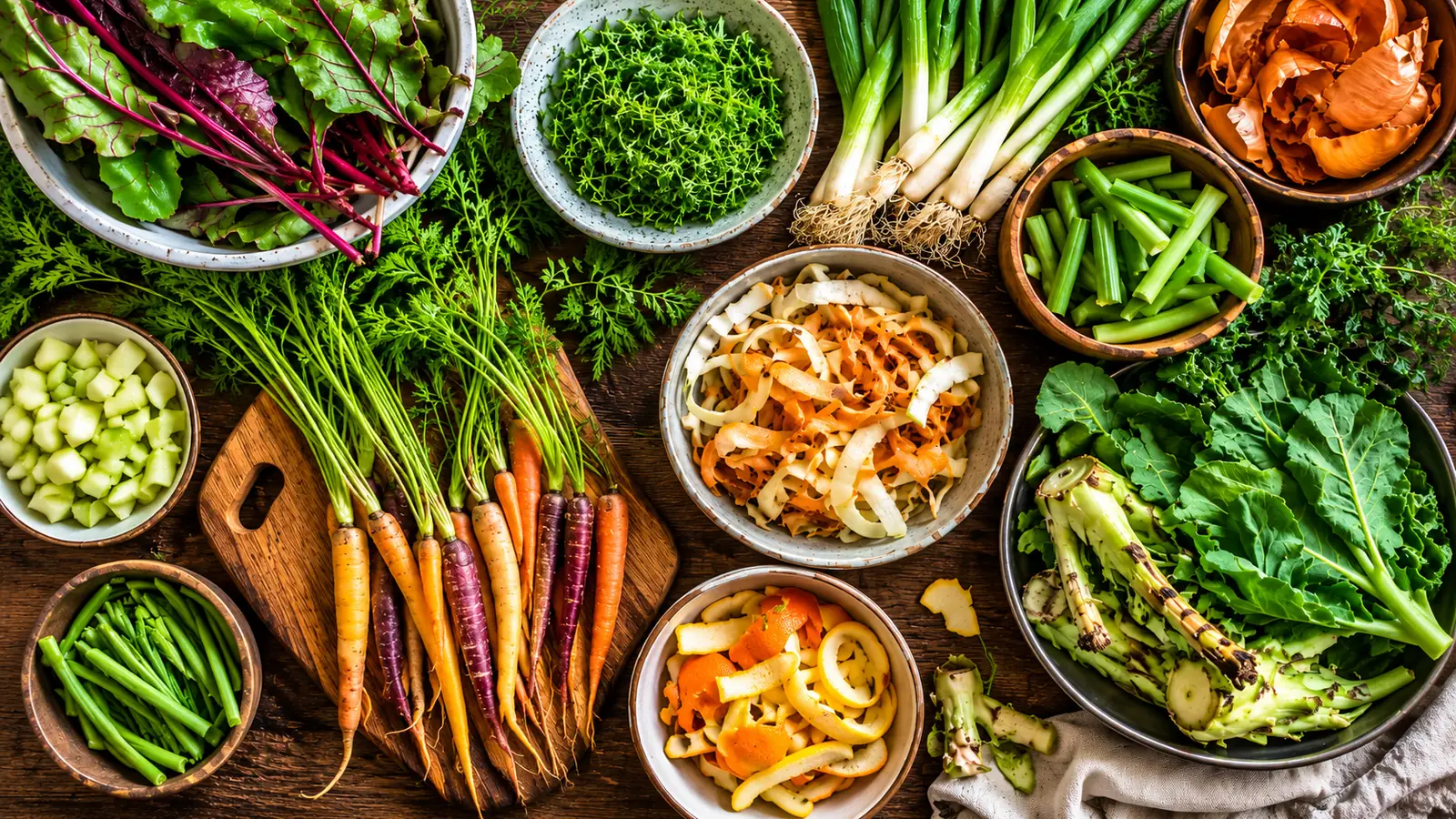
Cauliflower leaves, radish greens and pumpkin seeds can become useful parts of everyday meals. Here are seven vegetable trimmings to try, how to prepare them, and which scraps to leave out of the pot.
Lunch prep is finished: cauliflower leaves in the bin, coriander stems on the board, pumpkin seeds scraped into the sink. It is an ordinary kitchen routine. Yet some of those pieces can become a sabzi, chutney, soup or snack. The useful rule is simple: eat a discarded part only when you know the plant and the part is normally edible, fresh, clean and prepared appropriately.
Why do we throw away so much of our vegetables?
Habit, texture and convenience explain many trimmings. Other parts are genuinely tough, damaged or unsafe, so “root-to-stem” cooking does not mean using everything. It means noticing the edible parts you already buy and deciding whether they suit a meal.
A peer-reviewed King’s College London study published on October 29, 2026 measured fibre in discarded parts of 12 produce types. It found higher fibre than the commonly eaten portion in 10 comparisons. The team prepared one specimen per type, tested the discarded portions in duplicate, and compared them with food-composition data or published values. Separate focus groups explored attitudes among university students and staff, not household adoption. The researchers call for testing more specimens, so this is an early comparison—not proof that every scrap is safer or healthier.
Seven vegetable parts worth saving
1. Cauliflower leaves and tender stems
Fresh cauliflower leaves and tender inner stems are edible, with a mild cabbage-like taste. Remove damaged leaves and woody ends, rinse away grit, and slice thinly. Cook stems first; add leaves to a mustard-seed, onion and turmeric tempering until tender. Serve with dal and rice. For another meal, try our cauliflower curry and pumpkin meal.
2. Radish leaves (mooli patta)
Fresh mooli leaves taste peppery and wilt quickly. Rinse between them, discard yellow or slimy leaves, and chop. A brief sauté with garlic, cumin and chilli softens their bite; chopped greens also work in paratha dough. Use promptly, and do not generalise this advice to other roots.
3. Coriander stems
Clean coriander stems bring bright flavour to chutney, curry bases and tomato-onion masala. Rinse well and finely chop the tender stems. Lower stems can be fibrous; mince them very small or leave them out. Use with the leaves while fresh.
4. Pumpkin seeds
Seeds from a sound culinary pumpkin make a crunchy snack. Separate them from stringy pulp, rinse, and dry thoroughly on a clean towel. Season lightly, then roast until dry and crisp, checking and stirring because seed sizes and ovens vary. Add salt and chilli near the end so spices do not scorch. Cool fully and store airtight. For the flesh, try our pumpkin, sweet potato and carrot soup is another way to use the flesh.
5. Carrot skin
Carrot skin is edible; peeling is often about texture. Scrub carrots under running water before cutting or peeling. Use only fresh, clean peels directly in cooked stock or soup; easier still, leave the skin on a sound, washed carrot. Discard rotten or mouldy carrots.
6. Broccoli stalks
Broccoli stalks are edible, but the outer layer can be fibrous. Trim the dry end, peel tough skin, then slice or grate the tender centre for a stir-fry, sabzi or savoury pancake. Start stalks before florets and cook until tender, adjusting for size. For a meal that also uses carrots and cauliflower, try our For a meal that also uses carrots and cauliflower, try our vegetable paneer biryani.
7. Watermelon’s white rind
On a fresh, sound watermelon, the pale inner rind between flesh and hard green skin can be cooked. Wash the melon before cutting, remove the green skin, dice the pale rind and simmer in a mildly spiced sabzi until tender. This applies to watermelon only, not all fruit rinds.
Quick guide to edible vegetable parts
| Vegetable part | Edible portion | Preparation | Simple idea |
|---|---|---|---|
| Cauliflower | Leaves, tender stems | Rinse; trim woody ends; slice | Mustard-seed sabzi |
| Radish | Fresh leaves | Rinse between leaves; chop | Saag or paratha |
| Coriander | Tender stems | Rinse; finely chop | Chutney or masala |
| Pumpkin | Seeds from culinary pumpkins | Remove pulp; rinse; dry; roast | Spiced snack |
| Carrot | Clean skin | Scrub first; peel if desired | Cooked stock |
| Broccoli | Tender inner stalk | Peel tough skin; slice or grate | Stir-fry |
| Watermelon | Pale inner rind | Wash; remove hard green skin; dice | Mild sabzi |
Not every vegetable scrap is safe to eat
Identify the plant and part first. Rinse produce under running water; scrub firm melons with a clean brush, and do not use soap. Washing reduces dirt and microbes but cannot guarantee their removal or remove every pesticide residue. It cannot make an unsafe plant edible. Discard produce that is rotten or mouldy.
- Green, sprouted or badly damaged potatoes: these can contain elevated potato glycoalkaloids, mainly α-solanine and α-chaconine. Discard potatoes that are very green, shrivelled, soft or heavily sprouted; do not try to make questionable potatoes safe by cooking. UK food-safety guidance advises removing small sprouts and green areas from an otherwise firm potato.
- Rhubarb leaves: do not eat them. Rhubarb stalks are the culinary part; its leaves are toxic.
- Unknown leaves or wild plants: never taste them to identify them. Use only parts reliably identified as edible.
- Unusually bitter pumpkin-family produce: spit it out and discard it. A very bitter squash, cucumber or other cucurbit can contain cucurbitacins that cause illness; cooking is not a reliable fix.
Five zero-waste cooking myths
| Myth | Fact and practical takeaway |
|---|---|
| All vegetable peels are safe. | Edibility depends on the species and condition. Check the specific plant part first. |
| Cooking makes every plant part safe. | Heat does not neutralise every natural toxin. Do not cook unknown or unsafe parts. |
| Stems have no useful flavour. | Tender stems can add flavour and texture. Chop clean coriander stems into chutney or masala. |
| Scraps are always less nutritious. | Composition varies by plant and part. A fibre comparison alone cannot establish overall health value. |
| Zero-waste means using absolutely everything. | Safe, enjoyable cooking includes discarding spoiled, inedible or uncertain parts. |
How to save edible parts without creating more waste
Separate clean, edible trimmings from peelings or scraps you will discard while you prep. Refrigerate suitable fresh leaves and stems in a clean covered container and use them soon; freeze portions if you cannot cook them promptly. Label frozen containers so you know what they hold. In warm weather, keep cut produce cold and return it to the refrigerator quickly. Storage needs vary by ingredient, so follow produce-specific advice. Never save scraps that have spoiled just to avoid waste.
Can using more of your vegetables save money?
It can help stretch what you have bought: radish tops become sabzi, coriander stems flavour chutney, and cauliflower stems join dinner instead of the bin. The value depends on freshness, your time and whether your household enjoys the dish; there is no fixed rupee saving. If you want an idea built around ingredients already at home, try FullMeals Pantry Match.
Frequently asked questions
Are cauliflower leaves safe to eat?
Yes. Fresh cauliflower leaves and tender stems are edible when washed and cooked. Remove damaged leaves and woody ends, then slice finely; cooking softens the texture. Use the same simple mustard-seed tempering you might use for a greens sabzi.
Can you cook radish leaves?
Yes. Use fresh green radish leaves, rinse between them to remove grit and chop. A brief sauté with garlic or cumin mellows their peppery bite. Add them to a sabzi or fold finely chopped leaves into paratha filling or dough.
Are carrot peels nutritious?
The study cited here does not establish a nutrition advantage for carrot peels specifically. The skin is edible on a clean, sound carrot; wash and scrub before cooking, and leave it on if you prefer to avoid peeling.
Can you eat watermelon rind?
The pale inner rind between the flesh and hard green skin can be cooked when the melon is fresh and sound. Wash the whole melon before cutting, remove the green skin and simmer diced white rind in a sabzi until tender. This does not apply to every fruit.
Which vegetable scraps should never be eaten?
Do not eat rhubarb leaves, unknown plant parts, mouldy or rotten produce, or unusually bitter pumpkin-family vegetables. Discard potatoes that are very green, soft, shrivelled or heavily sprouted. Cooking cannot be relied on to make unsafe plant parts edible.
Start with one small change: save a handful of fresh, clean stems or leaves, cook them well, and see whether they earn a place in your next meal. Good root-to-stem cooking is practical, selective and safe.