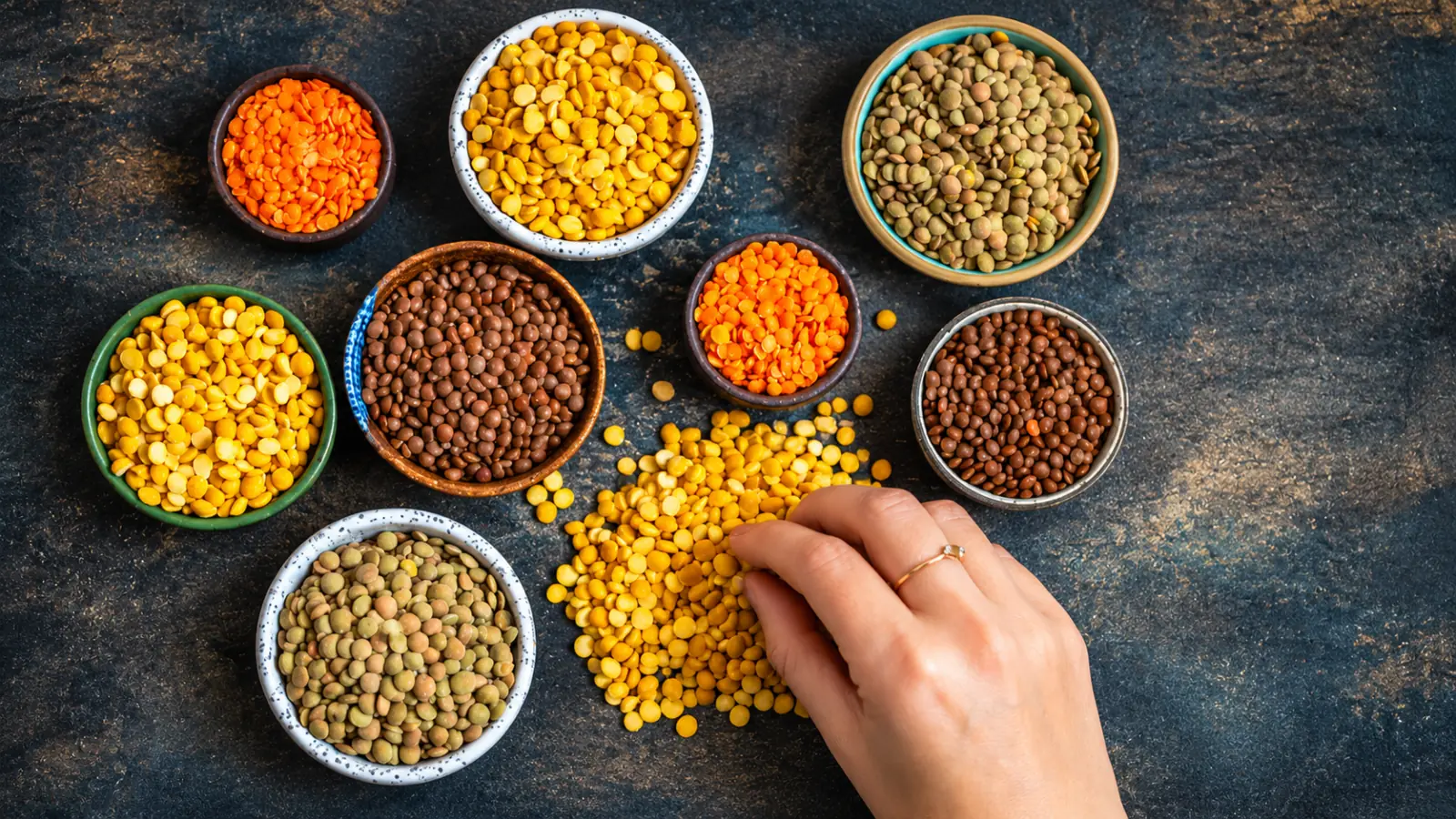
Many split dals can be cooked without soaking, while larger pulses often benefit from it. Here is how to choose, what soaking changes, and the important safety rule for rajma.
The dal is rinsed, the cooker is ready, and someone asks whether it was soaked first. That question has no single answer: a bowl of split red masoor behaves very differently from whole rajma. Many quick-cooking split dals can go straight into the pot; larger, harder pulses usually cook more evenly and often faster after soaking.
Why do Indian households soak dal before cooking?
Soaking is a practical kitchen habit. Dry pulses take up water before they meet the heat, which can shorten cooking and help larger beans soften evenly. But a family habit of soaking everything does not mean every split dal needs the same treatment. Older pulses may also take longer to soften than fresher ones.
What happens when dal is soaked?
A dried pulse has lost much of its original moisture. As it sits in water, moisture moves through the seed coat and the pulse swells. That head start can help larger pulses cook more evenly. How much time it saves varies with the variety and how the pulse was stored. Soaking water can also carry away water-soluble compounds, so results differ across lentils, chickpeas and beans. Food-science reviews report that the effect depends on the pulse and soaking conditions.
Which dal needs soaking—and which does not?
For quick-cooking splits, rinsing is usually enough to remove dust and loose debris. Soak larger pulses when you want more even cooking or when the recipe calls for it. Utah State University Extension notes in its guide to dry beans and peas that lentils and split peas do not require soaking.
| Dal or pulse | Soaking guide |
|---|---|
| Split yellow moong | Usually optional; it cooks readily without soaking. |
| Split red masoor | Usually optional; rinse, then cook until tender. |
| Toor / arhar dal | Often optional; soaking may help with older or slower-cooking dal. |
| Chana dal | Helpful for faster, more even softening, especially for a firm texture. |
| Urad dal | Depends on the form and dish: whole black urad benefits more than split urad. |
| Whole green moong | Helpful for even cooking, though the recipe and desired texture matter. |
| Chickpeas / kabuli chana | Generally soak; these large whole pulses take longer to soften. |
| Rajma / kidney beans | Soak and follow the safety steps below; soaking alone does not make them safe. |
Does soaking dal make it easier to digest?
It may help some people, but it is not a guaranteed fix for digestive discomfort. Certain legumes contain oligosaccharides such as raffinose that can be fermented by gut bacteria and contribute to gas. Soaking and draining may reduce some, but the effect varies by pulse. Reviews of pulse processing describe the link between these oligosaccharides and digestive discomfort. A study of lentils, chickpeas, peas and soybeans found different results after soaking and cooking for each legume. Phytate can bind minerals in food; soaking and cooking may reduce it in some pulses but not all. Neither step removes every compound or guarantees less discomfort for everyone.
Is soaked dal more nutritious?
There is no universal winner. Soaking may lower some compounds, while draining the water discards what has leached into it. Soaking can also affect water-soluble B vitamins; a study of fava beans, chickpeas and lentils found that retention varied by legume and soaking solution. That makes “soaked is healthier” too broad a claim. Cook pulses thoroughly either way.
Can a pressure cooker replace soaking?
Pressure cooking raises the temperature and speeds up softening, which is why split moong, masoor and many toor dals cook well without a pre-soak. Larger whole pulses may still benefit from soaking because they need to hydrate and soften through to the centre. The cooking method, age of the pulse and recipe all affect the result.
Kidney beans need a separate safety reminder. Raw or undercooked red kidney beans can contain phytohaemagglutinin (PHA), a lectin that can cause severe illness. The US FDA advises soaking them for at least five hours, discarding that water, then boiling briskly in fresh water for at least 30 minutes. Do not treat soaking alone, a slow cooker, or an arbitrary number of pressure-cooker whistles as a validated substitute for that guidance.
Five dal-soaking myths, fact-checked
- “Every dal must soak overnight.” False. Split moong and masoor usually cook without it. Match soaking to the pulse and recipe.
- “Unsoaked dal is always harder to digest.” Too absolute. Some people find soaking helpful, but digestion varies and soaking is not a guarantee against discomfort.
- “Soaking removes all antinutrients.” False. It may reduce some soluble compounds; effects vary and some remain after soaking and cooking.
- “A pressure cooker makes soaking completely unnecessary.”Not for every pulse or every safety question. It can cook many splits from dry, but use the kidney bean guidance above.
- “Longer soaking always gives better results.” False. More time is not automatically useful. Follow a reliable recipe and keep soaking pulses cool, especially in a warm kitchen.
What if you forgot to soak your dal?
If it is split yellow moong, red masoor or toor, rinse it and start cooking; allow extra time if it is old or your recipe expects a softer texture. Check tenderness rather than relying on a fixed whistle count. For chana dal, chickpeas or whole moong, use a recipe that accounts for cooking from dry or follow a quick-soak method for that pulse.
For rajma, do not skip the FDA safety steps because you are short on time. Avoid leaving pulses in warm water for an extended period; if an overnight soak is convenient, keep the bowl cool or refrigerated, then drain and cook as directed. Compare moong-and-masoor dal, chana dal masala, and dal makhani with whole urad and rajma to see how the pulse changes the dish.
The practical rule every home cook can remember
Quick-cooking split dals generally do not need a pre-soak. Larger, harder pulses often benefit from one, and kidney beans need careful, thorough cooking. Rinse every pulse, follow the recipe for the texture you want, and let the type of dal—not a blanket household rule—decide.
Frequently asked questions
Can I cook toor dal without soaking?
Yes. Rinse split toor dal and cook it until tender; soaking is often optional. Older dal or a recipe aiming for a very soft finish may take longer, so check the texture and add cooking time or water as needed.
Does moong dal need to be soaked?
Split yellow moong usually cooks well without soaking. Whole green moong is firmer, so soaking can help it cook more evenly. Choose based on the form of moong and whether you want the pulses to hold their shape.
Is it okay to cook chana dal without soaking?
It can be cooked from dry, but soaking is helpful because chana dal is larger and firmer than quick-cooking split dals. Without a soak, expect a longer cook and check that the centre is fully tender before serving.
Does soaking dal reduce gas?
It can reduce some water-soluble oligosaccharides linked with gas, particularly if the soak water is drained, but the effect differs by pulse and person. It does not eliminate all gas-producing compounds or guarantee that symptoms will stop.
Should rajma be soaked overnight?
Soaking is recommended, but “overnight” is not the safety step by itself. FDA guidance says soak red kidney beans for at least five hours, discard the water, then briskly boil in fresh water for at least 30 minutes before serving.
Need an idea for tonight? Explore FullMeals recipes and cooking guides, and let the kind of pulse in your pantry set the pace.