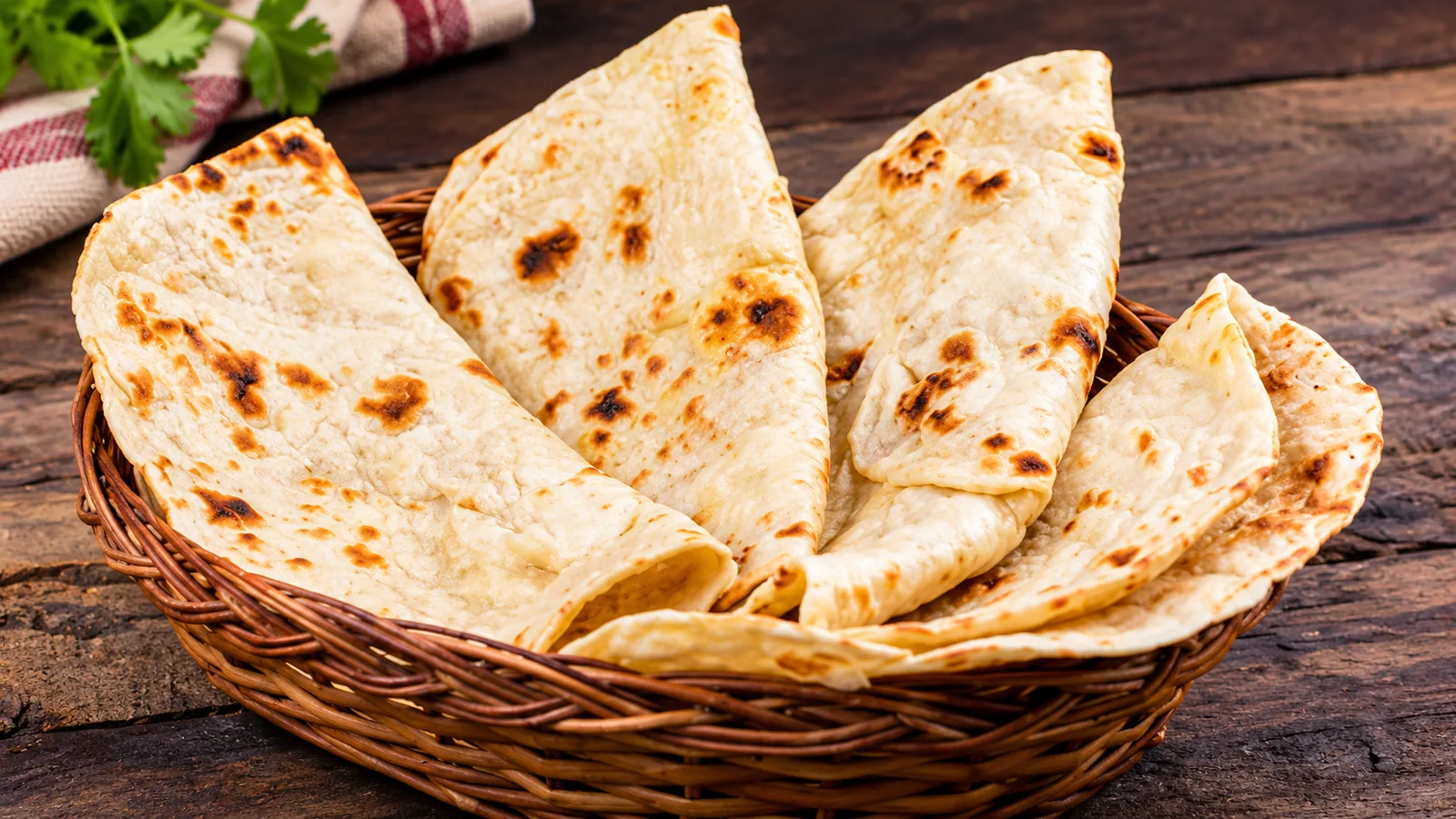
Chapatis soft on the tawa but hard by dinnertime? Learn what causes dry, chewy roti and eight practical ways to keep homemade chapatis softer.
Chapatis can feel soft on the tawa and turn stiff by the time dinner is served. Dry dough, uneven rolling, too much time on the heat and air exposure can all play a part. The useful clue is when the texture changes: straight from the tawa, after cooling, or inside a lunchbox.
There is no single flour brand, water amount or cooking time that works for every kitchen. Use a soft, workable dough and the cues below, then adjust for the atta and pan you have.
Why do chapatis turn hard?
Chapatis become hard when the dough is too dry or uneven, or when cooking and holding let too much moisture escape. Flour absorption, dough resting, thickness, tawa heat and time on the pan all affect the result. A chapati that is tough straight from the tawa points to a different part of the process than one that was soft and later dried out.
When does your chapati become hard?
- Hard straight from the tawa: check dough texture, thickness and how long each side cooks.
- Soft first, hard after cooling: check overcooking, air exposure and how the cooked chapatis are held.
- Dry in a lunchbox: check how they cool, what they are wrapped in and whether the box traps steam or lets them dry out.
8 tips for softer chapatis
1. Choose a suitable whole-wheat atta
Finely milled atta is commonly used for everyday chapati, but flours vary in bran content and how quickly they absorb water. If you change flour, expect the dough to feel different. Mix in water gradually and judge the dough by touch rather than assuming the same amount will work every time. This prevents a familiar recipe from turning stiff when the flour changes.
2. Add enough water for a soft, workable dough
A dry, crumbly dough is difficult to roll smoothly and can make a chapati dense. Add water in small amounts as you mix until the flour comes together into a soft dough that feels moist but does not cling heavily to your fingers. If it is sticky, give it a brief rest before adding more flour; too much dry flour can make it firm again.
3. Knead until the dough is smooth and cohesive
Knead enough to bring dry patches together and make the dough pliable. Press and fold it until the surface feels more even and a portion can be shaped without cracking. There is no mandatory minute count for every batch. Stop once it is cohesive; prolonged kneading can warm the dough, while leaving loose flour pockets gives uneven texture.
4. Rest the dough while it is covered
A short covered rest gives the flour time to absorb moisture and lets the dough relax, making it easier to roll. Keep it in a bowl or under a clean damp cloth so the surface does not form a dry skin. The exact rest depends on the recipe and the flour. If the dough springs back while rolling, let it rest a little longer rather than forcing it thinner.
5. Roll evenly and use little dry flour
Divide the dough into similar portions and roll each to an even thickness. A thick middle with thin edges cooks unevenly; very thin patches can dry before the rest is done. Dust the board only enough to prevent sticking, then brush off any loose excess before the chapati reaches the tawa. Perfect circles are unnecessary; even thickness is what helps it cook consistently.
6. Heat the tawa evenly
A cool tawa can leave the dough on the pan for too long, while an excessively hot one can scorch spots before the bread cooks through. Preheat the pan and adjust the flame as you cook. A small chapati should begin to set and show light spots without turning dark at once. Cast iron, steel and non-stick pans hold and transfer heat differently, so watch the bread as well as the burner setting.
7. Flip at the right stage and avoid overcooking
Cook the first side until the surface changes and small bubbles begin to appear, then turn it. Cook the second side until light brown spots form and the centre is cooked; turn once more briefly if needed. Move finished chapatis off the hot tawa instead of leaving them there while the next one cooks. Puffing can be a useful cue, but a chapati does not have to puff fully to be soft.
8. Hold cooked chapatis so they do not dry out
During a meal, stack chapatis in a clean container lined with a dry, clean cloth to limit air exposure. Do not leave them uncovered beside the stove. If they are still releasing heavy steam, let that escape briefly before closing the container so condensation does not make them damp. For longer storage, cool and refrigerate them rather than leaving cooked food warm for hours.
How to make soft chapati at home
This is a technique guide, not a measured recipe: use one trusted recipe for quantities and follow its method from start to finish.
- Mix: add water gradually until no dry flour remains.
- Knead: work until the dough feels smooth and cohesive.
- Rest: cover it for the time in your recipe.
- Portion: make even balls and cover those waiting.
- Roll: use even pressure and little dusting flour.
- Heat: preheat the tawa and adjust the flame as needed.
- Cook: flip as the surface sets; remove when done.
- Hold: stack in a clean cloth-lined container.
Why does chapati become hard after cooling?
As a chapati cools, it loses warmth and moisture; exposure to moving air speeds drying. A thin or overcooked bread has less margin before it feels stiff. This is different from a chapati that was tough as soon as it left the tawa, which more often calls for checking dough hydration, kneading, rolling or cooking. Remove each finished piece promptly and protect the stack from dry air while it is served.

Cook with the app
Cook along with Sweet'n'Spicy
Make cooking easier with recipes right on your phone. Get the Sweet'n'Spicy app for iPhone and Android.
How to keep chapati soft for a lunchbox
Cook the chapatis through without drying them, then let excess steam escape briefly before packing. Stack them in a clean cloth or food-safe wrapping and place them in a clean food-grade lunch container. Keep wet curry or other moist sides in a separate sealed compartment to limit sogginess. Food safety depends on the full meal: perishable fillings and sides need suitable temperature control during transport, especially in warm weather. Do not pack chapatis in newspaper or leave a hot, steaming lunch sealed unrefrigerated for an extended period.
How to reheat chapati without making it hard
Warm refrigerated chapati briefly on a preheated tawa, turning once and removing it as soon as it is hot. For a microwave, cover a single chapati with a microwave-safe cover and heat in short bursts; stop before the edges dry. Reheating can make a stored chapati pleasant to eat, but it cannot restore moisture that has been lost completely. Reheat only chapatis that were stored safely.
Soft chapati troubleshooting at a glance
| Problem | Possible cause | What to check |
|---|---|---|
| Hard straight from the tawa | Dough too dry or bread overcooked | Dough feel, thickness and time on the pan |
| Chewy or dense | Uneven dough or thick areas | Kneading, resting and even rolling |
| Dry after cooling | Moisture loss or air exposure | Cooking time and covered holding |
| Does not puff | Uneven thickness or heat | Rolling and tawa cues; puffing is not required for softness |
| Cracks while rolling | Dough may be too dry or tight | Gradual hydration and a covered rest |
| Hard in lunchbox | Overcooking or drying during holding | Cooking, brief steam release and clean wrapping |
Frequently asked questions
How can I make chapati dough softer?
Add water gradually and knead until soft and cohesive. Flour absorption varies, so use the dough’s feel rather than a universal ratio.
How long should chapati dough rest?
Follow your recipe and keep the dough covered. It should feel relaxed and easier to roll; rest needs vary by flour and batch.
Does chapati need to puff to be soft?
No. Puffing depends on even rolling and cooking, but a chapati can be soft without puffing fully.
Should I add oil or ghee to chapati dough?
It is optional and recipe-dependent; it is not required for every soft chapati.
Can hard chapati be made soft again?
Gentle reheating may help if it is only slightly dry, but cannot reverse severe drying. Reheat only safely stored leftovers.
How do I keep lunchbox chapati from drying out?
Avoid overcooking, release heavy steam briefly, then use clean food-safe wrapping and a food-grade container. Keep perishable sides at safe temperatures.
For softer chapatis, start with a pliable dough, roll it evenly and cook it only until done. Then protect the stack from drying air. Small adjustments to those cues are more useful than chasing a single guaranteed flour ratio or stove setting.