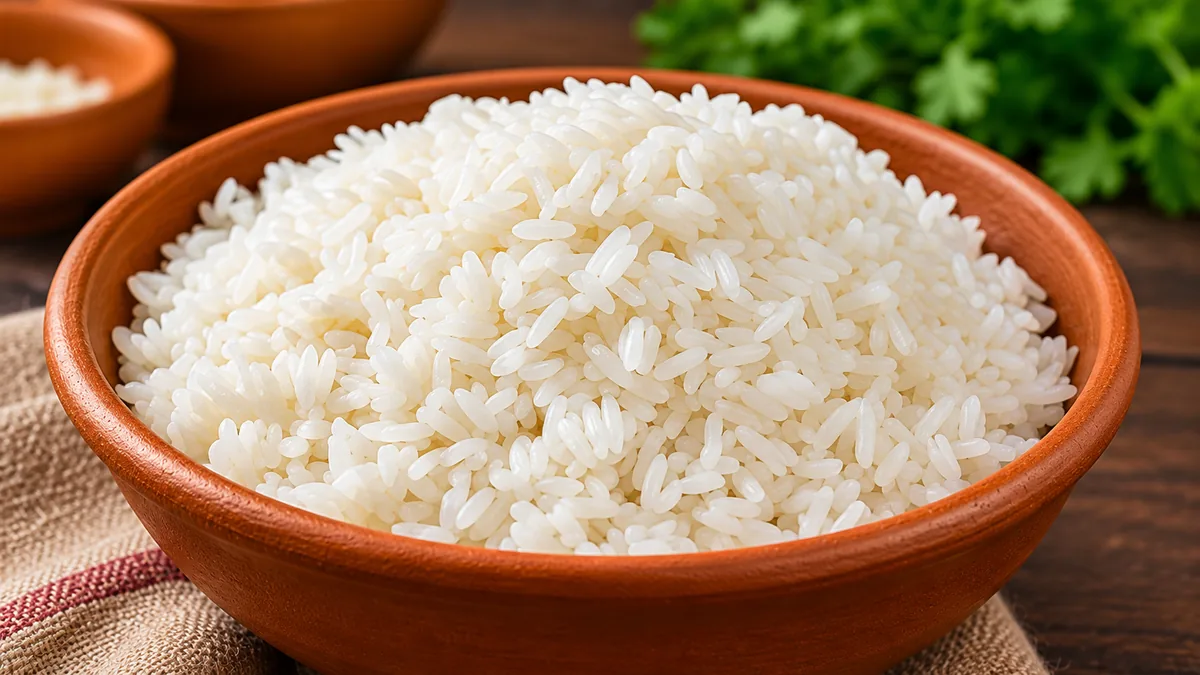
Yesterday’s rice can be safe when it is cooled quickly and refrigerated. Learn why smell is not a reliable safety check and how to reheat rice properly.
You open the fridge and find last night’s rice. It looks and smells fine, and could become quick fried rice. But age is not the only question. Cooked rice can cause food poisoning even when it appears normal.
Can you eat yesterday’s rice?
Yes, if it was cooled promptly, refrigerated and reheated safely. Rice left on the counter overnight should be discarded. Reheating cannot reliably undo unsafe storage, and the sniff test cannot tell you whether harmful bacteria or toxins are present.
The UK Food Standards Agency (FSA) gives rice-specific advice: cool it as quickly as possible, ideally within one hour; keep it refrigerated for no more than 24 hours before reheating; and reheat it only once, until steaming hot throughout. Other countries’ general leftover rules can be less strict, so follow your local authority’s advice. When in doubt, the rice-specific one-day approach is a simple, cautious choice.
The science behind leftover rice
Uncooked rice may contain spores of Bacillus cereus, a bacterium found in the environment. Ordinary cooking kills many active bacteria but may not destroy these hardy spores. If cooked rice sits warm for too long, spores can grow into bacteria, which may multiply and produce toxins. Rice is not the only food involved, but the link between rice and this illness is why people sometimes call it “fried rice syndrome.” The FSA describes the spores surviving cooking, while the FDA notes that the vomiting-type toxin cereulide is heat-resistant.
Does reheating rice kill the bacteria?
Thorough reheating matters: it can kill many bacteria that grew during storage. But it does not turn rice that was left out too long into safe rice. Some spores can survive heat, and reheating may not destroy cereulide that formed beforehand. Think of reheating as the final step for rice that was stored properly, not a rescue plan for rice with an uncertain history.
For a microwave, cover the rice, heat it until steaming hot throughout, and stir partway through so the centre does not stay cool. On the hob, stir as it heats. Reheat only the portion you plan to eat.
How long can cooked rice sit out?
Don’t leave a pot of rice on the counter to cool slowly, and never keep it there overnight. The FSA advises cooling rice quickly, ideally within one hour. In the United States, FoodSafety.gov’s general leftover guidance is to refrigerate within two hours—or one hour above 90°F (32°C)—and use leftovers within three to four days. The FSA is stricter for rice specifically: chill it within an hour and use it within 24 hours. In a hot kitchen, portion rice shallowly and chill it promptly; follow local food-safety guidance.
Five leftover-rice mistakes to avoid
- Leaving rice in the cooker or pan overnight. A lid keeps dust out; it does not keep rice safely hot or cold. Refrigerate leftovers promptly, or use a rice cooker’s keep-warm setting only if it reliably keeps the rice hot.
- Waiting for a big pot to cool on the counter. Rice in a deep pot holds heat. Divide it into clean, shallow containers so it cools faster.
- Trusting the smell test. Food-poisoning bacteria and toxins may not change rice’s smell, taste or appearance. Never taste rice to check whether it is safe.
- Reheating the whole batch again and again. Each warm-and-cool cycle creates another chance for bacteria to grow. The FSA says to reheat rice no more than once; portion it before storing.
- Assuming frying or microwaving fixes poor storage.High heat cannot reliably remove toxins that formed while rice sat warm. If its storage history is uncertain, discard it.
How to store and reheat rice safely
- Save it only if you can chill it quickly. As soon as the meal is finished, spread extra rice in a shallow layer or divide it among small, clean containers.
- Get it into the fridge promptly. Aim to cool rice and refrigerate it within one hour, following the FSA’s rice-specific advice. Keep your refrigerator cold and store the rice covered once chilled.
- Use the rice within 24 hours. This is the FSA’s rice-specific refrigerated limit before reheating. Freeze rice promptly if you will not use it in that window, and thaw it in the refrigerator before reheating. The FSA advises freezing rice within one hour of cooking.
- Reheat once until steaming hot all the way through.Stir during microwave heating or frequently on the hob, then eat it straight away. Don’t cool and reheat the same portion again.
A quick visual reminder: portion → cool quickly → refrigerate → use within a day → reheat once. If you cannot remember how it was stored, do not judge it by smell; throw it away.
Fried rice, lemon rice and curd rice
Cold, safely refrigerated rice is handy for dishes such as fried rice and lemon rice because it is already cooked and easy to portion. It still needs to have been cooled and stored correctly. Adding lemon, spices or curd does not make rice safe if it spent too long at room temperature. Curd rice also needs prompt chilling because it contains a perishable dairy ingredient.
If your cooked rice was stored safely, try FullMeals’ spicy tomato egg garlic rice or lemon rice. For more quick meal ideas, see our guide to Indian dinners ready in 30 minutes.
Leftover-rice myths and facts
| Myth | Fact |
|---|---|
| “If it smells fine, it is safe.” | Food-poisoning bacteria or toxins may not affect smell or appearance. Storage history matters. |
| “The microwave kills everything.” | Microwaves can leave cold spots, and reheating cannot reliably remove heat-resistant toxin already formed. |
| “Rice becomes poisonous as soon as it is a day old.” | Age alone is not the cause. Time and temperature control matter; the FSA recommends using refrigerated rice within 24 hours. |
| “Keeping it covered overnight makes it safe.” | A cover helps keep contaminants out, but it does not replace rapid cooling and refrigeration. |
Frequently asked questions
Can I eat rice cooked yesterday?
Yes, if it was cooled quickly, refrigerated promptly and kept cold. The FSA advises using it within 24 hours and reheating it only once.
Is cold rice safe straight from the fridge?
It can be eaten cold if it was cooked properly, cooled quickly, refrigerated and eaten within the recommended storage period.
Can I reheat rice in the microwave?
Yes. Cover it, stir partway through and heat until steaming hot throughout. Reheat only once.
Can I use yesterday’s rice for fried rice?
Yes, if it was cooled and refrigerated promptly and is still within the safe storage window. Frying does not fix rice that was stored unsafely.
How do I know when leftover rice is unsafe?
You may not be able to tell by looking or smelling it. If it sat out too long or you do not know how it was stored, discard it without tasting.
Yesterday’s rice can be useful when handled carefully. Cool it quickly, keep it cold and let storage—not smell—guide your decision.