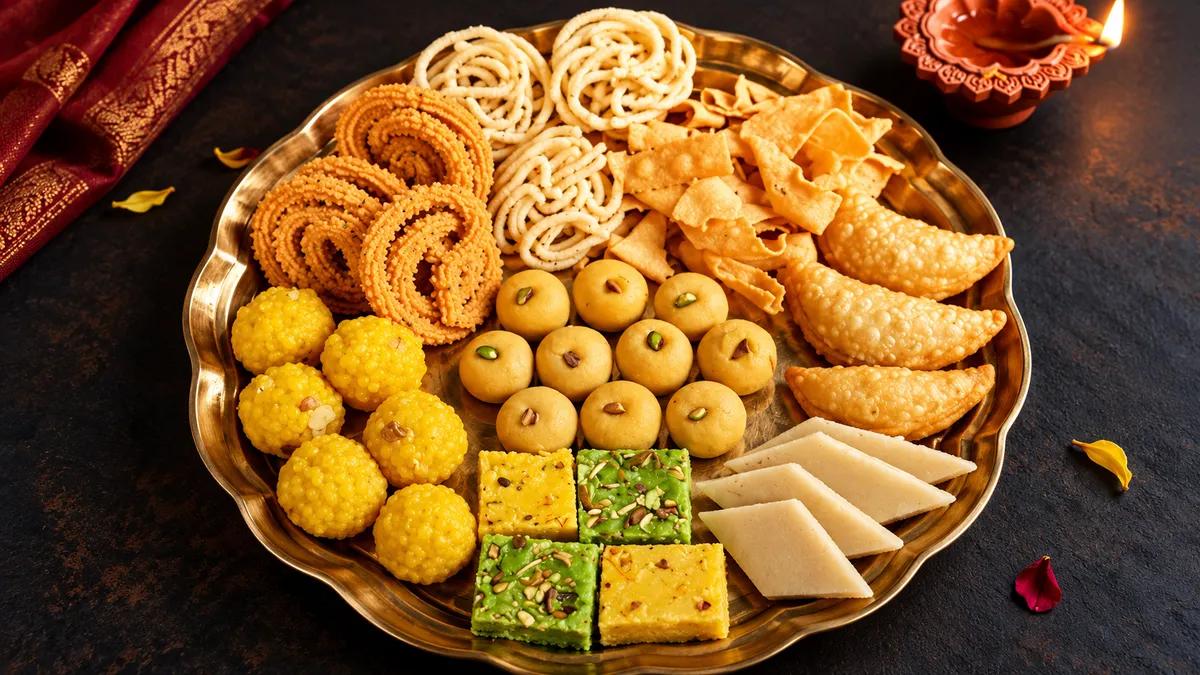
Diwali preparations do not have to happen all at once. Find out which sweets and savory snacks to prepare ahead, what tastes best fresh, and how to pace your cooking.
Diwali cooking is easier when every dish does not compete for the same afternoon. Plan the sweets that need time to cool or set first, keep dry snacks crisp in airtight tins, and leave syrup-soaked or fried treats closer to serving.
In 2026, Diwali (Deepavali) is listed for Sunday, November 8, on the U R Rao Satellite Centre holiday calendar. Observances can vary by region and family, so use this guide around your own celebration day.
What Diwali sweets and snacks can you make ahead?
Dry, fully cooked sweets and savory snacks are usually the easiest to prepare ahead because they cool and store well when kept dry. Make items such as Mysore Pak a day or two early to allow setting time. For moist or milk-based sweets, prepare closer to the celebration, follow the recipe’s storage directions, and refrigerate promptly. Make fried snacks in advance only after they have cooled completely before you seal them.
- Plan ahead: sweets that need cooling or setting, plus crisp dry snacks.
- Prepare closer to serving: soft, moist, milk-heavy desserts and sweets best enjoyed freshly fried or warm.
- Make on the day: the final frying or reheating for the freshest aroma and texture.
Ingredients, moisture, handling, and temperature all affect keeping quality and safety. There is no single shelf life for every Indian sweet: FSSAI’s illustrative guidance assigns different windows to different types, from same-day kalakand to longer-lasting dry-fruit sweets. Use the recipe’s directions for homemade food rather than applying one shelf-life chart to every variation.
Sweets worth planning ahead
Mysore Pak is a useful make-ahead choice because it needs to cool and set before you cut it. Make it when you have an unhurried stretch of time, transfer it to a clean dry tin only after it has set, and keep the pieces protected from humidity. The FullMeals Ghee Mysore Pak recipe lists 10 minutes of prep, 20 minutes of cooking, and 2 hours to set, for 150 minutes total. That setting time matters when planning.
Besan Modak is another option to prepare before guests arrive, but its FullMeals recipe includes milk. Shape it after the mixture’s 10-minute rest, then cool and refrigerate leftovers promptly instead of treating it like a dry shelf-stable sweet. The recipe lists 10 minutes of prep, 15 minutes of cooking, and 35 minutes total.
Gulab Jamun is more flexible than its “fresh” reputation suggests: you can prepare it earlier, but allow time for the syrup soak and handle leftovers according to the recipe. The FullMeals instant-mix version lists 25 minutes of prep and cooking, then asks for at least 30 minutes of soaking. Set aside roughly an hour before serving rather than counting only the active cooking time.
Keep homemade Diwali snacks crisp
Murukku, thattai, ribbon pakoda, and similar dry snacks can be fried ahead if you cool them fully first. Warm snacks release steam inside a closed container; trapped moisture softens the crust. Once cool, pack them in a clean, dry, airtight tin and keep it away from the stove, steam, and damp serving spoons. If you are making several varieties, store them separately so delicate pieces do not break and stronger aromas do not mingle.
Fry in manageable batches and let excess oil drain before cooling. Avoid stacking snacks while warm. For the best crunch, open the tin only when you are ready to serve and return leftovers with a dry spoon. These texture tips do not establish a fixed safe storage period; use your recipe’s storage guidance and discard food that has been contaminated or handled unsafely.
What is better made closer to serving?
Freshly fried snacks have their best aroma soon after cooking, so fry a small final batch shortly before guests arrive if you can. Syrup-based sweets such as Gulab Jamun can be cooked earlier, but their soaking time must be included in the schedule. Soft dairy sweets and desserts with fresh cream or cut fruit are best handled in smaller batches and kept chilled until serving.
Keep perishable foods out of the room-temperature serving area for no more than two hours; when the room is hotter than 32°C (90°F), use a one-hour limit. Refrigerate leftovers promptly. These are general guidelines for perishable foods, not a claim that every traditional sweet has the same storage needs. Follow local food-safety advice and your recipe’s instructions.
A simple Diwali cooking timeline
- 3–4 days ahead: check recipes, servings, moulds, tins, and ingredient quantities. Shop for shelf-stable ingredients and chop or measure what can be prepared safely ahead.
- 1–2 days ahead: make sweets that need cooling and setting, such as Mysore Pak. Prepare dry snacks if your recipe allows; cool completely before packing.
- The day before: make any remaining dry sweets or snacks. Label containers and keep milk-based or other perishable items refrigerated as directed.
- On the day: fry a small fresh batch if desired, finish syrup-soaked sweets with enough time to absorb the syrup, and bring out only the portions you plan to serve.
Scale the plan to your menu. A few well-chosen dishes are easier to manage than several recipes all needing the stove at once.
Common make-ahead mistakes to avoid
- Sealing snacks before they cool: wait until there is no warmth or visible steam.
- Forgetting setting and soaking: include those minutes in the schedule, not just prep and cooking time.
- Leaving dairy sweets out all evening: serve small portions and return the rest to the refrigerator promptly.
- Putting different snacks in one tin: separate them to protect crunch, shape, and flavor.
- Making the whole menu on the festival day: move suitable measuring, chopping, setting, and dry-snack cooking to earlier days.
Frequently asked questions
How early can I make Diwali sweets?
It depends on the ingredients and method. Dry sweets that set firmly are often convenient to make a day or two ahead. Keep dairy-rich or moist sweets chilled and follow the specific recipe’s storage instructions.
How do I keep fried Diwali snacks crisp?
Drain and cool them completely, then store them in a clean, dry, airtight container away from steam and moisture.
Should homemade Gulab Jamun be refrigerated?
Follow the linked recipe’s storage directions and refrigerate leftovers promptly when they contain perishable ingredients or will not be served soon. Avoid leaving perishable food out for extended periods.
What should I cook fresh on Diwali?
Consider frying a small final batch of snacks close to serving. Syrup-soaked sweets also need time to absorb syrup, so finish them with the recipe’s resting time in mind.
How can I plan without rushing?
Choose a short menu, shop and measure ahead, make setting sweets early, and leave only the final frying or assembly for the day.
FullMeals sweets to add to your plan
These published recipes have verified timings. The Mysore Pak time includes its two-hour setting period; the Gulab Jamun recipe’s 25-minute listed time does not include its additional 30-minute syrup soak. FullMeals’ published recipe library did not surface a verified Diwali savory-snack recipe for this guide, so the snack section focuses on planning and storage rather than linking an unverified recipe.
Plan for a calmer celebration
Start with the sweets that need time to set, keep crisp snacks dry, and leave delicate or freshly fried items until nearer to serving. A little sequencing gives you more choice at the table and less last minute work in the kitchen.