Homemade Paneer – Indian
Recipe by Haus Of HIMA
Ingredients
Main Ingredients
- 2 litersFull-fat milk
- 4-6 tablespoonsLemon juice or white vinegar
Step-by-Step Instructions
- 1.Heat the Milk
Pour the full-fat milk into a heavy-bottomed pot and place it on the stove. Heat the milk over medium-high heat, stirring occasionally with a spoon to prevent scorching, until it comes to a rolling boil and bubbles appear on the surface.
- 2.Curdle the Milk
Once the milk is boiling, reduce the heat to low. Gradually add the lemon juice or white vinegar, stirring gently. Continue stirring until the milk completely curdles, separating into solid white curds and yellowish-green whey. This should happen within 1-2 minutes.
- 3.Strain the Curds
Line a colander with a clean cheesecloth or a thin cotton kitchen towel. Place the colander over a large bowl or sink. Carefully pour the curdled milk into the cheesecloth-lined colander, allowing the whey to drain away.
- 4.Drain and Press the Paneer
Gather the edges of the cheesecloth to form a pouch around the curds. Gently squeeze out any excess whey. Place the wrapped curds back into the colander, flatten them slightly, and place a heavy object (like a cast-iron pan or a few cans) on top to press out more liquid. Let it press for 1-2 hours until the paneer is firm.
- 5.Cut the Paneer
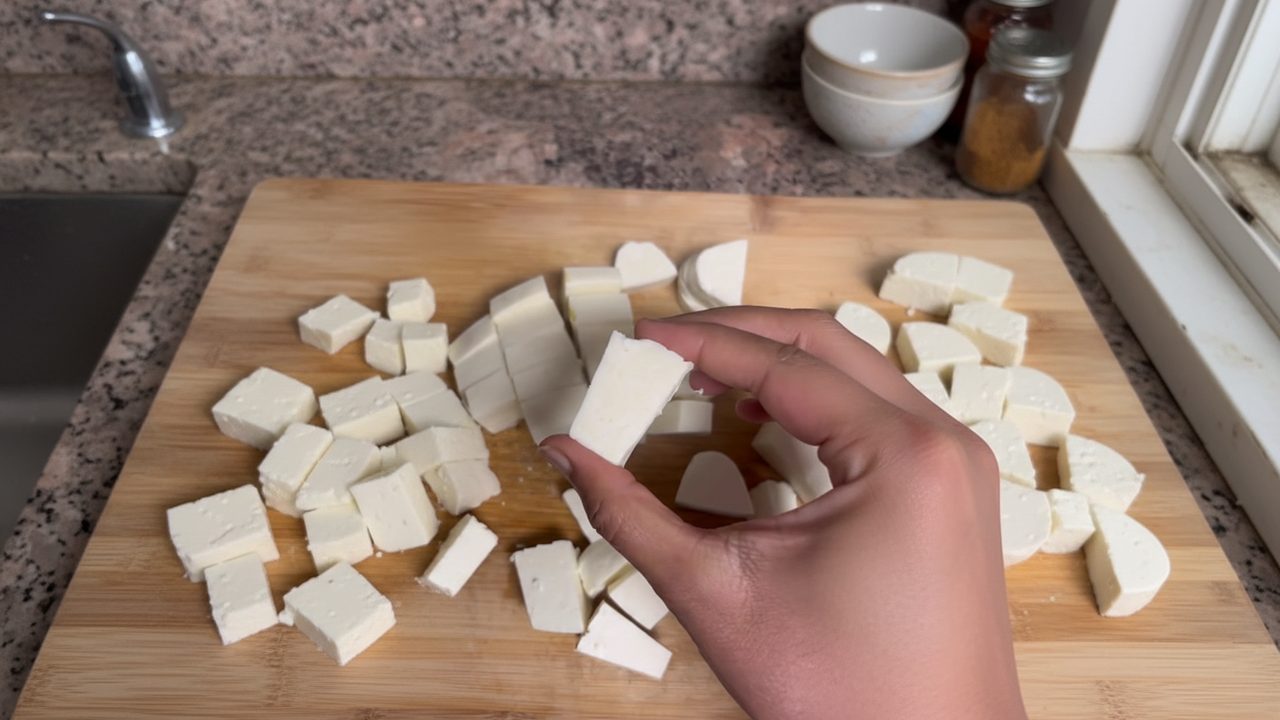
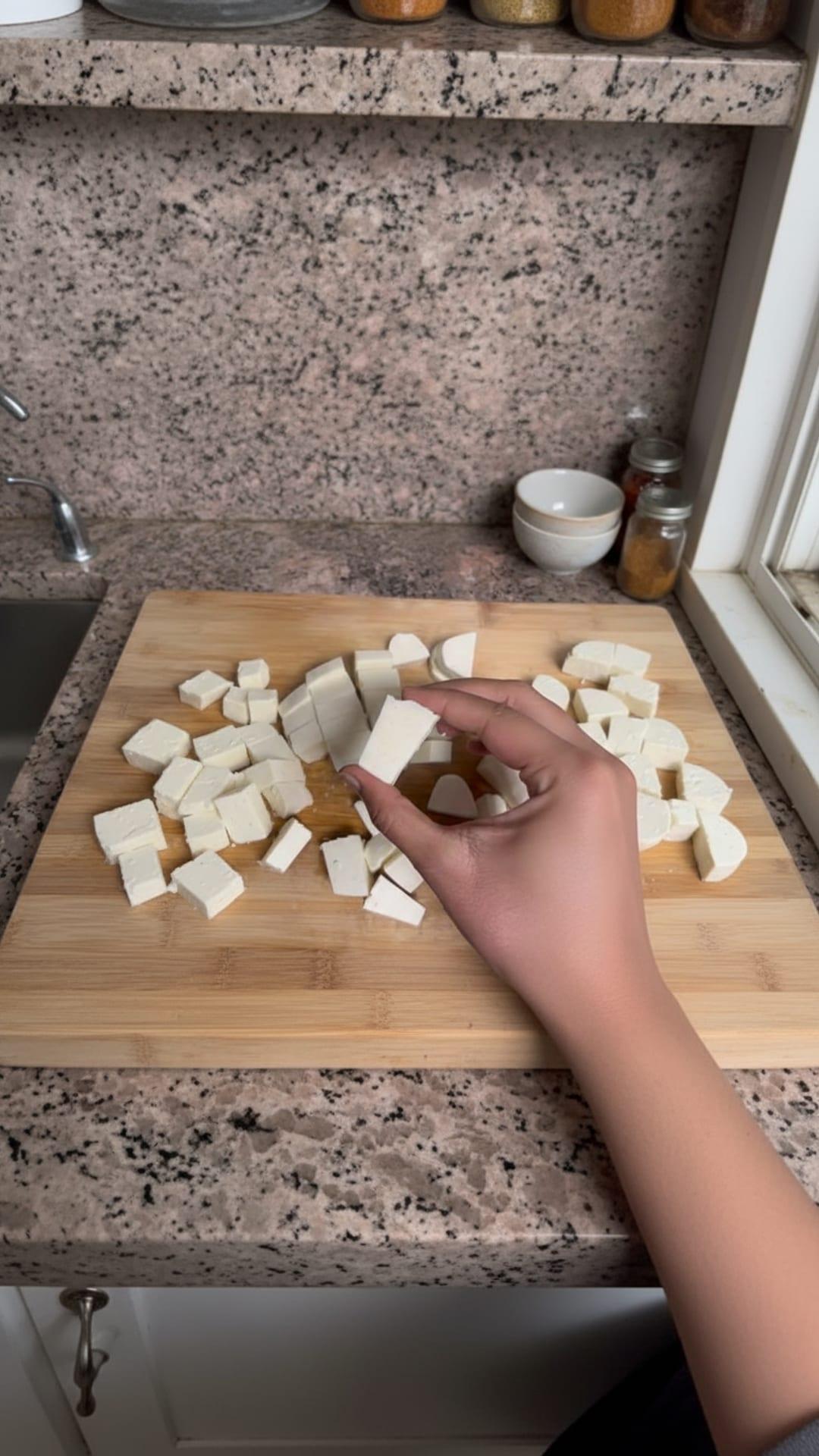
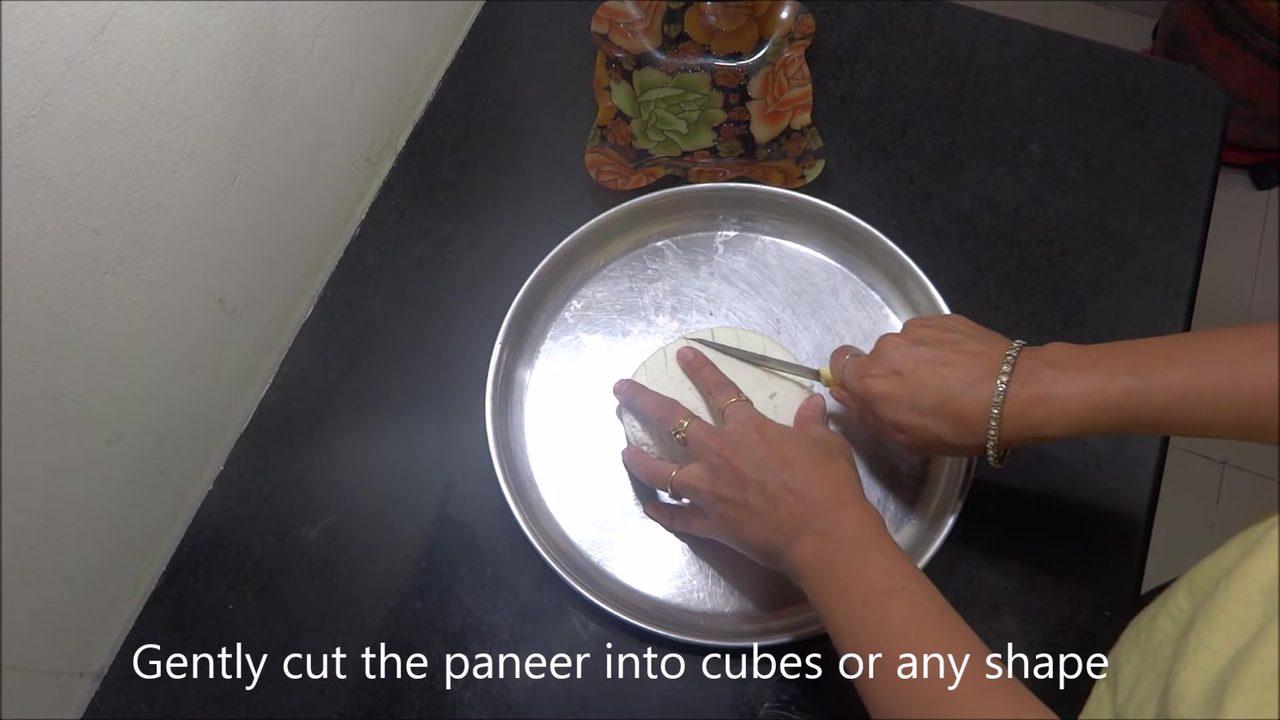
Once the paneer is firm and has cooled, unwrap it from the cheesecloth. Place it on a cutting board and cut it into desired shapes, such as cubes or triangles, as shown.


Comments (0)
Sign in to leave a comment on this recipe.
Loading comments...