Homemade English Muffins – Classic Breakfast
Recipe by Club Foody
Ingredients
Main Ingredients
- 2 1/4 tspActive dry yeast
- 1 1/4 cupsLukewarm milk (105-110°F / 40-43°C)
- 1 tbspHoney
- 1/4 cupMelted butter (room temperature)
- 1Large egg (room temperature)
- 3 1/2 cupsAll-purpose flour
- 1 tspSalt
- for oiling bowlCanola or grapeseed oil
- for dustingCornmeal or semolina
Step-by-Step Instructions
- 1.Proof the Yeast
In a stand mixer bowl, combine 2 1/4 teaspoons of active dry yeast, 1 1/4 cups of lukewarm milk (between 105-110°F / 40-43°C), and 1 tablespoon of honey. Stir to mix and let it prove for 7 to 8 minutes until foamy, indicating the yeast is active.
- 2.Combine Wet Ingredients
Once the yeast mixture is foamy, add 1/4 cup of melted butter and 1 large egg, both at room temperature. Using the paddle attachment, process on medium speed until well combined, about 1 minute.
- 3.Mix the Dough
Add 3 1/2 cups of all-purpose flour and 1 teaspoon of salt to the mixture. Process on low speed until just combined, then increase to medium speed. Mix for 7 minutes, scraping the sides and bottom of the bowl as needed to ensure all ingredients are incorporated. The dough will be very sticky.
- 4.First Rise
Transfer the sticky dough to a large bowl that has been generously oiled with canola or grapeseed oil. Cover the bowl with a clean dish towel and transfer it to a draft-free area, such as an oven with no heat on. Let the dough rise for 2 hours, or until it doubles in size.
- 5.Refrigerate Overnight
After the first rise, cover the bowl with plastic wrap and transfer it to the refrigerator for at least 8 hours, or preferably overnight. This slow fermentation develops flavor.
- 6.Prepare for Shaping
The next day, line a large baking sheet with either a silicone mat or parchment paper. Evenly sprinkle the lined sheet with cornmeal or semolina, then set it aside.
- 7.Shape the Muffins
On a well-floured work surface, gently drop the dough and form it into a ball by pulling the edges under. Flour the top of the dough and your hands. Gently spread the dough out to about 1/2 inch (1.25 cm) thickness. Be careful not to knock out the air. If the dough starts to retract, let the gluten relax for a minute or two before continuing.
- 8.Cut and Arrange
Using a 3-inch (or 3 1/2-inch) cookie cutter, dip it in flour each time before cutting rounds from the dough. Transfer the cut rounds to the prepared baking sheet. Gather any dough scraps, gently fold them under to form a new ball, flour the work surface, stretch the dough again to 1/2 inch thick, and cut more rounds. Repeat this process until all the dough is used.
- 9.Second Rise
Once all the muffins are cut and on the baking sheet, sprinkle more cornmeal on top of each muffin. Cover the baking sheet with a clean dish towel and let the muffins prove for 30 minutes.
- 10.Preheat and Cook
While the muffins are proving, heat a cast iron pan on medium heat until it's very hot. Once the proving time is over, reduce the heat to medium-low. Lightly sprinkle the pan with more cornmeal. Working in batches, place about 3 to 4 muffins in the pan, leaving 2 inches (5 cm) in between them as they will expand. Place a lid on the pan and cook for 8 to 10 minutes, or until golden brown on the bottom.
- 11.Flip and Finish Cooking
Flip the muffins to cook the other side. Place the lid back on and cook for a little less time, about 7 minutes, or until the second side is golden brown and the internal temperature reaches 200°F (93°C). Transfer the cooked muffins to a wire rack to cool. Before starting the next batch, you can push any remaining cornmeal to the side or remove it if it's burning. Lightly sprinkle fresh cornmeal for each new batch.
- 12.Serve and Enjoy
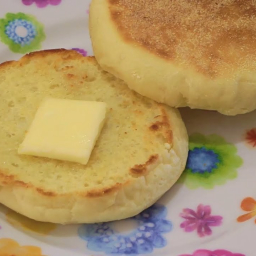
Once cooled, slice the English muffins with a serrated knife. Serve them with butter, jam, or use them as a base for Eggs Benedict. Enjoy your incredibly light, soft, and fluffy homemade English muffins!





Comments (0)
Sign in to leave a comment on this recipe.
Loading comments...