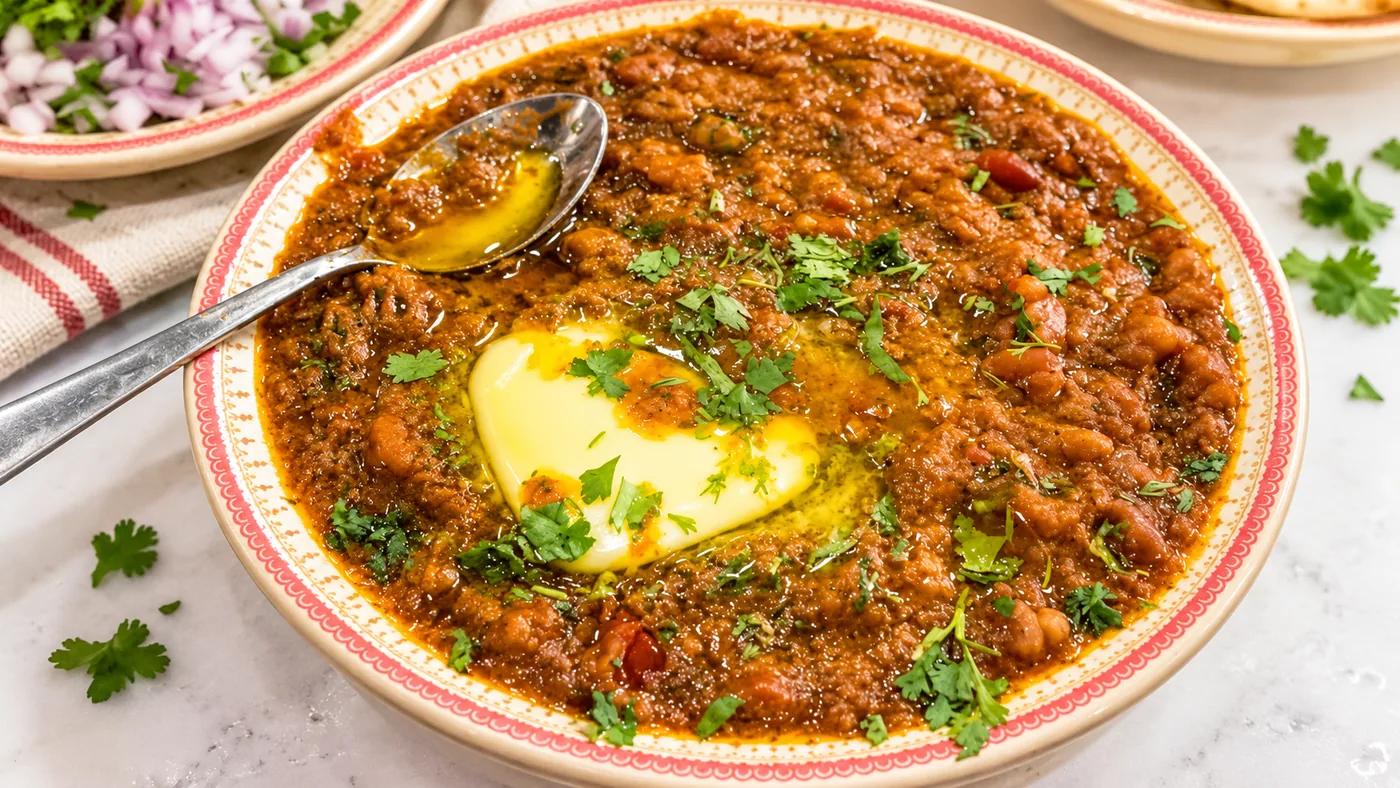
What makes Mumbai’s Sardar Pav Bhaji so memorable? Explore its buttery style, the techniques behind rich bhaji, and a practical inspired recipe for home cooks.
A good plate of pav bhaji is built for the last swipe of pav through the bhaji: hot, tangy vegetables, a little heat, chopped onion, lemon and bread toasted on the same buttery griddle. Sardar Refreshments in Tardeo is one of Mumbai’s most discussed stops for this dish, known especially for a conspicuously rich, butter-heavy style.
That reputation is not a claim that every diner prefers it. A 2018 Condé Nast Traveller India’s 2018 review described daily queues at the Tardeo institution and its strikingly buttery bhaji, while also finding the flavour divisive. That contrast helps explain why the place stays in the conversation: Sardar’s version is a very particular expression of Mumbai pav bhaji, not a universal template for the dish.
Why Sardar Pav Bhaji is famous in Mumbai
Sardar Refreshments is on Tardeo Road, opposite the bus depot, in South Mumbai. The same Condé Nast guide placed it among the city’s notable pav bhaji destinations and reported that it had appeared in city guides, television programmes and newspaper coverage. Its defining public image is easy to understand: a generous, butter-rich bhaji, pav toasted on a hot surface, and a busy neighbourhood setting where the dish is the main event.
The coverage is also usefully honest about taste. The writer thought the butter could overwhelm the flavour; other diners praise the rich style, while some find it too heavy. Food reputation is made through repeat attention and strong opinions as much as through consensus. Sardar is famous for a distinctive excess, but the home cook can borrow the useful parts—deeply cooked masala, well-mashed vegetables and properly toasted pav—and decide how much butter feels right.
A Mumbai street-food classic, with more than one origin story
Pav bhaji is now closely tied to Mumbai, where a vegetable mash and bread roll make a filling meal that can be served quickly from a tawa. One commonly told history connects the dish to the city’s textile-mill workers and the need for a substantial meal during a short break. The story is not settled: accounts differ about who first made it and when. A 2025 The Indian Express feature on the dish’s history presents the mill-worker account as a widely reported explanation, not proof of one inventor. Sardar’s restaurant story is separate; there is no reliable first-party history establishing that it created pav bhaji.
The food itself keeps changing. As Condé Nast Traveller Indianotes, cooks differ in the vegetables, spice, colour and texture they prefer—from a smooth mash to a chunkier khada style. Butter is common, though the amount varies. Sardar’s rich version sits at one end of that broad spectrum.
What makes the bhaji taste full and balanced?
Butter is noticeable, but it cannot rescue undercooked tomatoes, under-seasoned vegetables or a watery pan. A satisfying bhaji has several layers: onion and capsicum cooked until sweet, tomatoes given time to lose their raw edge, pav bhaji masala bloomed in fat, and vegetables mashed until they hold together. A little lemon at the end sharpens the richness. These are general cooking principles, not a description of Sardar’s private recipe.
Aim for bhaji that is moist and scoopable. It should settle back into the pan after a spatula passes through, not run like soup or sit in a dry lump. Mash most of the vegetables, but leave a little texture if that is what you enjoy. Keep the seasoning slightly bold because the pav is mild and the lemon and onion will soften each bite.
How to make Sardar-inspired Pav Bhaji at home
This is an original home-style recipe inspired by Mumbai’s butter-rich pav bhaji tradition. It is not Sardar Refreshments’ official recipe. It adapts the familiar potato, cauliflower, pea, capsicum and tomato base to a home pan, with butter added in measured stages. Makes 4 servings; allow about 15 minutes to prepare and 30 minutes to cook.
Ingredients
- For the bhaji: 3 medium potatoes (about 450 g), peeled and diced; 1 cup cauliflower florets; 1/2 cup green peas; 1 medium capsicum, finely chopped; 2 medium onions, finely chopped; 3 medium tomatoes, finely chopped; 1 tablespoon ginger-garlic paste; 2 tablespoons pav bhaji masala; 1 teaspoon Kashmiri chilli powder, or to taste; 1/4 teaspoon turmeric (optional); 1 tablespoon oil; 3 tablespoons butter, divided; 1/2 cup water, plus more only if needed; salt to taste; 1 tablespoon lemon juice.
- For serving: 8 pav rolls; 2 tablespoons butter for toasting; 1 small onion, finely chopped; a handful of chopped coriander; lemon wedges; extra butter to serve, optional.
Method
- Cook the vegetables. Put the potatoes, cauliflower and peas in a pot with water to cover. Simmer until a knife passes easily through the potatoes, about 12–15 minutes. Drain, reserving a little cooking water. Mash the vegetables roughly and set aside.
- Cook the masala base. Heat the oil and 1 tablespoon butter in a wide heavy pan or tawa over medium heat. Add the onions and cook for 5–7 minutes, stirring, until soft and lightly golden. Stir in the ginger-garlic paste and cook for 30 seconds. Add capsicum and cook until it softens slightly.
- Give the tomatoes time. Add tomatoes, pav bhaji masala, chilli powder, optional turmeric and 1 teaspoon salt. Cook for 7–9 minutes, mashing the tomatoes as they soften, until the mixture looks cohesive and no longer smells raw. If it catches, add a spoonful of water and lower the heat.
- Mash and simmer. Add the cooked vegetables and 1/2 cup water. Mash them into the masala with a potato masher, leaving a little texture if you like. Simmer for 8–10 minutes, stirring and scraping the base. Add reserved vegetable water a splash at a time only if the bhaji is too thick to stir.
- Balance the bhaji. Stir in the remaining 2 tablespoons butter. Taste and adjust salt, masala or chilli. Turn off the heat and add lemon juice. The finished bhaji should be thick enough to scoop and moist enough to spread on the tawa.
- Toast the pav. Split each roll without cutting all the way through. Melt butter on a clean part of the pan over medium-low heat. Toast the cut sides until golden and crisp at the edges, then turn briefly to warm the outside. Lower the heat if the butter browns before the bread is toasted.
- Serve hot. Spoon bhaji into shallow bowls, top with coriander and optional butter, and serve with chopped onion, lemon wedges and warm pav.
Five mistakes that make pav bhaji less satisfying
1. Adding too much water
Excess water thins the vegetable flavour and makes the bhaji hard to scoop. Start with the measured half cup and add more only a little at a time. If it is already loose, simmer uncovered and stir until it thickens; avoid trying to hide the water with more butter or masala.
2. Rushing the tomato masala
Raw-tasting tomato and ginger-garlic can dominate an otherwise good batch. Cook the base until it darkens slightly, thickens, and smells rounded rather than sharp. Keep the heat moderate so it develops without scorching.
3. Leaving the vegetables too chunky
Large potato or cauliflower pieces make the bhaji break apart instead of spreading over the pav. Mash thoroughly enough for a cohesive base, then keep a few small pieces if you prefer a less smooth texture.
4. Expecting butter to do all the work
Butter brings aroma and a round finish, but the flavour still needs cooked vegetables, a properly developed masala, enough salt and a little acidity. Taste before adding an extra knob; lemon may be the adjustment the pan needs.
5. Toasting pav over high heat
High heat can burn the butter and bread before the centre warms. Use a medium-low flame, turn the rolls when the cut face is golden, and toast in batches so they sit flat against the pan.
How to serve it
Serve the bhaji straight from the pan while hot, with pav toasted just before eating. Chopped onion adds crunch; lemon brightens the butter and spice; coriander gives a fresh finish. Extra butter is optional, so let everyone add their own. These are home serving suggestions, not a claim about the restaurant’s exact plate.
Frequently asked questions
Why is Sardar Pav Bhaji famous in Mumbai?
Sardar Refreshments in Tardeo has longstanding visibility in Mumbai food coverage. A 2018 Condé Nast Traveller guide noted its queues and butter-heavy style; opinions about the taste differ.
What makes Mumbai-style pav bhaji different?
There is no single standard version. Many Mumbai preparations use a spiced vegetable mash cooked on a tawa and serve it with butter-toasted pav. Vegetable mix, spice, colour and smoothness vary by cook.
Can I make Sardar-inspired pav bhaji at home?
Yes. The recipe here borrows the broad idea of a rich, tawa-finished bhaji, but it is an independent adaptation, not the restaurant’s recipe.
Why does homemade pav bhaji become watery?
Vegetables release water, or too much liquid may be added before the masala has reduced. Drain cooked vegetables well, begin with a measured amount of water, and simmer uncovered if the bhaji needs to thicken.
Is butter the only reason restaurant pav bhaji tastes rich?
No. Butter adds richness, but developed masala, well-cooked vegetables, balanced seasoning and hot toasted pav all contribute to the result.
How do I get the right pav bhaji consistency?
Mash the vegetables until they form a cohesive base, then simmer until a spatula track closes slowly. Add liquid in small splashes if it gets too thick.
Want to make pav bhaji at home?
FullMeals has a separate Mumbai-style recipe with its own ingredients and steps. Open it for the complete recipe card, then use the technique notes above to adjust the texture and finish to your taste.
Sardar Refreshments’ pav bhaji has become a reference point because it leans so confidently into richness. At home, the more useful lesson is balance: cook the masala patiently, control the water, mash to the texture you like, and toast the pav gently. Then let butter play its part without asking it to carry the whole dish.