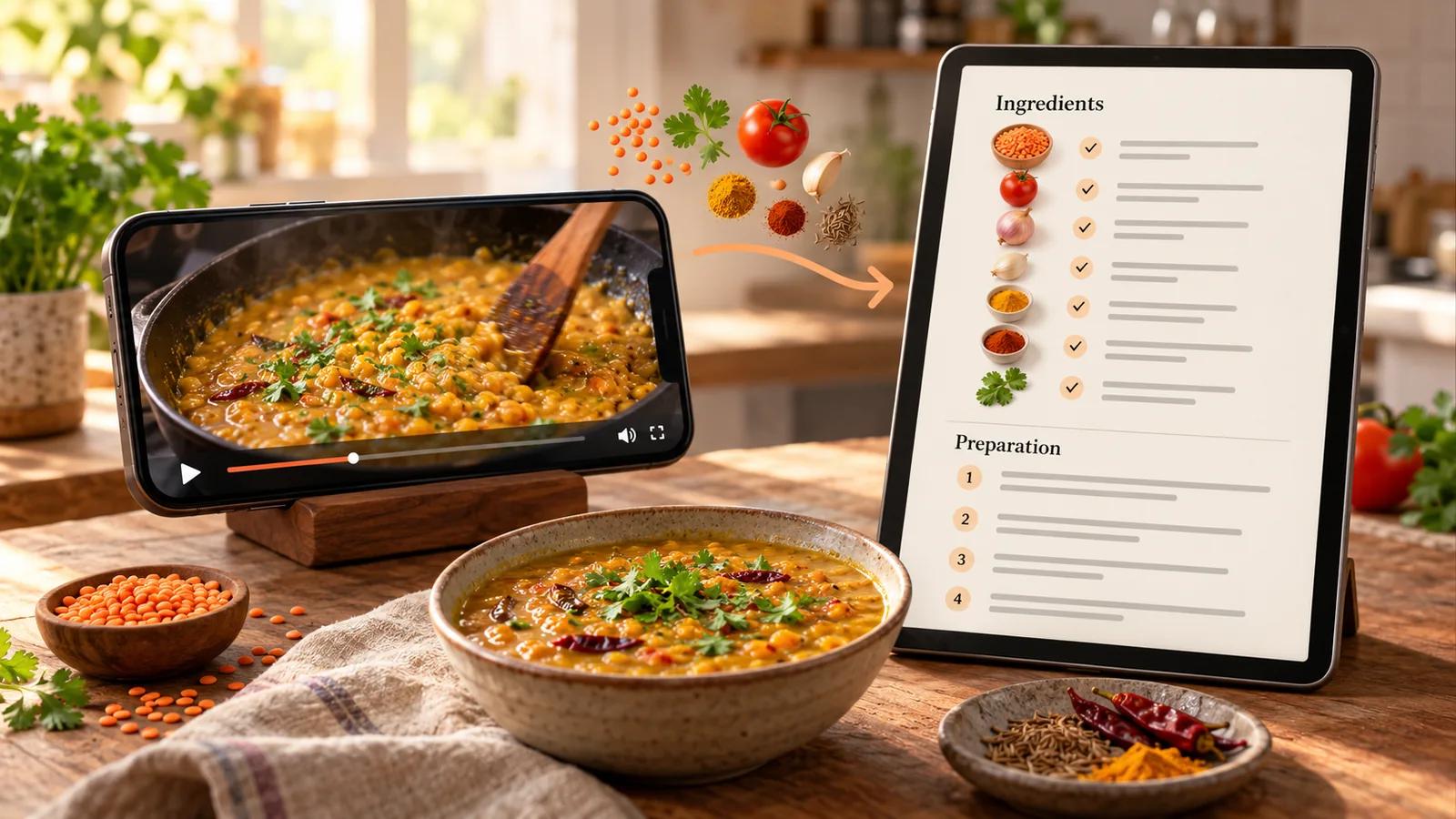
Cooking videos are inspiring, but they are not always convenient to follow while your hands are busy in the kitchen. Here’s how to turn them into practical, step-by-step recipes.
Cooking videos show things a written recipe can only describe: how a dough feels, when onions are ready, or how to fold a dumpling. But once you start cooking, finding a quantity or the next step can mean pausing, rewinding, and scrubbing with busy hands.
In short: organize the ingredients, quantities, timings, and cooking steps into the order you need them. FullMeals can organize information available in a supported cooking video into a structured recipe, with the original source nearby for reference.
The two formats serve different needs: video is useful for technique and appearance; a recipe is easier to scan for ingredients and steps. Here’s how to make a cooking video easier to use in the kitchen.
Why cooking videos can be difficult to follow in the kitchen
Videos unfold from beginning to end, while cooking often calls for one quick detail. Ingredients may be mentioned at different points, quantities can appear briefly, and instructions sit alongside context or storytelling. With wet or busy hands, scrubbing back to the right moment is inconvenient. That is a difference in format, not a flaw in how creators teach.
What a useful recipe should extract from a video
A useful structured recipe is a concise cooking reference, not a transcript. It can organize:
- Ingredients and quantities, when stated
- Preparation notes and cooking actions
- Temperatures, timings, and step order
- Servings and tips explicitly provided by the creator
If the source doesn’t provide an exact quantity or timing, the recipe should not pretend it did. Keeping a missing detail visible is more useful than filling the gap with a guess.
Details may be scattered across the video: an ingredient can appear in the opening, while its quantity is mentioned just before it goes into the pan. Bringing those notes together helps you prepare before cooking and spot omissions while there is still time to check the source.
Keep the creator’s level of precision, too. If they say “a little” or “until golden,” those are the details the source provides; turning them into exact measurements or a fixed time would add certainty that was never there.
A better way to turn a cooking video into a recipe
Whether you take notes yourself or use a tool, this simple workflow makes the result easier to cook from:
- Start with the original video. Keep it handy for details that are easier to see than describe.
- Capture the cooking information. Note ingredients, stated quantities, timings, temperatures, and actions. Keep each amount beside the ingredient it belongs to, including qualifiers such as “about” or “to taste.”
- Separate instructions from other context. Keep cooking details and useful tips together, without repeating the surrounding narration. A creator’s note about why a technique works can be worth keeping; unrelated conversation usually is not needed in the cooking steps.
- Group ingredients clearly. Separate a sauce, marinade, or topping when the source treats it as its own part. This makes it easier to measure and prepare everything before turning on the heat.
- Put steps in cooking order. Number the actions so they are easy to follow while you cook. If preparation happens while something simmers or bakes, make that overlap clear instead of forcing every action into a misleading sequence.
- Preserve timing and cues. Include visual cues such as “until translucent” when the creator gives them. A stated time is a guide; the cue helps you judge what is happening in your own pan.
- Keep the source linked. Return to the creator’s video for technique, texture, or context. A source link also makes it clear where the cooking information came from.
Before you begin, read the steps once from top to bottom. Note any long resting or marinating time, preheat the oven if needed, and prepare ingredients that can be measured or chopped ahead. That short check helps prevent a recipe from catching you by surprise halfway through.
How FullMeals helps
FullMeals accepts supported YouTube cooking videos and Instagram Reels. It organizes the useful cooking information available from the source into a structured recipe, so ingredients and steps are easier to scan. Supported links can still fail or omit details, so review the result before cooking. See how the process works.
Depending on the source, a recipe can include ingredients, quantities, temperatures, numbered cooking steps, available timings, and a link back to the video.
Extraction can miss or misread details, so check the recipe against the source when a quantity or step seems unclear.
Conversion depends on the video being accessible and supported. A link may not work, and a quick review is useful even when a recipe is generated successfully. The original video remains the best reference for a visual detail or an explanation that is hard to capture in text.
Keep the original video as part of the recipe
Use the structured recipe for ingredients, step order, and quick lookups. Return to the video when you want to see batter thickness, browning, texture, or a technique in motion. They complement one another: the recipe is easy to scan, while the video preserves the creator’s visual guidance and context.
Fictional example — not a creator transcript
In the video: Cook the onions for about five minutes, then add the tomatoes.
Structured recipe: Step 3 — Cook the onions. Cook about 5 minutes, then add the tomatoes.
Always double-check important cooking details
Timings vary with the pan, heat, and amount of food; ovens can also differ. Use the creator’s visual cues as well as stated times and temperatures. Cook meat and other foods safely, and check unclear generated details against the original source before relying on them. When food safety depends on doneness, follow reliable guidance for the specific food rather than relying on a timer alone.
Try it with your next cooking video
The next time you find a cooking video you want to try, keep the original nearby and put its ingredients and steps into a recipe you can scan as you cook. Use whichever format helps at each moment.