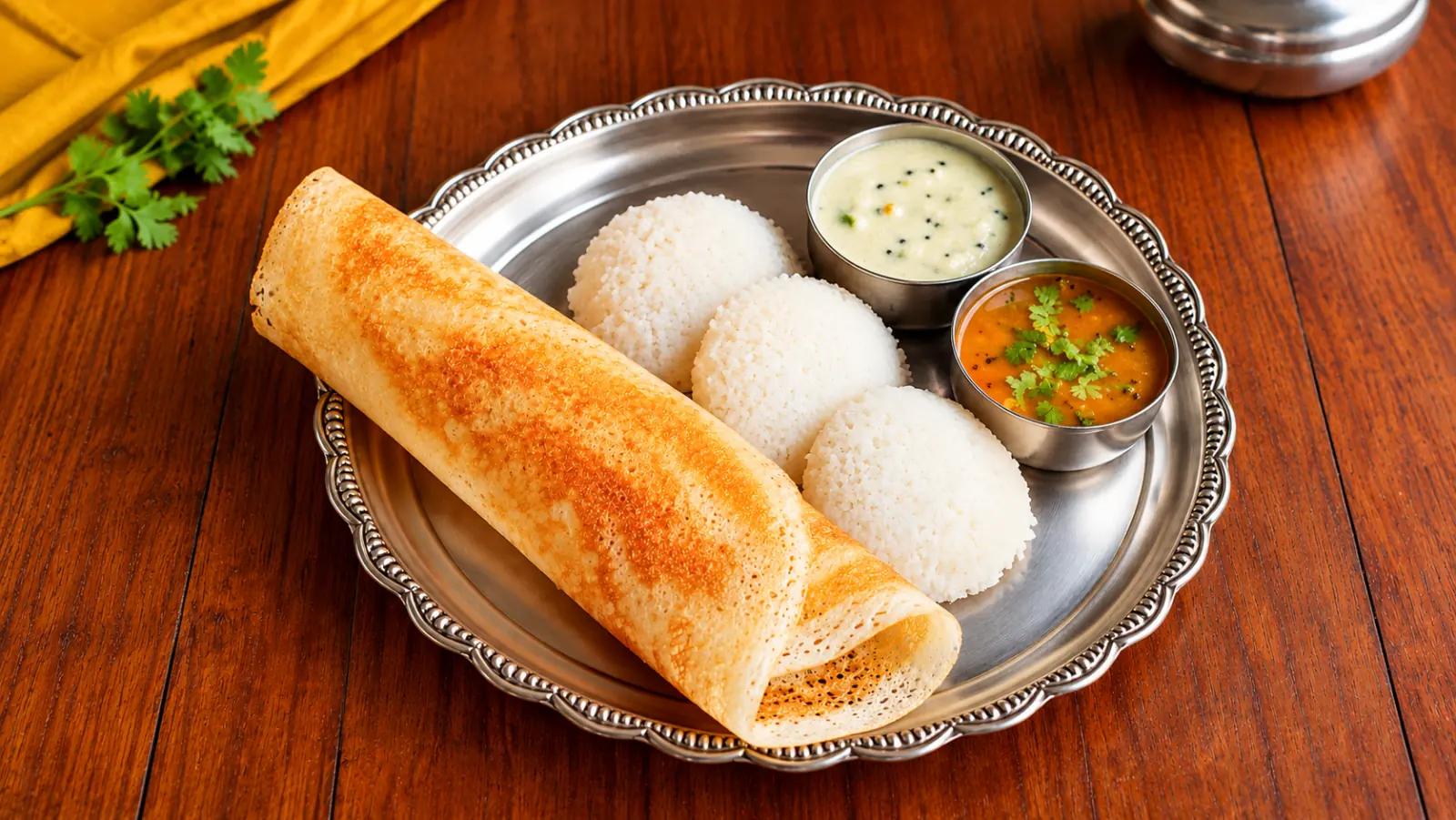
Make soft idli and crisp dosa from one fermented batter with a flexible rice-to-dal ratio, practical texture cues, and fixes for common problems.
One well-fermented batter can make both tender idli and crisp dosa. The useful trick is to keep the base batter thick, then loosen only the portion you plan to spread on the griddle. Rice, urad dal, soaking, grinding, and fermentation build the shared base; steaming and pan temperature give each dish its own texture.
Quick answer
Start with about three parts idli rice to one part urad dal by volume, grind them separately, then mix and ferment until the batter is visibly airy and risen. Keep some batter thick for steaming idli. Add a little water to another portion until it spreads easily for dosa. The 3:1 ratio is a starting point, not a guarantee: rice, dal, grinder, and room temperature all affect the result.
Ingredients and a practical rice-to-dal ratio
This small-batch formula makes a useful starting point for a shared batter:
- 3 cups idli rice or parboiled rice
- 1 cup whole or split, skinned urad dal
- ½ teaspoon fenugreek seeds, optional
- About 2–3 cups cool water for grinding, added gradually
- 1½ teaspoons fine salt to start, adjusted to taste
- Oil or ghee for greasing the idli moulds and dosa pan
A 4:1 rice-to-dal ratio is another common starting point. More urad dal can make the batter lighter, while rice choice and grinding method change how much water it needs. Use the texture cues below instead of treating either ratio as universal. If you weigh ingredients, record your own successful batch; cup weights vary with the grain and how it is filled.
Make and ferment the shared batter
- Wash and soak separately. Rinse the rice until the water is less cloudy. Rinse the dal, then soak rice and dal in separate bowls for about 4–6 hours. Fenugreek can soak with the dal. Cover each with several centimetres of water so the grains stay submerged.
- Grind the dal first. Drain it, saving some soaking water. Grind with small additions of cool water until it is smooth, light, and fluffy. Avoid pouring in all the water at once; a batter that becomes thin is harder to correct.
- Grind the rice. Drain and grind the rice with enough water to keep it moving. Aim for a fine, slightly grainy texture rather than a completely silky paste. Combine it with the dal in a large clean bowl.
- Mix and check thickness. Stir thoroughly so the two batters are evenly combined. The mixture should be thick but able to fall from a spoon in a slow ribbon. Leave room in the bowl for it to rise. Mix in the salt now, or after fermentation if that is your usual method and your climate calls for it.
- Ferment by sight and smell. Cover loosely and keep the bowl in a warm, draft-free spot. In a warm kitchen it may take around 8–12 hours; a cooler room can take longer. Look for bubbles, a lighter texture, and a noticeable rise. A clean, gently tangy smell is normal. Do not rely on the clock alone, and do not let the batter overflow.
Steam soft idli from the thick portion
Stir the fermented batter gently so it is even, but do not beat out all of its air. If it pours like water, it is too thin for reliable fluffy idli. Add salt if you held it back. Lightly grease the moulds and fill each cup about three-quarters full, leaving room for the idli to expand.
Steam over steadily boiling water for roughly 10–12 minutes, depending on mould size and the steamer. Check the centre with a clean skewer; it should come out without wet batter. Rest the tray briefly before loosening the idli with a damp spoon. Long steaming can make the surface dry and the centres firm, so use the skewer and the shape of your moulds as cues rather than extending the time automatically.
Spread crispy dosa from a loosened portion
Move only the dosa portion to a separate bowl. Add water a spoonful at a time until the batter flows easily from a ladle but still coats the back of a spoon. This keeps the idli portion thick and avoids thinning the whole batch. If the batter has become very sour or collapsed, it may not spread or brown as expected.
Heat a seasoned cast-iron or suitable non-stick tawa over medium heat. A few drops of water should sizzle and evaporate; if they disappear instantly and the pan smokes, let it cool slightly. Wipe the surface with a little oil, pour a ladle of batter in the centre, and spread it outward in thin circles. Drizzle a little oil or ghee around the edge. Cook until the top looks dry and the underside is golden and releases easily. A thin dosa usually needs no flip; fold it and serve. Thicker dosas can be turned briefly to finish the top.
Troubleshooting idli and dosa
| Problem | Likely reason | Practical fix |
|---|---|---|
| Idli turns hard | The batter did not rise enough, was too thin, or was steamed too long. | Check the rise before steaming, keep the idli portion thick, and test doneness early. |
| Dosa is not crisp | The batter is thick, the layer is heavy, or the pan is not hot enough. | Loosen a small portion, spread it thinner, and wait for the surface to dry before folding. |
| Batter does not ferment | The room is cool, the bowl is too cold, or the batter did not rise visibly. | Give it more time in a comfortably warm spot and judge by bubbles and rise, not a fixed deadline. |
| Dosa sticks | The pan is too cool, too hot, or not well seasoned. | Let the pan reach an even medium heat, wipe on a thin film of oil, and adjust heat between dosas. |
| Batter is very sour | It fermented longer than needed or stayed warm after rising. | Refrigerate risen batter promptly. Discard it if it has mould, unusual colour, or a rotten smell; do not taste questionable batter. |
Storage and safe handling
Once the batter has risen, refrigerate what you will not cook soon in a clean, covered container. Use a clean spoon each time and avoid leaving the bowl warm on the counter between meals. Fermented batter can smell mildly tangy, but mould, unusual colours, a slimy surface, or a rotten odour are reasons to discard it. Do not taste batter that may have spoiled. Storage life varies with ingredients, temperature, and how it was handled, so use it while fresh and follow local food-safety advice.
Frequently asked questions
Can I really use the same batter for idli and dosa?
Yes. Ferment one base batter, keep the idli portion thick, and thin only the portion you will spread for dosa. Cooking method and consistency make the textures different.
Is 3:1 the best idli dosa batter ratio?
It is a practical starting ratio by volume, not a rule. Some cooks use 4:1, and the best balance depends on the rice, dal, grinder, and the texture you prefer.
Which rice works for this batter?
Idli rice or parboiled rice is a common choice for a soft steamed result. Other rice can work, but it may absorb water differently and produce a different texture.
Why does idli become hard even when the batter rises?
The batter may be too thin, the dal may not have been ground light, or the idli may have steamed too long. Check one variable at a time and note what changes in your next batch.
Why is my dosa not crisp?
A thick layer, thick batter, or uneven pan heat can keep it soft. Thin the dosa portion gradually, spread it evenly, and allow the underside to brown before folding.
How long can I keep fermented batter?
There is no single time that suits every kitchen and batch. Chill it after fermentation, handle it cleanly, and discard it if it shows signs of spoilage.
One batter, two breakfast favourites
A thick, airy fermented batter is the shared starting point; gentle steaming makes idli, while a thinner pour and a well-heated pan make dosa. Begin with the 3:1 ratio, watch the batter rather than the clock, and adjust one step at a time to suit your kitchen. For more morning ideas, explore FullMeals breakfast recipes.