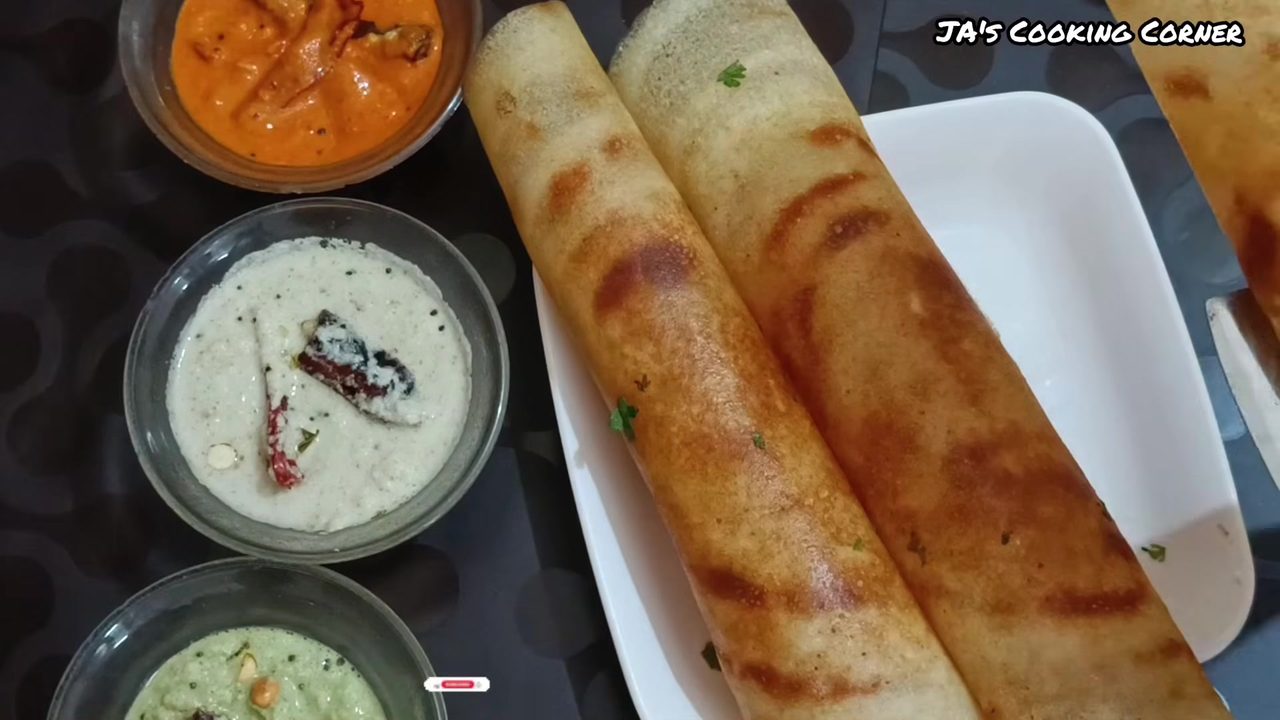
Crispy Dosa Recipe (2 Ingredients)
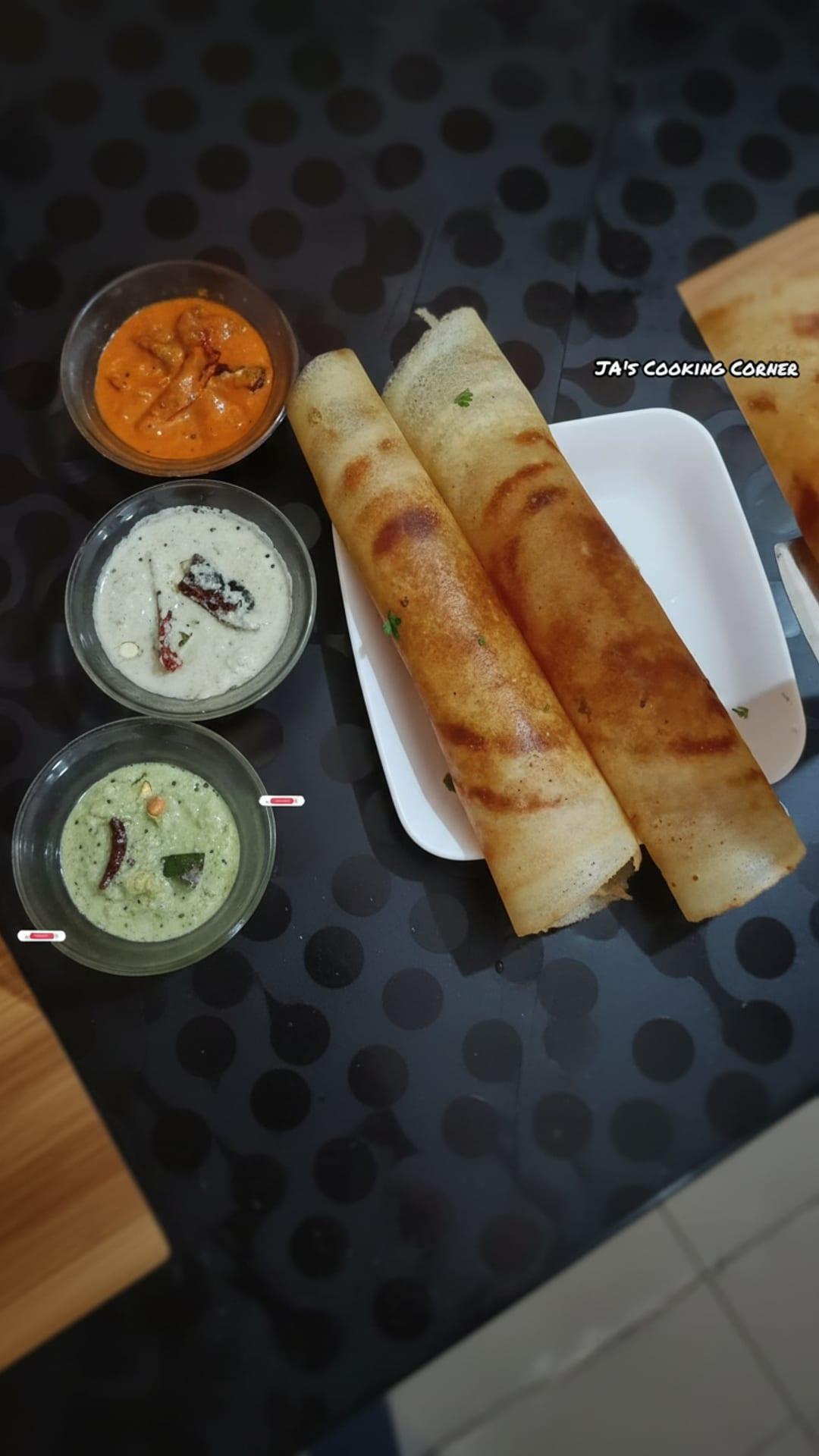
For Dosa Batter
For Cooking Dosa
Step-by-Step Instructions
Follow each step to make the recipe successfully.
Prepare Rice and Urad Dal
Take 3 cups of small broken rice (kanki) and 1 cup of urad dal in a bowl. Wash them thoroughly with water 2-3 times until the water runs clear. Then, soak the rice and dal in fresh water for .
Grind the Batter
After , drain the soaking water completely. Transfer the soaked rice and dal to a mixer grinder jar. Do not overfill the jar. Add about 1/2 cup of water to the jar. Grind the mixture into a very fine and smooth batter. The batter should not have any gritty texture when touched.
Ferment the Batter
Transfer the finely ground batter to a large bowl. Cover the bowl with a lid and let it ferment in a warm place for . In colder climates, it might take , or you can cover it with a towel to aid fermentation. The batter should rise and develop a bubbly, net-like texture, indicating proper fermentation.
Adjust Batter Consistency
Once fermented, check the batter consistency. It will likely be thick. Add salt to taste (about 1/4 tsp for the shown portion) and then gradually add a little water, mixing well, until the batter reaches a pouring consistency that is neither too thick nor too thin. This perfect consistency is crucial for crispy dosas.
Prepare the Tawa
Heat a cast iron tawa (griddle) on high flame. Once hot, sprinkle a few drops of water onto the tawa. The water should sizzle and evaporate immediately. Wipe the tawa clean with a cloth to balance its temperature. The tawa should be moderately hot, not too hot or too cold, before pouring the batter.
Cook the Dosa
Pour one ladleful of dosa batter onto the center of the tawa. Quickly spread the batter in a circular motion using the back of the ladle to form a thin, even circle. Keep the flame high while spreading. Once the batter starts to dry and the edges begin to cook, the flame to low. Drizzle ghee or oil around the edges and in the center of the dosa. Rotate the tawa by holding it with a cloth to ensure even cooking of the edges. Cook until the dosa turns golden brown and crispy, and the edges start to lift easily.
Serve the Dosa
Once the dosa is golden brown and crispy, gently lift it with a spatula and fold it. Serve immediately with your favorite chutneys. Before making the next dosa, repeat step 5 (sprinkle water, wipe tawa) to maintain the correct tawa temperature.
Before You Cook
Helpful details before you startIngredient SubstitutionsMissing something? View suitable alternatives.View 1 swap
No Ghee?
- Unsalted butter (1:1)
- Neutral oil (1:1, lacks the toasted note)
Plan Ahead
Complete this step earlier to save time later.
- View Step 1Prepare Rice and Urad Dal3 hours
Take 3 cups of small broken rice (kanki) and 1 cup of urad dal in a bowl. Wash them thoroughly with water 2-3 times until the water runs clear. Then, soak the rice and dal in fresh water for 3-4 hours.
- View Step 2Grind the Batter3 hours
After 3-4 hours, drain the soaking water completely. Transfer the soaked rice and dal to a mixer grinder jar. Do not overfill the jar. Add about 1/2 cup of water to the jar. Grind the mixture into a very fine and smooth batter. The batter should not have any gritty texture when touched.
- View Step 3Ferment the Batter
Transfer the finely ground batter to a large bowl. Cover the bowl with a lid and let it ferment in a warm place for 5-6 hours. In colder climates, it might take 8-10 hours, or you can cover it with a towel to aid fermentation. The batter should rise and develop a bubbly, net-like texture, indicating proper fermentation.
- View Step 4Adjust Batter Consistency
Once fermented, check the batter consistency. It will likely be thick. Add salt to taste (about 1/4 tsp for the shown portion) and then gradually add a little water, mixing well, until the batter reaches a pouring consistency that is neither too thick nor too thin. This perfect consistency is crucial for crispy dosas.
Helpful Tips
Small details that can improve the final result.

Comments (0)
Sign in to leave a comment on this recipe.
Loading comments...