Kerala Avial With English Subtitles
Recipe by Sujitha
Ingredients
Main Vegetables
- as needed, chopped into sticksCarrot
- as needed, chopped into sticksCucumber
- as needed, chopped into sticksRaw banana
- 1/2, choppedDrumstick
- as needed, chopped into sticksElephant foot yam
- as needed, chopped into sticksSnake gourd
- 2, wholeGreen chili
- 4, cutBiliambi (Pulianjikka)
- 1 1/2 tbspCurd
- small amount, soaked in 1/4 cup waterTamarind
- 1 tbsp for cooking, 1 1/2 tbsp for garnishCoconut oil
- to tasteSalt
- as needed for garnishCurry leaves
For the Coconut Paste
- 2 cupsGrated coconut
- 1 1/2 tspCumin seeds
- 1, cutShallot
- 2, cutGreen chili
- 2 sprigsCurry leaves
- 1 tspTurmeric powder
- 1/4 tspKashmiri chili powder
Step-by-Step Instructions
- 1.Prepare Coconut Paste (First Grind)
In a mixer jar, add 1/4 cup grated coconut, 1 1/2 tsp cumin seeds, 1 cut shallot, 2 cut green chilies, 2 sprigs curry leaves, 1 tsp turmeric powder, and 1/4 tsp Kashmiri chili powder. Grind these ingredients finely to a smooth paste.
- 2.Prepare Coconut Paste (Second Grind)
Add the remaining 1 3/4 cups of grated coconut to the mixer jar. Pulse it coarsely, similar to a thooran (stir-fry) consistency. Combine this pulsed coconut with the finely ground paste in a bowl and mix well by hand.
- 3.Cook Elephant Foot Yam
Heat 1 tbsp coconut oil in a brass uruli (or heavy-bottomed pan). Add the chopped elephant foot yam and sauté briefly. Pour 1 1/2 cups of water, ensuring the yam is submerged. Add 1/4 tsp cumin seeds, 1/4 tsp turmeric powder, 1/4 tsp Kashmiri chili powder, and salt to taste. Mix well and cook until the yam is tender.
- 4.Add Remaining Vegetables and Cook
Once the elephant foot yam is tender, add the remaining chopped vegetables: carrots, cucumber, raw banana, drumstick, snake gourd, and whole green chilies. Add a generous amount of curry leaves. Cover the uruli with a banana leaf and cook until all vegetables are tender.
- 5.Add Biliambi and Tamarind Water
After the vegetables are partially cooked, add the 4 cut biliambi pieces and the strained tamarind water. Mix gently and cover again with the banana leaf to continue cooking.
- 6.Incorporate Coconut Paste
Once the vegetables are fully cooked and most of the water has evaporated, add the prepared grated coconut paste on top of the vegetables. Gently press the paste down with a spatula. Cover the uruli with a banana leaf and let it steam for about 5 minutes on low heat, then turn off the flame.
- 7.Final Seasoning and Mixing
After 5 minutes, remove the banana leaf. Gently mix the avial, ensuring the coconut paste is well combined with the vegetables. Add more fresh curry leaves and drizzle 1 1/2 tbsp of coconut oil over the avial. Mix thoroughly.
- 8.Add Curd
Allow the avial to cool slightly (it should not be boiling hot). Add 1 1/2 tbsp of curd and mix gently until well incorporated. Ensure the curd does not curdle due to excessive heat.
- 9.Serve
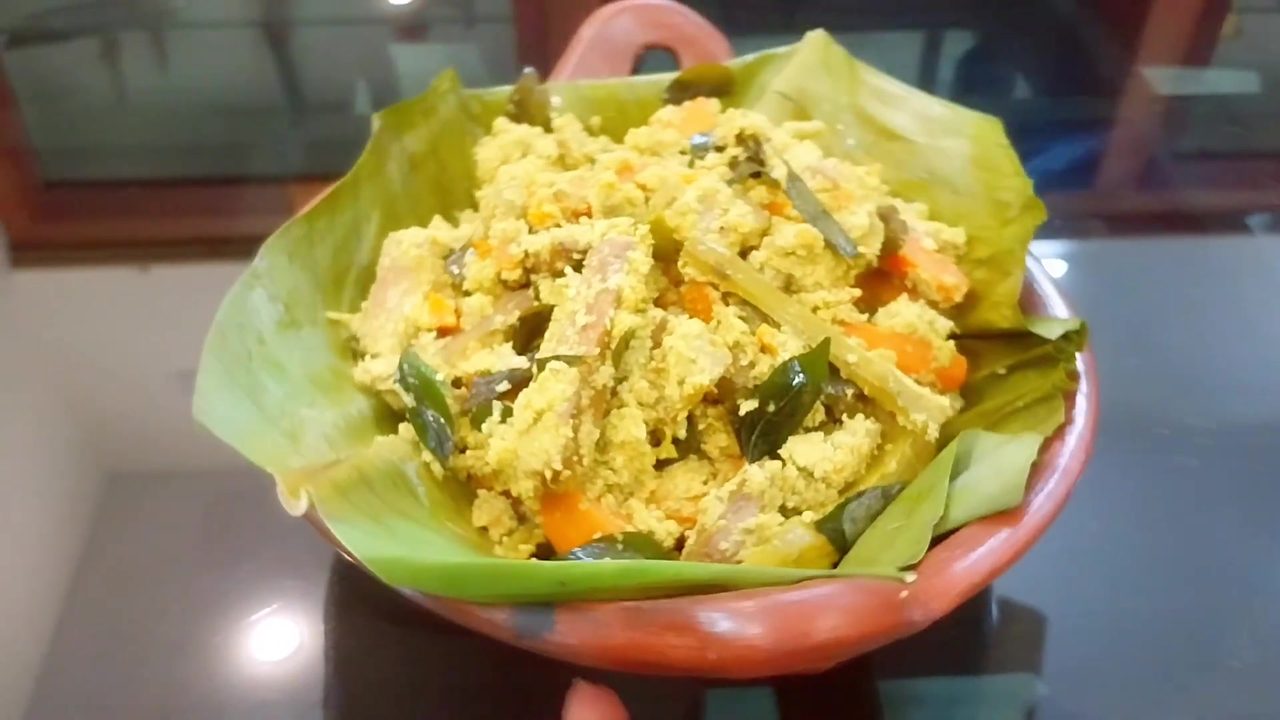
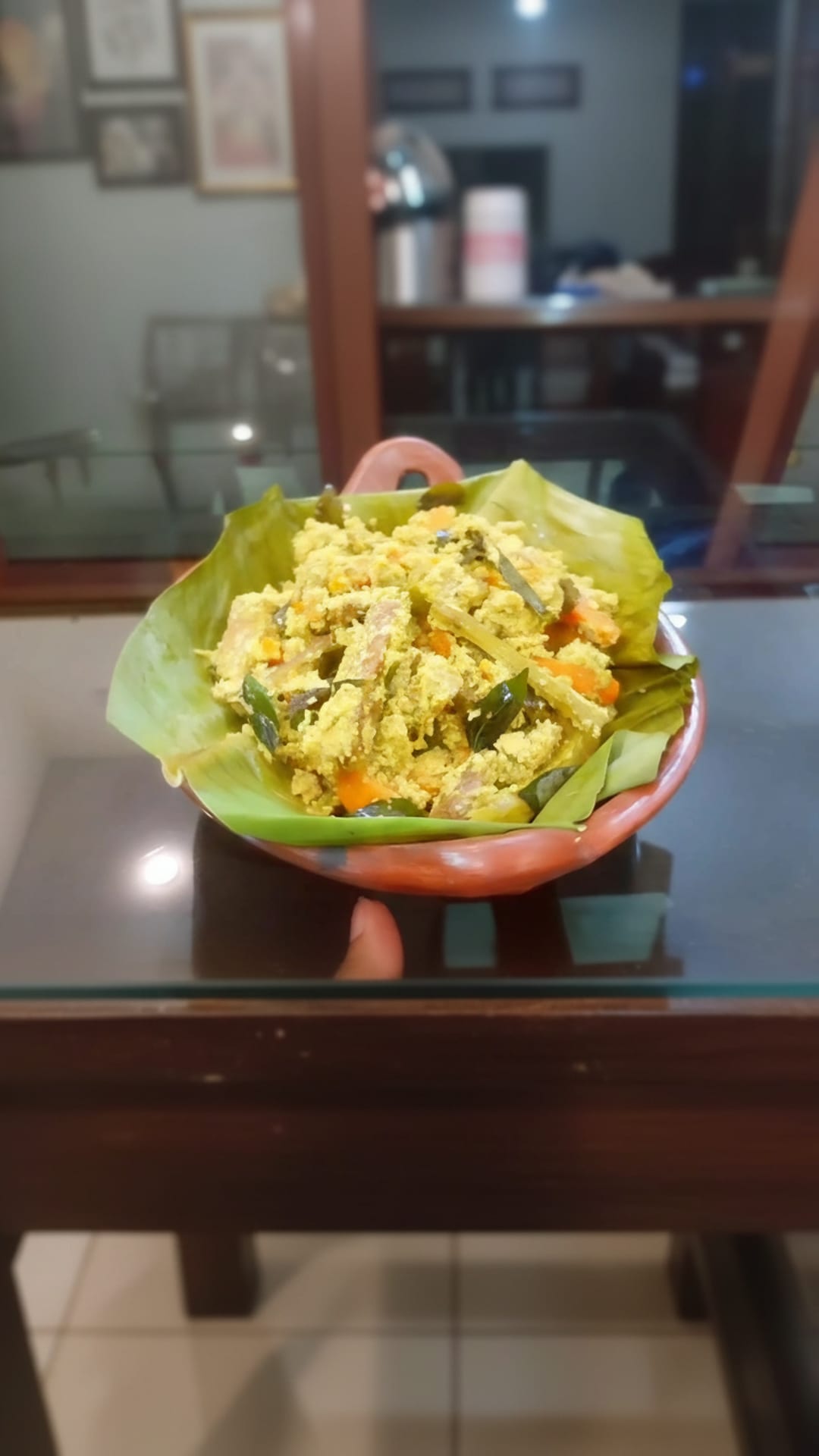
Serve the Kerala Avial hot, traditionally on a banana leaf or in a clay pot lined with a banana leaf.




Comments (0)
Sign in to leave a comment on this recipe.
Loading comments...