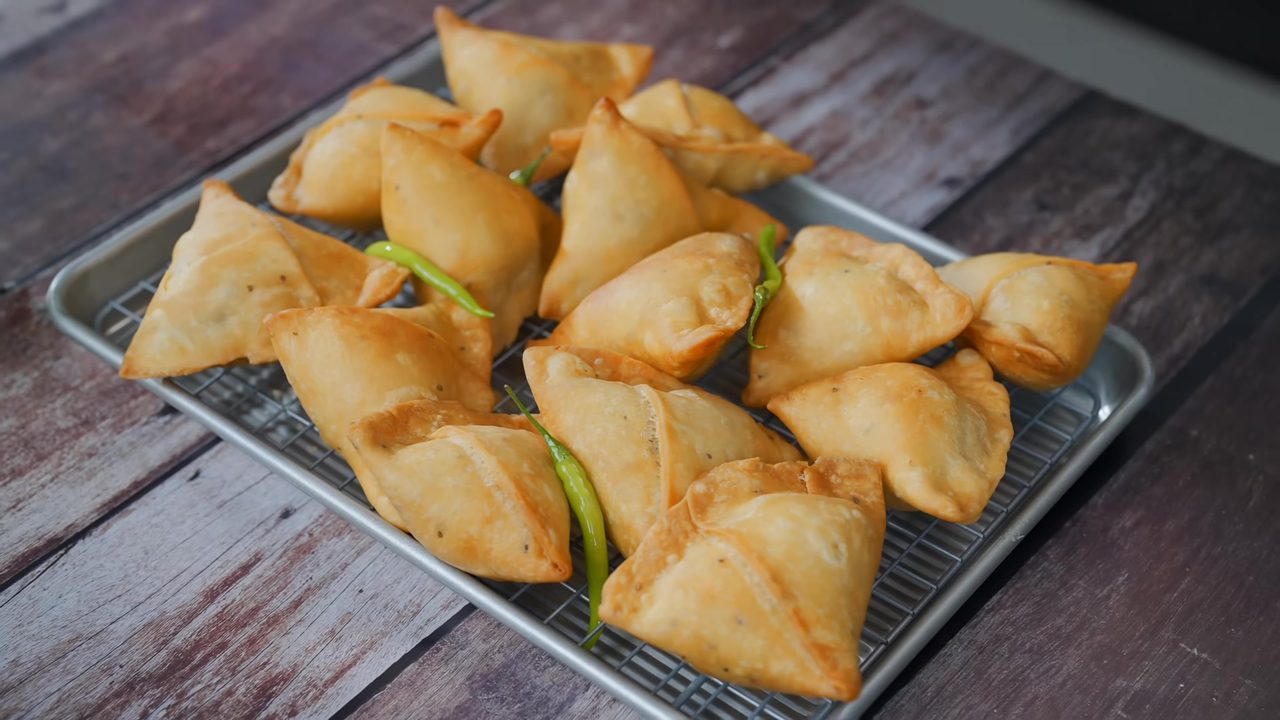
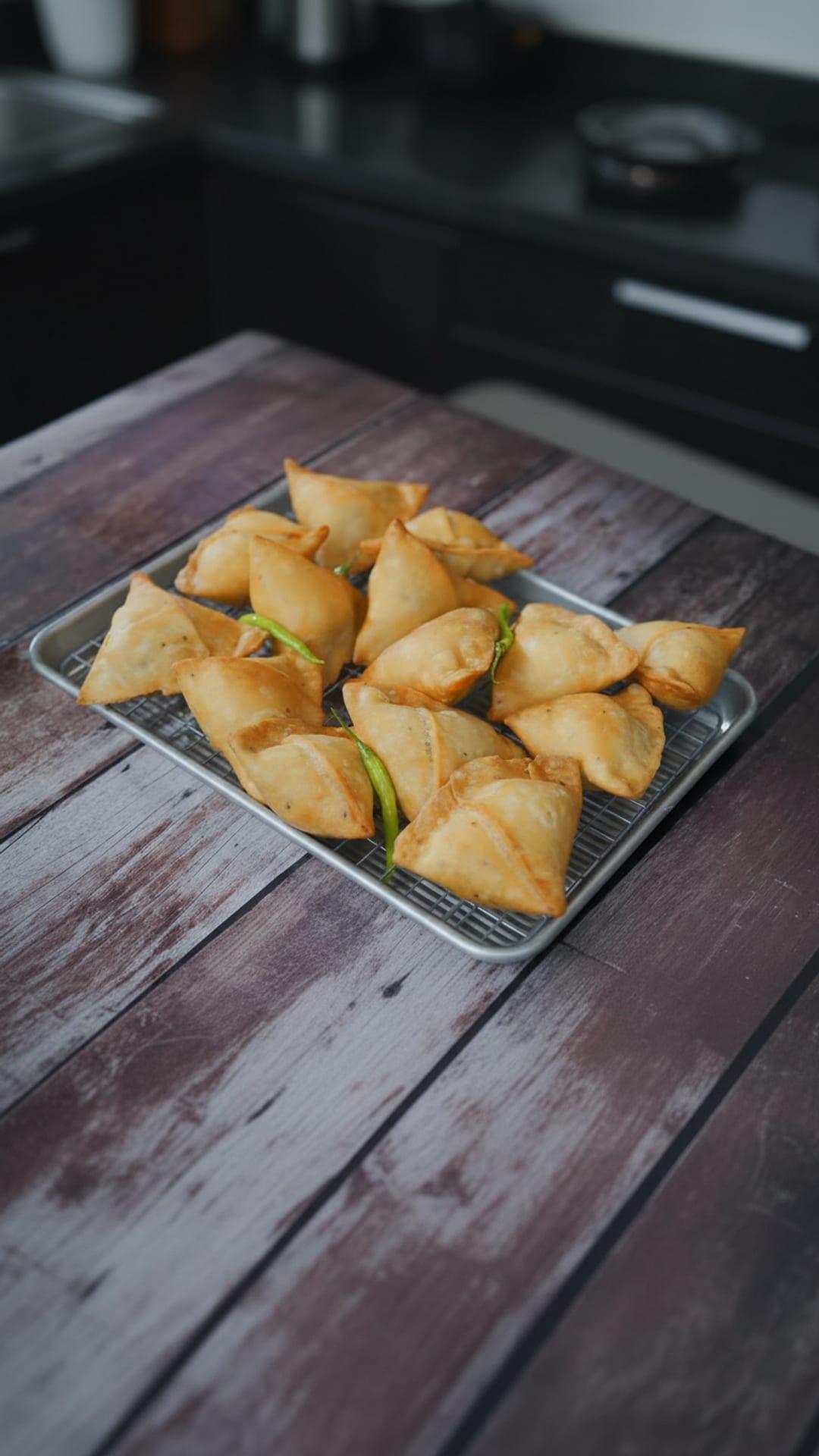
Crispy Aloo Pyaj Samosa
Recipe by Bharat's Kitchen
Ingredients
For the Dough
- 2 cups (300g)Maida (All-purpose flour)
- 1/2 tspAjwain (Carom seeds)
- 1 tspSalt
- 5 tbspOil
- 1/2 cup (divided)Water
For the Aloo Pyaj Masala (Filling)
- 2-3 tbspOil
- 1/2 tspHing (Asafoetida)
- 1 tspCumin Seeds
- 1 tspFennel Seeds
- 1.5 tspCoriander Seeds
- 6-7 cloves (finely chopped)Garlic
- 1 inch (finely chopped)Ginger
- 10-12Curry Leaves
- 5-6 (thickly chopped)Green Chillies
- 4 (mashed)Boiled Potatoes
- 1/2 tspTurmeric Powder
- 1 tspRed Chilli Powder
- 1 tspSalt
- 1-2 tbspWater
- 1 tspAmchoor Powder (Dry mango powder)
- 1 (thickly chopped)Onion
- 1/4 cup (chopped)Fresh Coriander Leaves
For Frying
- sufficient for deep fryingOil
Step-by-Step Instructions
- 1.Prepare the Samosa Dough
In a large bowl, combine 2 cups (300g) maida, 1/2 tsp ajwain, and 1 tsp salt. Add 5 tablespoons of oil and mix it thoroughly with your hands until the mixture resembles breadcrumbs and clumps together when pressed.
- 2.Knead the Dough
Gradually add 1/2 cup of water, starting with 1/4 cup and then adding the rest slowly, mixing until the dough just comes together. Do not over-knead. The dough should be tight and firm, not soft. Knead for about 5 minutes until it forms a cohesive ball.
- 3.Rest the Dough
Cover the dough with a damp cloth and let it rest for at least 30 minutes. This allows the gluten to relax, making the dough more pliable.
- 4.Prepare the Aloo Pyaj Masala Base
Heat 2-3 tablespoons of oil in a pan over medium flame. Add 1/2 tsp hing, 1 tsp cumin seeds, 1 tsp fennel seeds, and 1.5 tsp coriander seeds. Sauté for a minute until fragrant.
- 5.Add Aromatics and Chillies
Add 6-7 finely chopped garlic cloves and 1 inch of finely chopped ginger to the pan. Sauté on medium flame until the garlic and ginger are lightly golden. Then add 10-12 curry leaves and 5-6 thickly chopped green chilies. Sauté for another minute.
- 6.Incorporate Potatoes and Spices
Add 4 mashed boiled potatoes to the pan. Sprinkle with 1/2 tsp turmeric powder, 1 tsp red chili powder, and 1 tsp salt. Mix everything well, breaking up any large potato chunks.
- 7.Enhance Texture with Water
Add 1-2 tablespoons of water to the potato mixture while it's still on the flame. This will create steam, slightly mash the potatoes further, and give the filling a unique, moist texture. Continue to sauté for a few minutes until the water evaporates.
- 8.Add Fresh Onions and Coriander
Turn off the gas. Immediately add 1 tsp amchoor powder, 1 thickly chopped onion, and 1/4 cup fresh chopped coriander leaves to the hot potato mixture. Mix well. The residual heat will slightly soften the onions without cooking them fully, retaining their crunch and sweetness. Let the filling cool completely.
- 9.Portion the Dough
Take the rested dough and roll it into a thick log. Divide the log into 4 equal portions (approximately 80g each).
- 10.Roll the Samosa Sheets
Take one portion of dough, flatten it with your palm, and then roll it out into an oblong or oval shape using a rolling pin. Ensure the sheet is slightly thick, not too thin, as very thin sheets can break during frying.
- 11.Cut and Prepare for Folding
Cut the oblong sheet in half lengthwise, creating two semi-oval pieces. Apply water along the straight edge of one semi-oval piece.
- 12.Form the Samosa Cone
Bring the two ends of the straight edge together, overlapping them slightly, and press firmly to form a cone shape. Ensure the seam is tightly sealed. Press the 'backbone' seam of the cone firmly to create a strong seal.
- 13.Fill and Seal the Samosa
Fill the cone with approximately 2 tablespoons of the cooled aloo pyaj masala. Do not overfill. Apply water to the remaining open edges. Bring the edges together, and at the center of the back seam, make a small pleat or fold. Press all edges firmly to seal the samosa completely, ensuring no gaps.
- 14.Initial Low-Heat Frying
Heat oil for deep frying in a kadai or deep pan over very low flame. The oil temperature should be around 120-125°C. Place a slotted spoon in the oil to prevent the samosas from sticking to the bottom. Gently place the prepared samosas onto the slotted spoon and into the oil.
- 15.Continue Frying and Increase Heat
Fry on low flame for about 5 minutes until the samosas start to float to the surface. Remove the slotted spoon. Continue frying on low flame for another 5 minutes, stirring occasionally, until they float completely. At this stage, increase the flame to medium. If any samosas are not frying evenly, you can place the slotted spoon on top of them to keep them submerged.
- 16.Achieve Golden Brown Crispiness
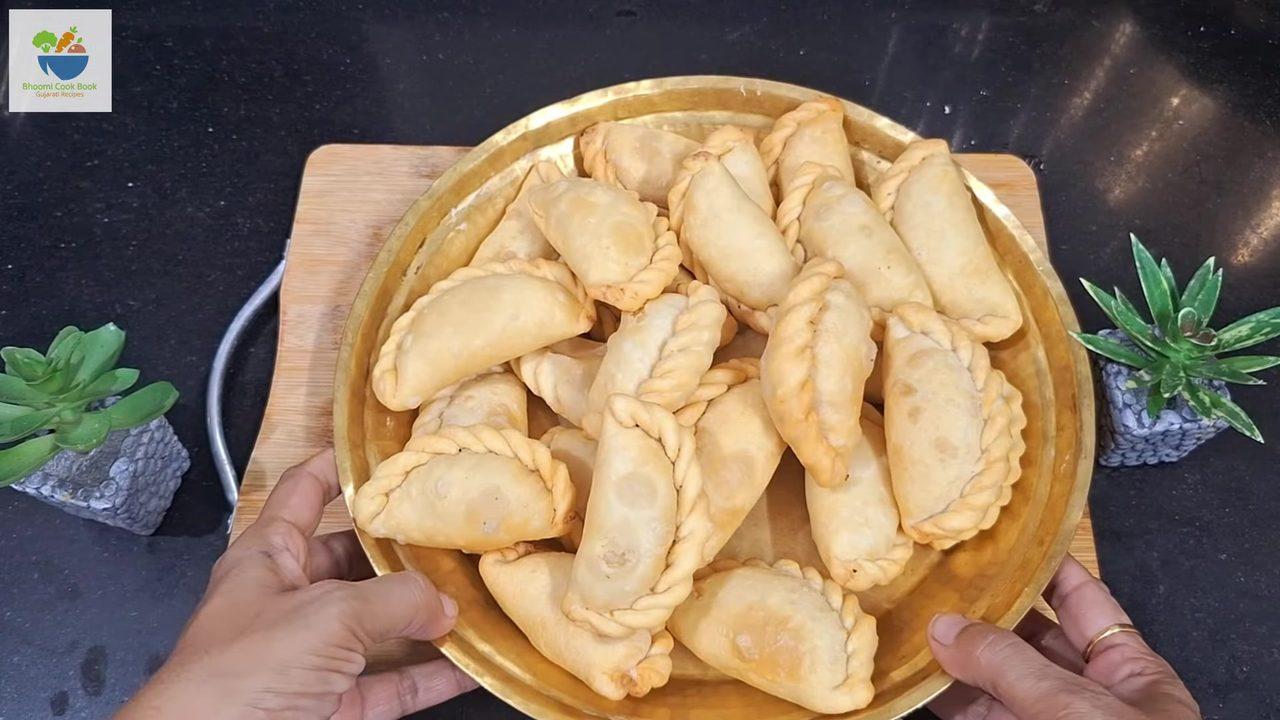
Continue frying on medium flame, turning occasionally, for a total of 15-20 minutes until the samosas turn a beautiful golden brown and are perfectly crispy. Remove them from the oil and place them on a wire rack to drain excess oil.
- 17.Serve Hot
Serve the hot, crispy samosas with your favorite chutney or a cup of chai.

Comments (0)
Sign in to leave a comment on this recipe.
Loading comments...