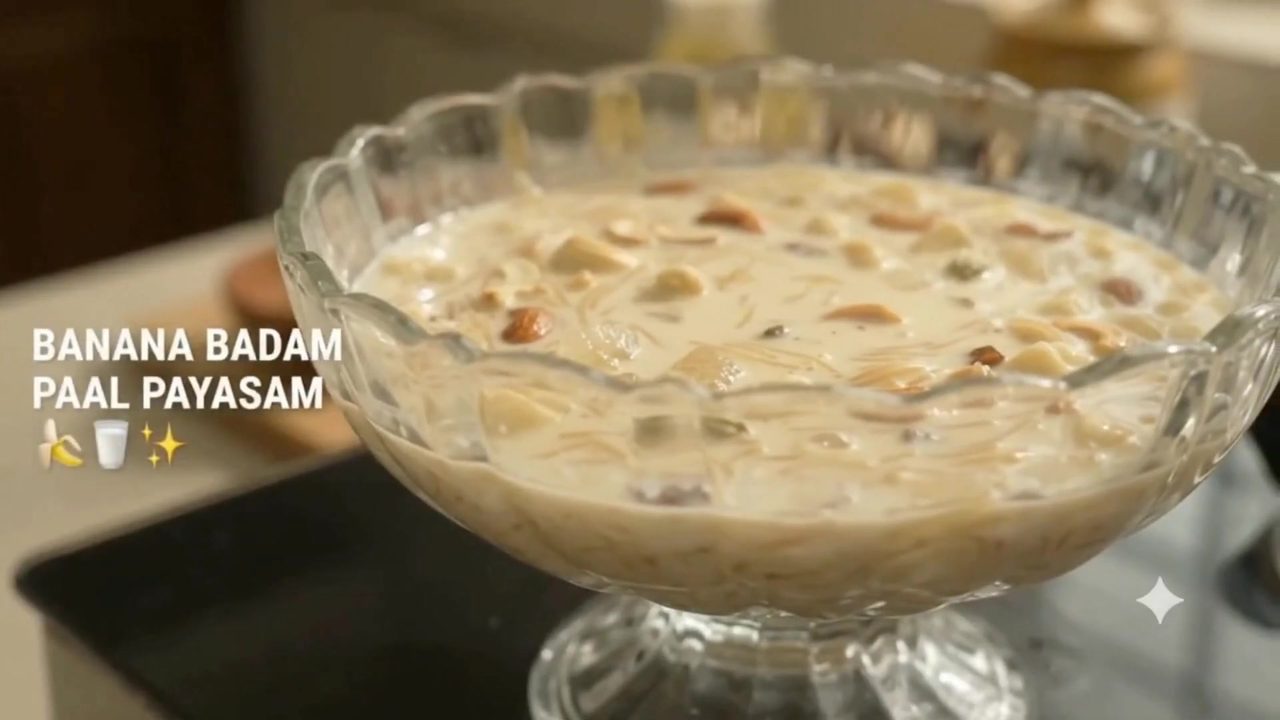
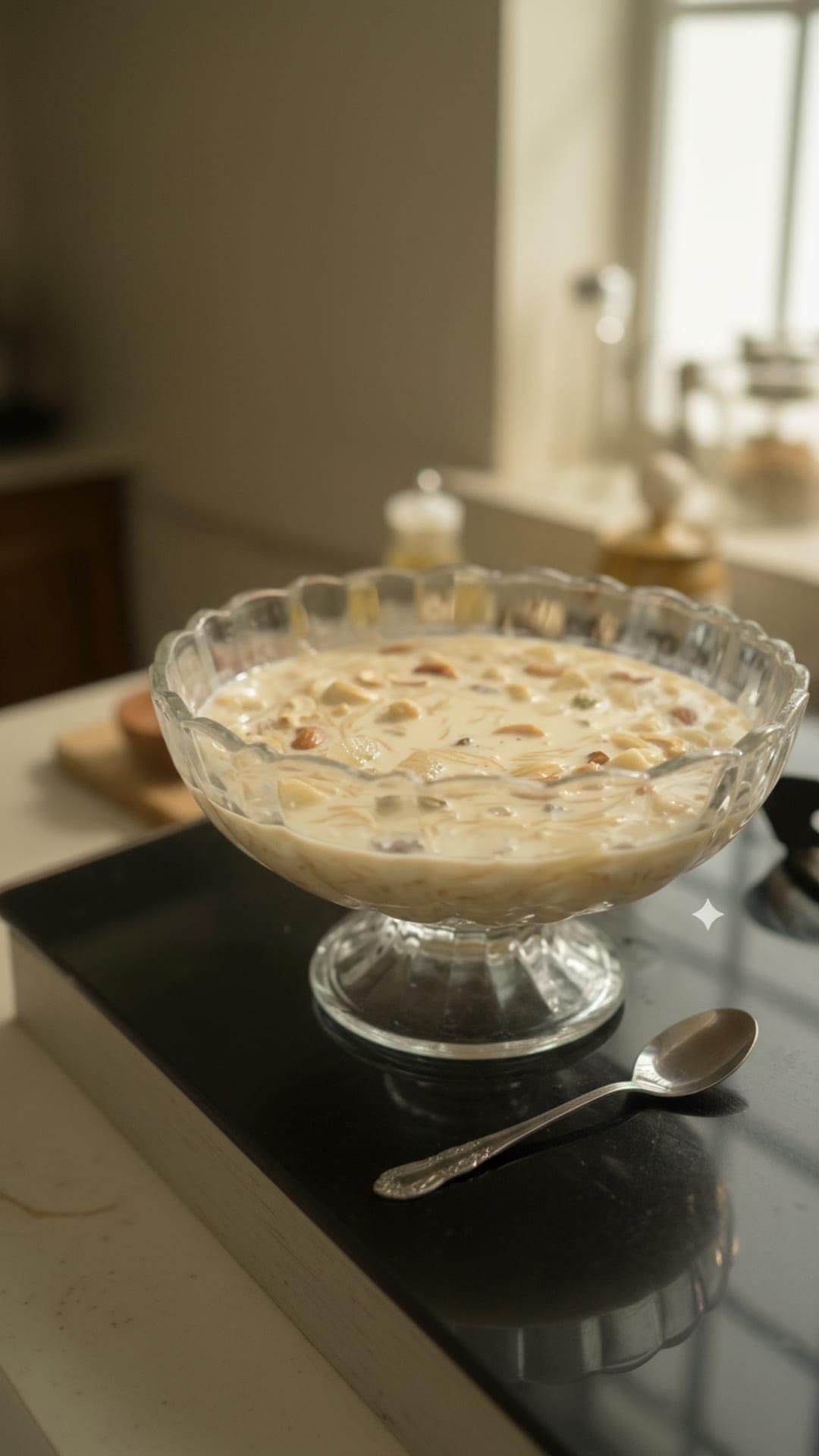
Banana Badam Paal Payasam
Ingredients
Main Ingredients
- 1 LMilk
- 250 gNendran Banana
- 100 gSemmiya (Vermicelli)
- 40 gBadam Powder (Almond Powder)
- 25 gBadam (Almonds)
- 25 gCashews
- 150 gSugar
- 20 gGhee
- 1/2 tspElakkai (Cardamom Powder)
- 7-8 gBadam Pisin (Almond Gum)
Step-by-Step Instructions
- 1.Prepare Banana Paste
Peel and slice the Nendran bananas. Blend them into a smooth paste using a blender.
- 2.Prepare Nuts and Badam Pisin
Chop some of the almonds. Soak the 25g almonds and 7-8g Badam Pisin (almond gum) in water separately.
- 3.Boil Milk and Prepare Badam Slurry
In a pan, boil 1 liter of full-fat milk. In a separate small bowl, mix 40g badam powder with a small amount of warm milk from the pan to create a smooth, lump-free slurry. Slowly add this badam slurry to the boiling milk, stirring continuously with a whisk.
- 4.Cook Milk Base
Continue stirring the milk mixture continuously on a low-medium flame. Add 150g sugar and mix until it completely dissolves. Cook until the mixture thickens slightly, forming a creamy badam milk base.
- 5.Cook Semiya
In a separate pan, cook 100g semiya (vermicelli) in water until it becomes soft. Drain and keep the cooked semiya aside.
- 6.Combine Ingredients
Add the prepared 250g Nendran banana paste to the badam milk base. Mix gently. Then, add the cooked semiya and mix gently again. Cook briefly on a low flame.
- 7.Roast Nuts and Finish Payasam
In a small pan, heat 20g ghee. Add 25g badam (almonds) and 25g cashews. Roast until they turn light golden brown. Add the roasted nuts to the payasam and mix gently. Stir in 1/2 tsp cardamom powder and mix well. Finally, add the soaked Badam Pisin (almond gum) and mix gently. Cook briefly on low flame until the payasam reaches a final creamy consistency.
- 8.Cool and Serve
Allow the payasam to cool down to room temperature, then transfer it to a serving bowl. Cool and chill in the refrigerator for a few hours before serving for the best taste and texture.




Comments (0)
Sign in to leave a comment on this recipe.
Loading comments...