Roti Making – Indian Style
Summary
- This video demonstrates the basic process of making soft and pliable Indian flatbreads called Roti or Chapati from scratch. It covers preparing the dough, rolling it out, and cooking it on a tawa and directly over heat to puff it up, with tips for beginners.
All Ingredients - For the Dough
- Wheat Flour (Chapati Atta) 2 cups
- Oil 1 tbsp
- Water 1 cup + 2 tbsp (or as needed)
- Ghee (Clarified Butter) As needed
- Dry Flour As needed
Tools You'll Need
- Tawa
- Pan
- Mixing bowl
- Rolling pin
- Tongs
Don't have an ingredient? Try these swaps
No Butter?
- 3/4 the amount of olive oil (for cooking, not baking)
- Equal parts ghee — Slightly nuttier flavor.
- Equal parts coconut oil (in baking)
No Ghee?
- Unsalted butter (1:1)
- Neutral oil (1:1, lacks the toasted note)
⚠ Contains Allergens
Step-by-Step Instructions
Step 1: Introduction to Roti Making
The presenter welcomes viewers and introduces the video on making basic rotis.
Step 2: Prepare the Dough
In a large bowl, add 2 cups of wheat flour (chapati atta). Add 1 tablespoon of oil (optional). Gradually add 1 cup and 2 tablespoons of water, starting with half the amount. Begin the dough by hand. Add more water as needed, aiming for a soft but pliable consistency that is not too sticky or too hard. If the dough is sticky, add a little oil to your hands and continue until it becomes smooth and does not stick. Cover the dough and let it stand for about , or you can start rolling immediately.
Step 3: Portion and Dust the Dough
After , pinch off a lemon-sized or slightly smaller portion of the dough. Flatten the dough ball slightly. Dust the dough ball with dry flour (wheat, rice, or all-purpose flour can be used) to prevent sticking.
Step 4: Roll the Roti
Place the dusted dough ball on a rolling board. Using a rolling pin, start rolling the dough into a thin, round shape. It takes practice to achieve a perfect circle. Dust with a little more dry flour if the dough starts sticking to the board or rolling pin, but try to use as little flour as possible. Continue rolling until the roti is thin and evenly shaped.
Step 5: Bake the Roti on Tawa
Place a rack on a ceramic cooktop (or directly on a gas stove flame if available). Heat a flat pan (tawa) with a handle on top of the rack over medium heat until it is slightly hot. Carefully place the rolled roti onto the hot pan. Let it bake until the color changes slightly and you see a few bubbles forming on the surface (approximately ). Using tongs, carefully flip the roti to the other side. Let it bake until you see a few brown specks on the flipped side (approximately ).
Step 6: Puff the Roti
Increase the heat to high. Carefully transfer the partially baked roti from the pan directly onto the rack (or directly over the gas flame if using a gas stove). The roti will puff up within a few seconds. If it doesn't puff completely, that's okay.
Step 7: Apply Ghee and Stack
Place a paper towel in a basket or a container with holes. Once baked, transfer the roti onto the paper towel. Take one hot roti and apply a small amount of ghee (clarified butter) on one side. Place another hot roti on top of the ghee-applied side and gently rub them together to spread the ghee evenly between the two rotis. Continue stacking the rotis on top of each other, applying ghee between each pair, to keep them soft and prevent them from drying out.
Step 8: Store and Serve
Once all rotis are baked, store them in an airtight, insulated container to keep them warm and soft. Serve the rotis warm with sabji, curries, or any of your favorite vegetables. They can also be rolled with fillings for lunchboxes.
Pro Tips
• Dough shouldn't be too soft or too hard, aim for pliable.
• Use a little oil on hands to smooth sticky dough.
• It takes practice to roll perfectly round rotis.
• Use minimal dry flour while rolling to prevent stickiness.
• Rotis bake fast, be careful.
• Use tongs to flip rotis if you are a beginner.
• Set heat to medium for baking on pan, then high for puffing on rack.
• Stack rotis on top of each other in an airtight container to keep them soft and prevent drying.
Variations
• Can use different flours like oat or quinoa, or mix them with wheat flour for added nutrition.
• Can be served with sabji, curries, or vegetables.
• Can be made into rolls for lunchboxes.
Storage & Leftovers
How to keep what you don't finish — pulled straight from the recipe.
- Store
Stack rotis on top of each other in an airtight container to keep them soft and prevent drying.
 From this Creator
More from Bhavna's Kitchen
Other recipes converted from Bhavna's Kitchen's cooking videos.
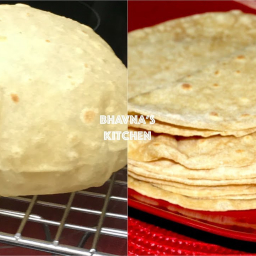
Roti Making - Indian Flatbread
Cuisine
Indian · North Indian
Prep + Cook Time
55 Minutes
Difficulty Level
Easy
Roti Making – Indian Flatbread
Cuisine
Indian · North Indian
Prep + Cook Time
45 Minutes
Difficulty Level
Easy
Plain Biryani – Indian Style
Cuisine
Indian · North Indian
Prep + Cook Time
35 Minutes
Difficulty Level
Easy
Soft Roti (Phulka) - Indian Flatbread
Cuisine
Indian · North Indian
Prep + Cook Time
35 Minutes
Difficulty Level
Medium
Similar RecipesYou might also like
Other recipes in the same cuisine, meal type, or style — ready to cook whenever you are.
Paneer Suji Snack / Paneer Starter
Cuisine
Indian · North Indian
Prep + Cook Time
20 Minutes
Difficulty Level
Easy

Creamy & Perfect Curd Rice
Cuisine
Indian · South Indian
Prep + Cook Time
25 Minutes
Difficulty Level
Easy

Egg Paneer Bhurji – High Protein
Cuisine
Indian
Prep + Cook Time
25 Minutes
Difficulty Level
Easy

Special Chole - Restaurant Style
Cuisine
Indian · North Indian
Prep + Cook Time
30 Minutes
Difficulty Level
Easy
Kadai Paneer – Easy & Scrumptious
Cuisine
Indian · North Indian
Prep + Cook Time
45 Minutes
Difficulty Level
Easy

Vijayadashami Festive Feast: 7 Traditional Dishes
Cuisine
Indian · South Indian
Prep + Cook Time
2 hr
Difficulty Level
Comments
Sign in to leave a comment on this recipe.
Loading comments...