Homemade Wild Mustang Grape Jelly
Recipe by Good Enough and Stuff
Ingredients
For Wild Mustang Grape Jelly
- 2.5 gallons (approx. 10 lbs, yielding 6 cups juice)Wild Mustang Grapes
- 2 cupsWater
- 6 cupsGranulated Sugar
- 1.5 (1.75 oz each) packetsPectin
Step-by-Step Instructions
- 1.Forage and Identify Grapes
Forage for wild mustang grapes, typically found in the Southern United States along riverbanks and moist areas. Identify them by their dark purple color, growth in clusters, dusty bloom on the outside, heart-shaped leaves (dark green and smooth on top, lighter green and fuzzy on the bottom), and 2-4 teardrop-shaped seeds per grape. Look for vines with tendrils. Avoid poisonous moonseed grapes, which have crescent-shaped seeds and no tendrils. The harvesting season is usually from mid-July to the end of August.
- 2.Pick Grapes
When picking, pull the grapes off the vine by their stems in clusters to keep them intact. This minimizes contact with the grape juice, which is high in tartaric acid and can cause skin itchiness. Consider wearing gloves.
- 3.Clean Grapes
Rinse the grapes thoroughly in a large bowl of water. Remove any leaves, sticks, or bugs. You can leave the grapes on their stems for cooking.
- 4.Mash Grapes
Transfer the cleaned grapes into a large pot. Add 2 cups of water. Use a potato masher or a similar tool (like a piece of wood in a bag) to mash the grapes, ensuring all of them burst.
- 5.Boil Grapes
Bring the pot of mashed grapes and water to a boil. Boil for 10 minutes, stirring frequently to prevent the grapes from burning on the bottom of the pot.
- 6.First Juice Strain
Carefully pour the boiled grapes through a fine-mesh strainer into a large bowl to separate the juice from the skins, seeds, pulp, and stems. Press the solids with a wooden spoon to extract as much juice as possible. You should yield about 6 cups of grape juice.
- 7.Settle Juice for Tartaric Acid
Pour the strained grape juice into a container with a lid. Place it in the refrigerator and leave it undisturbed for 2-3 days. During this time, sludgy sediment will collect at the bottom, and tiny tartaric acid crystals will form on the sides and bottom of the container.
- 8.Harvest Tartaric Acid (Optional)
If desired, you can harvest the tartaric acid crystals. Gently rinse the container with cold water while the crystals are still stuck to the sides and bottom. Scrape them off, dehydrate them, and then grind them into a fine powder to create purple cream of tartar.
- 9.Second Juice Strain
Strain the grape juice again, this time through cheesecloth, to remove any remaining crystals, sludge, or missed seeds. This ensures a clear jelly.
- 10.Prepare Jelly Mixture
In a clean large pot, combine the 6 cups of strained grape juice, 6 cups of granulated sugar, and 1.5 packets of pectin. Whisk well to combine.
- 11.Boil Jelly
Bring the jelly mixture to a rolling boil over high heat. Boil for 10 minutes, stirring constantly, until the mixture thickens. Skim off any foam that forms on the top.
- 12.Test for Doneness
To test if the jelly is ready, place a small white plate in the freezer until it's chilled. Spoon a quarter-sized amount of hot jelly onto the chilled plate and return it to the freezer for about 20 seconds. Remove the plate and hold it vertically. If the jelly drips quickly, it's not done. If it moves very slowly, or if you can run a finger through it and the line remains without the jelly running back together, it's ready.
- 13.Sterilize Jars and Lids
While the jelly is cooking, sterilize your canning jars by running them through a hot cycle in a dishwasher. Boil the lids and rings in a pot of water for about 5 minutes just before you are ready to fill the jars.
- 14.Fill Jars
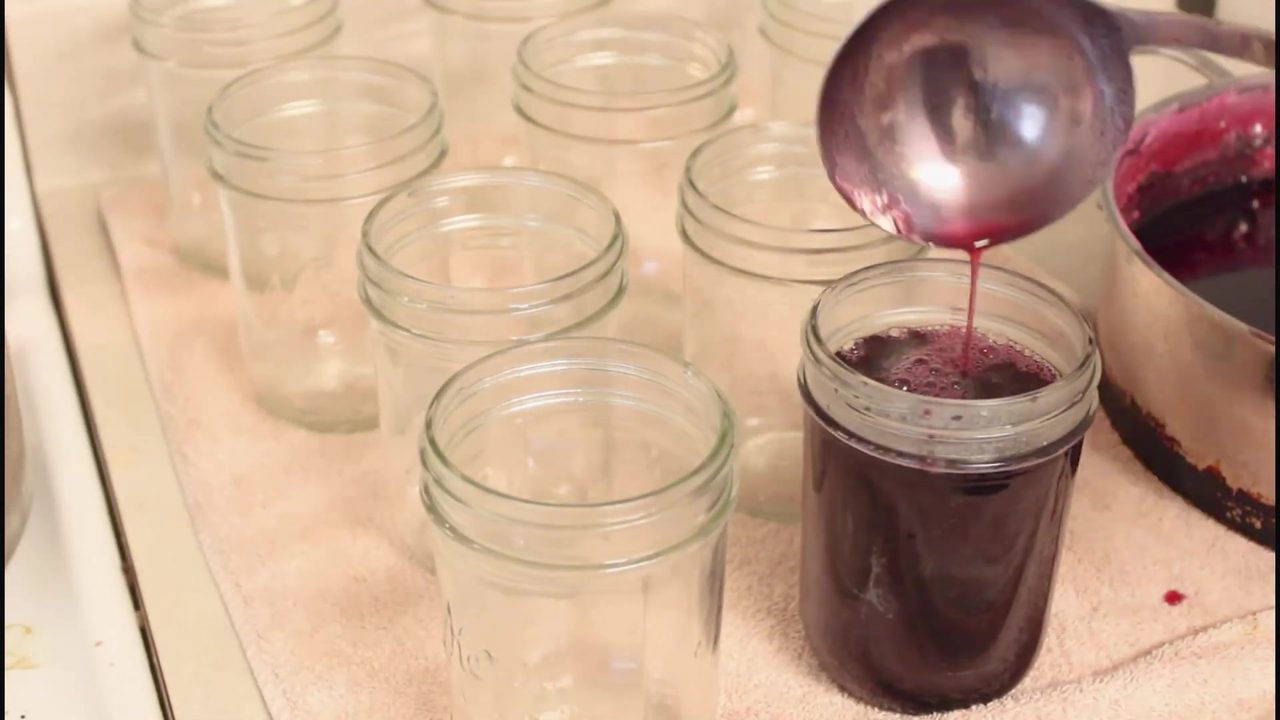
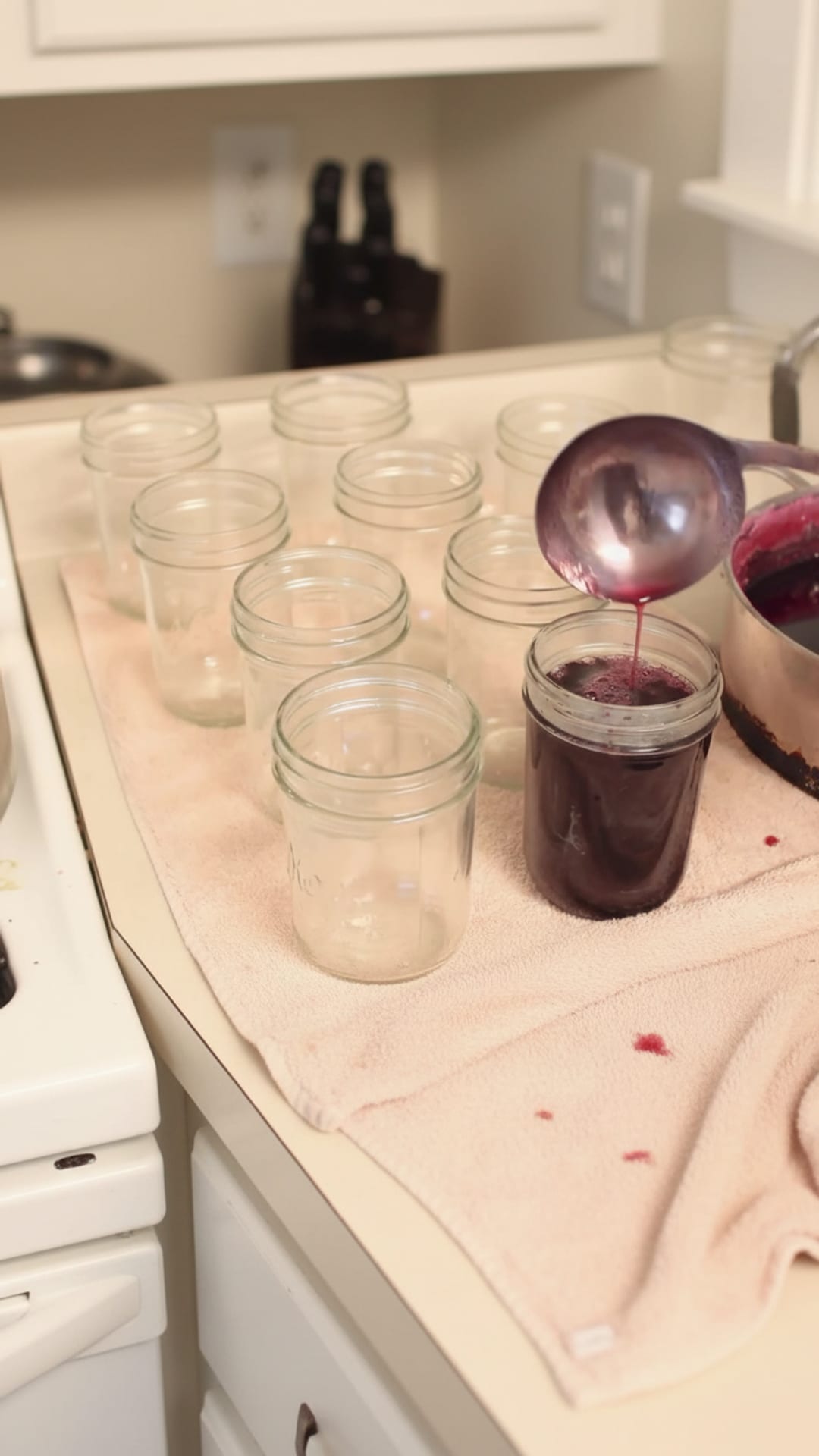
While the jelly is still hot, carefully ladle it into the hot, sterilized jars. Leave approximately 1/4 inch of headspace at the top of each jar.
- 15.Seal Jars
Wipe any drips or spills off the rim of each jar with a clean, damp paper towel to ensure a proper seal. Place a sterilized lid on each jar, followed by a ring, and tighten the ring until it is just finger-tight.
- 16.Process Jars (Water Bath Canning)
Place a towel (or a canning rack) at the bottom of a large pot to prevent the jars from touching the bottom directly. Carefully place the filled and sealed jars into the pot, ensuring they are covered by at least 1 inch of water. Bring the water to a rolling boil and process the jars for 10 minutes.
- 17.Cool and Store
Carefully remove the hot jars from the pot using a jar lifter and place them on a towel on the counter to cool completely. As they cool, you should hear a 'pop' sound, indicating that the lids have sealed. If a jar does not seal (the lid does not pull down), reprocess it with a new lid or refrigerate and consume within 1-3 months. Store sealed jars in a cool, dry pantry for up to 2 years. Once opened, refrigerate for 1-3 months.


Comments (0)
Sign in to leave a comment on this recipe.
Loading comments...