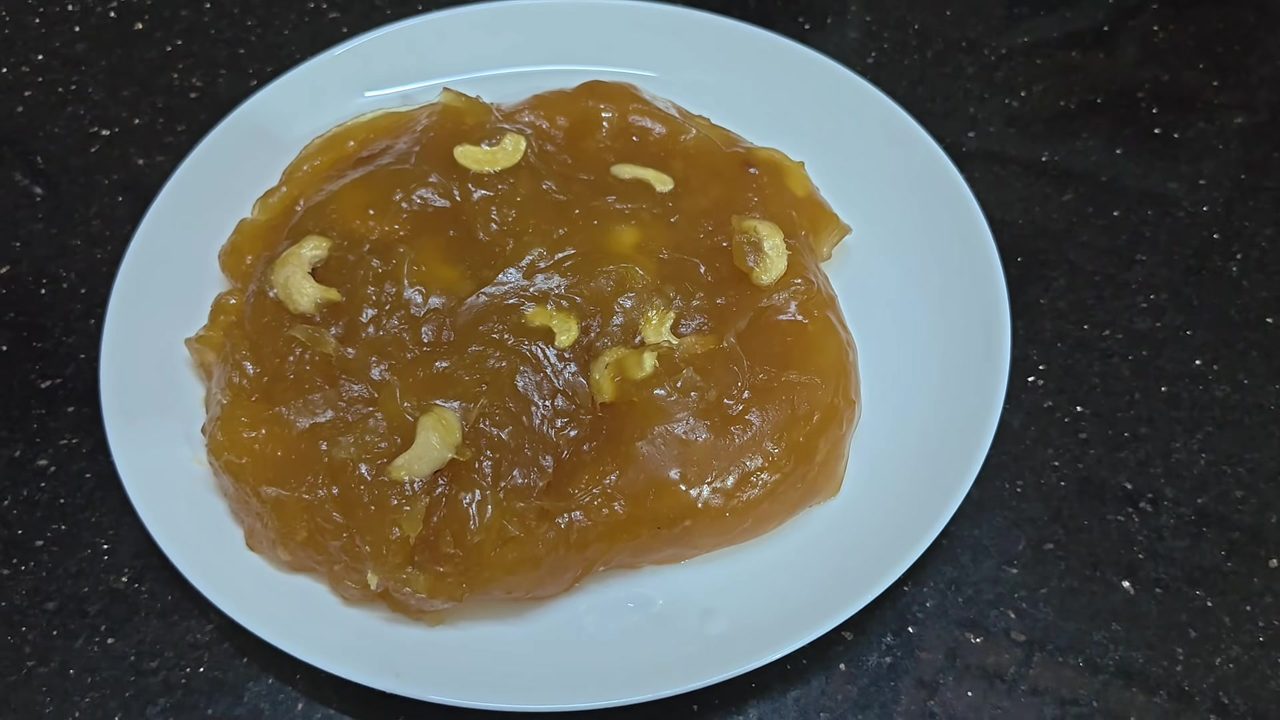
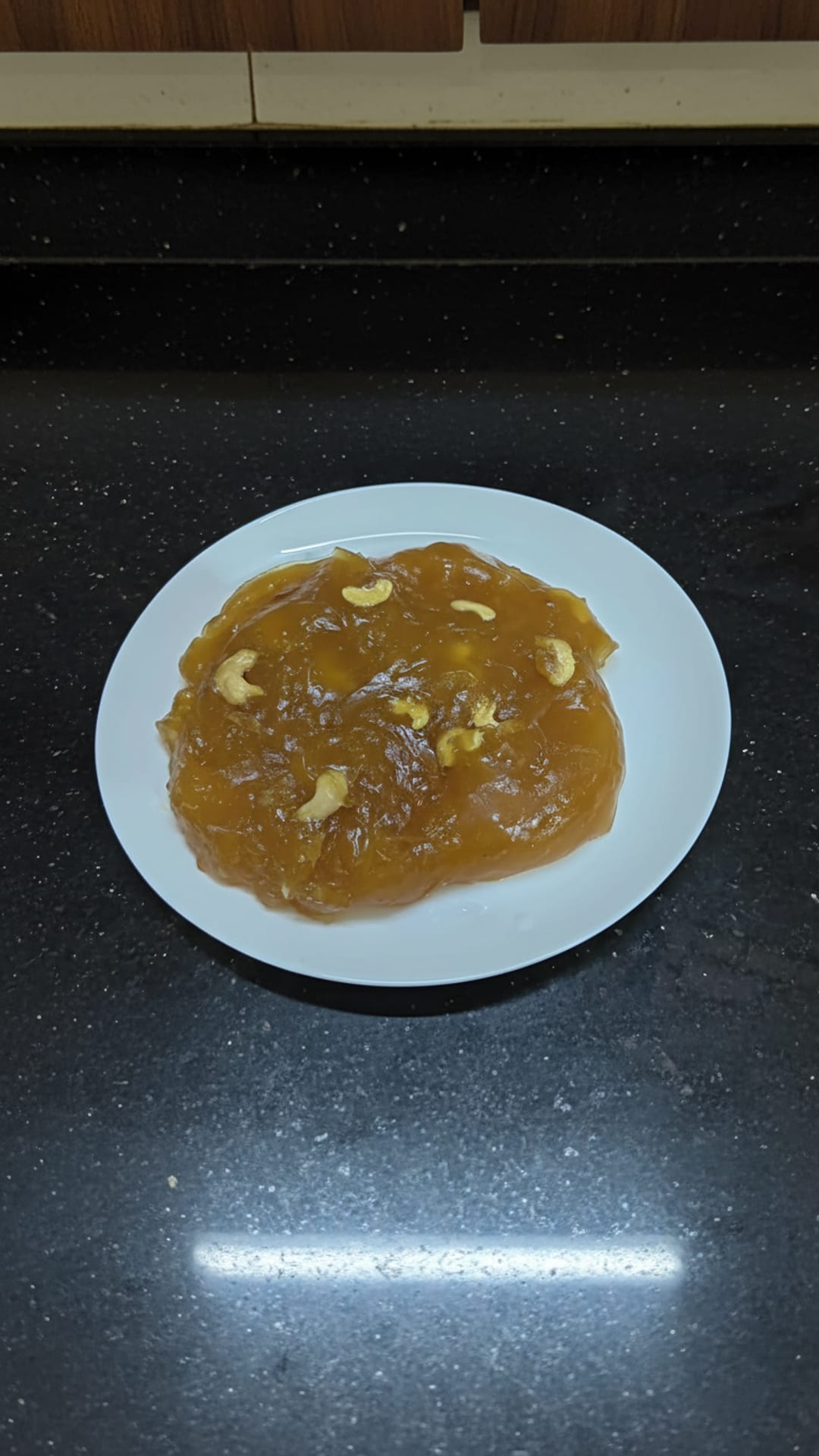
Tirunelveli Special Halwa
Recipe by Nellai happy kitchen
Ingredients
Main Ingredients
- 1 kgSamba Wheat
- 750 gSugar
- 500 mlGhee
- 1/4 cupCashew Nuts
- 6 nosCardamom
Step-by-Step Instructions
- 1.Clean and Soak Wheat
Take 1 kg of samba wheat in a bowl. Pour water and wash the wheat thoroughly 2-3 times to remove any dust or impurities. Drain the water, then add fresh water until the wheat is fully submerged. Cover the bowl and let it soak for 6 hours.
- 2.Grind Wheat to Extract Milk
After 6 hours, the wheat will be well-soaked. Transfer the soaked wheat in batches to a mixer jar. Add enough water to help it grind smoothly. Grind it into a fine paste. Pour the ground wheat paste into a large bowl. Repeat the process for the remaining wheat.
- 3.Strain Wheat Milk
Place a fine-mesh sieve over another large bowl. Pour the ground wheat paste into the sieve. Use your hands to press and squeeze the paste, extracting all the wheat milk into the bowl below. Discard the fibrous residue.
- 4.Ferment Wheat Milk
Cover the bowl containing the extracted wheat milk and let it ferment for a full day (24 hours) at room temperature. After 24 hours, you will notice the water has separated and risen to the top, leaving a thick wheat milk paste at the bottom. Carefully drain off the clear water from the top, leaving only the thick wheat milk.
- 5.Prepare Cardamom Powder
In a small mixer grinder, add 6 cardamom pods and 1/4 cup of sugar. Grind them into a fine powder. Set aside.
- 6.Dilute Wheat Milk
Add approximately 1 liter of water to the fermented wheat milk. Stir well with a ladle to ensure there are no lumps and the mixture is smooth.
- 7.Caramelize Sugar
In a heavy-bottomed kadai (wok), add 2 cups of sugar. Place it on a slow flame. Stir occasionally until the sugar melts completely and turns into a rich golden-brown caramel. Be careful not to burn it. Once caramelized, add 1/4 cup of water and stir well to combine.
- 8.Cook Halwa Base
Slowly pour the diluted wheat milk into the caramelized sugar mixture in the kadai. Stir continuously to prevent lumps and ensure the caramel dissolves into the milk. Keep stirring on a slow flame. The mixture will gradually start to thicken and change color.
- 9.Add Sugar in Stages
As the halwa thickens and starts to come together, add 1 cup of sugar. Stir continuously until the sugar dissolves and the halwa becomes smooth and glossy. Repeat this step by adding another 1 cup of sugar and stirring until fully incorporated. The halwa will become very thick and pull away from the sides of the kadai.
- 10.Incorporate Ghee and Cashews
Once the halwa is thick and glossy, add 3 tablespoons of ghee. Stir well until the ghee is absorbed. Continue adding the remaining ghee in stages (about 2-3 additions), stirring well after each addition until the halwa becomes translucent and leaves the sides of the kadai easily. Add 1/4 cup of cashew nuts (no need to fry them separately) and mix them into the halwa.
- 11.Finish with Cardamom
Once the halwa reaches a perfect consistency (it will be very stretchy, translucent, and non-sticky), turn off the stove. Add 1 tablespoon of the prepared cardamom powder and mix it well into the halwa. The Tirunelveli Special Halwa is now ready.
- 12.Serve
Transfer the hot halwa to a serving plate. Serve warm and enjoy the authentic taste of Tirunelveli Halwa.



Comments (0)
Sign in to leave a comment on this recipe.
Loading comments...