The Best Chicken Biryani - Karachi Style
Summary
- This Karachi-style chicken biryani is famous for its tangy and spicy flavor, made without onions and featuring tender chicken and potatoes. Served with a refreshing mint yogurt sauce, it's a mouth-watering dish that's incredibly juicy and flavorful.
All Ingredients - Main Ingredients
- Whole Chicken 1 (approx. 1.5-2 kg), cut into 15-16 pieces
- Basmati Rice 1 kg (washed and soaked for 30 minutes)
- Potatoes 1 kg, medium to large cut
- Cooking Oil 1.5 cups (approx. 350 ml)
- Tomatoes 4-5 medium, thinly sliced (approx. 400-500g)
- Natural Yogurt 1.5 cups (approx. 350g), whisked
- Green Chili Paste 2 tbsp
- Ginger Paste 2 tbsp
- Garlic Paste 2 tbsp
- Dried Plums 10-12 pieces
- Tamarind Pulp 1 tbsp
- Orange Food Color 0.5 tsp
- Fresh Coriander 0.5 cup chopped (for curry) + 0.25 cup chopped (for garnish)
- Fresh Mint 0.25 cup chopped (for curry) + 0.25 cup chopped (for garnish)
- Lemon Slices 1-2 lemons, sliced
- Crispy Onions For garnish (optional)
- Mint Coriander Chutney For serving (optional)
All Ingredients - Spices for Curry
- Red Chili Powder 1 tbsp
- Red Chili Flakes 1 tbsp
- Salt 1 tbsp
- Turmeric Powder 1 tsp
- Cumin Powder 1 tbsp
- Cumin Seeds 1 tsp
- Black Peppercorns 1 tsp
- Green Cardamom 4-5 pods
- Black Cardamom 2 pods
- Star Anise 2 pieces
- Cassia Bark 2 pieces (1 inch each)
- Cloves 3-4 pieces
- Nutmeg Small piece (ground)
- Mace Small piece (ground)
All Ingredients - Spices for Rice Water
- Salt 2 tbsp
- Cassia Bark 2 pieces (1 inch each)
- Star Anise 2 pieces
- Bay Leaves 2-3 leaves
Tools You'll Need
- Pot
- Pan
- Mortar & pestle
- Spatula
Don't have an ingredient? Try these swaps
No Yogurt?
- Sour cream (1:1)
- Buttermilk (1:1, slightly thinner result)
No Garlic (fresh)?
- 1/4 tsp garlic powder (per clove)
- 1/2 tsp garlic granules (per clove)
No Tamarind paste?
- 1 tbsp lime juice + 1 tbsp brown sugar (per 1 tbsp paste)
- Pomegranate molasses (1:1)
No Cilantro?
- Flat-leaf parsley (1:1, milder)
- Fresh mint (in chutneys, salads)
No Onion?
- 1 tbsp onion powder (per medium onion)
- 3 tbsp dried minced onion
- Shallots or leeks (1:1)
No Bay leaf?
- 1/4 tsp dried thyme (per leaf)
- Pinch of dried oregano
⚠ Contains Allergens
Step-by-Step Instructions
Step 1: Prepare Ground Spices
In a mortar and pestle, grind 2 pieces of cassia bark, a small piece of nutmeg, and a small piece of mace until it forms a fine powder. Set aside.
Step 2: Soak Rice
Wash 1 kg of Basmati rice several times until the water runs clear to remove excess starch. Soak the rice in water for at least . If using Sella Basmati, soak for .
Step 3: Cook Tomatoes
Heat 1.5 cups of cooking oil in a large pot over medium-high heat. Add the thinly sliced tomatoes and cook until they are nice and soft. Cover the pot for to help them soften faster.
Step 4: Add Ginger, Garlic, and Green Chili Paste
Once the tomatoes are soft, add 2 tablespoons each of ginger paste, garlic paste, and green chili paste. Cook everything properly until the raw smell of the pastes is gone, ensuring the flavors blend well.
Step 5: Add Spices
Add 1 tablespoon of red chili powder, 1 tablespoon of red chili flakes, 1 tablespoon of salt, 1 teaspoon of turmeric powder, 1 tablespoon of cumin powder, 1 teaspoon of cumin seeds, 1 teaspoon of black peppercorns, 4-5 green cardamom pods, 2 black cardamom pods, 2 star anise pieces, 2 pieces of cassia bark, and 3-4 cloves. Also, add half of the previously ground nutmeg, mace, and cassia bark. these spices for about , stirring constantly, to release their aroma.
Step 6: Cook Chicken
Add the chicken pieces to the pot. Fry the chicken for a few minutes, then cover the pot and let it cook for at least on medium-high heat. The chicken should be partially cooked at this stage.
Step 7: Add Yogurt
Pour in 1.5 cups of natural yogurt. Mix gently until everything comes together. Continue cooking until the oil separates from the curry, indicating the yogurt is well incorporated and cooked.
Step 8: Add Herbs, Plums, Tamarind, and Potatoes
Add 0.25 cup of fresh mint, 0.5 cup of fresh coriander, 10-12 dried plums, 1 tablespoon of tamarind pulp, and 1 kg of cut potatoes. Mix gently, then cover and cook for another until the potatoes are about 60-70% done.
Step 9: Add Food Color and Adjust Water
Drizzle 0.5 teaspoon of orange food color over the potatoes and chicken. Mix gently to distribute the color. Turn off the heat. Check the liquid level; there should be enough water to just stay below the chicken and potatoes. If needed, add 0.5 to 1 cup of water to ensure the rice will be fully submerged later.
Step 10: Add Final Flavorings
Add 1-2 lemon slices, more fresh coriander, fresh mint, the remaining dried plums, and the rest of the ground nutmeg, mace, and cassia bark. This adds a burst of fresh aroma and balances the flavors.
Step 11: Prepare Rice for Layering
In a separate pot, fill with water and add 2 tablespoons of salt, 2 pieces of cassia bark, 2 star anise pieces, and 2-3 bay leaves. Bring the water to a boil. Add the soaked Basmati rice and cook for until the rice is 50-60% done. Boil gently on medium-low heat to keep the grains intact. Strain the water from the rice.
Step 12: Layer the Biryani
With the heat still off under the chicken mixture, carefully layer the warm, partially cooked rice over the curry. Drizzle a small amount of oil evenly over the top of the rice. Remove the bay leaves and other whole spices from the top of the rice.
Step 13: Steam the Biryani (Dum)
Turn the heat to high for until you see coming up from underneath the rice. Then, the heat to low. Place a clean kitchen cloth over the pot, then place the lid on top, ensuring a tight seal. Let the biryani for on low heat. The pan should be hot and , with droplets forming on the lid.
Step 14: Rest and Serve
Once the time is complete, turn off the heat and let the biryani rest for . Gently fluff the top rice layer from the sides using a wide, flat spatula, sliding underneath and lifting slightly to mix the colored and white rice. Avoid stirring vigorously. Serve the biryani onto a dish, ensuring each serving has a mix of rice, chicken, and potatoes. Garnish with fresh coriander and crispy onions. Serve with mint coriander chutney if desired.
Pro Tips
• Whisk the natural yogurt before adding it to the curry to prevent it from splitting.
• Properly season the rice water with salt to ensure the rice is flavorful, even before it's layered with the biryani korma.
• Boil the rice gently on medium-low heat to keep the grains long and unbroken; vigorous boiling can cause them to split and turn mushy.
• Layer hot rice over the korma to help the rice settle without clumping or breaking.
• Drizzle oil over the rice before sealing for steaming to help keep the rice separate and prevent sticking.
• When serving, fluff the top rice layer gently from the sides using a wide, flat spatula to avoid breaking the grains. If mixing the entire pot, use a folding motion instead of stirring.
Variations
• You can use Sella Basmati rice instead of regular Basmati, but soak it for 2 to 2.5 hours.
• Add Kewra essence to the rice water for an additional aromatic flavor.
• Adjust the size of chicken pieces to your preference, from large to medium.
 From this Creator
More from HALAL CHEF
Other recipes converted from HALAL CHEF's cooking videos.
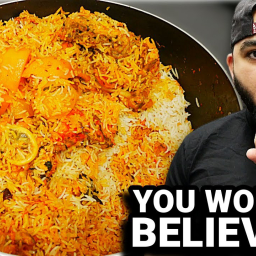
Karachi Chicken Biryani - Tangy & Spicy Flavor
Cuisine
Pakistani · Karachi
Prep + Cook Time
1 hr 55 min
Difficulty Level
Medium
The Best Chicken Biryani (Karachi Style)
Cuisine
Pakistani · Karachi
Prep + Cook Time
1 hr 30 min
Difficulty Level
Medium
Karachi Chicken Biryani - Tangy & Spicy
Cuisine
Pakistani · Karachi
Prep + Cook Time
2 hr 5 min
Difficulty Level
Medium
Authentic Chicken Curry - Pakistani Style
Cuisine
Pakistani
Prep + Cook Time
45 Minutes
Difficulty Level
Medium
Similar RecipesYou might also like
Other recipes in the same cuisine, meal type, or style — ready to cook whenever you are.
Mutton Masala – Pakistani Style
Cuisine
Pakistani · North Indian
Prep + Cook Time
50 Minutes
Difficulty Level
Easy
Chicken Angara
Cuisine
Indian · North Indian
Prep + Cook Time
1 hr 45 min
Difficulty Level
Medium
Egg Halwa – Quick & Easy Winter Dessert
Cuisine
Pakistani · Dessert
Prep + Cook Time
25 Minutes
Difficulty Level
Easy
Dry Dates Halwa (Chhuaron ka Halwa) - Unique & Healthy
Cuisine
Pakistani · South Asian
Prep + Cook Time
50 Minutes
Difficulty Level
Medium
Chicken Tikka Biryani
Cuisine
Indian · North Indian
Prep + Cook Time
1 hr 45 min
Difficulty Level
Comments
Sign in to leave a comment on this recipe.
Loading comments...