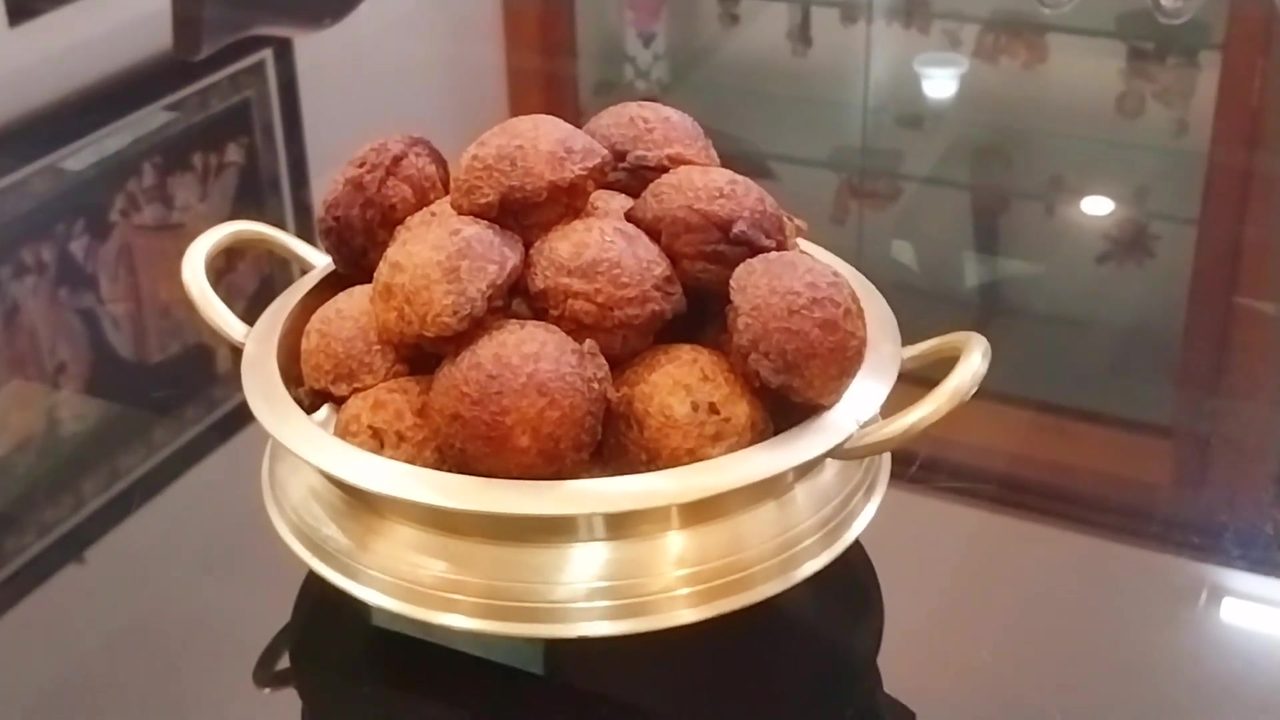
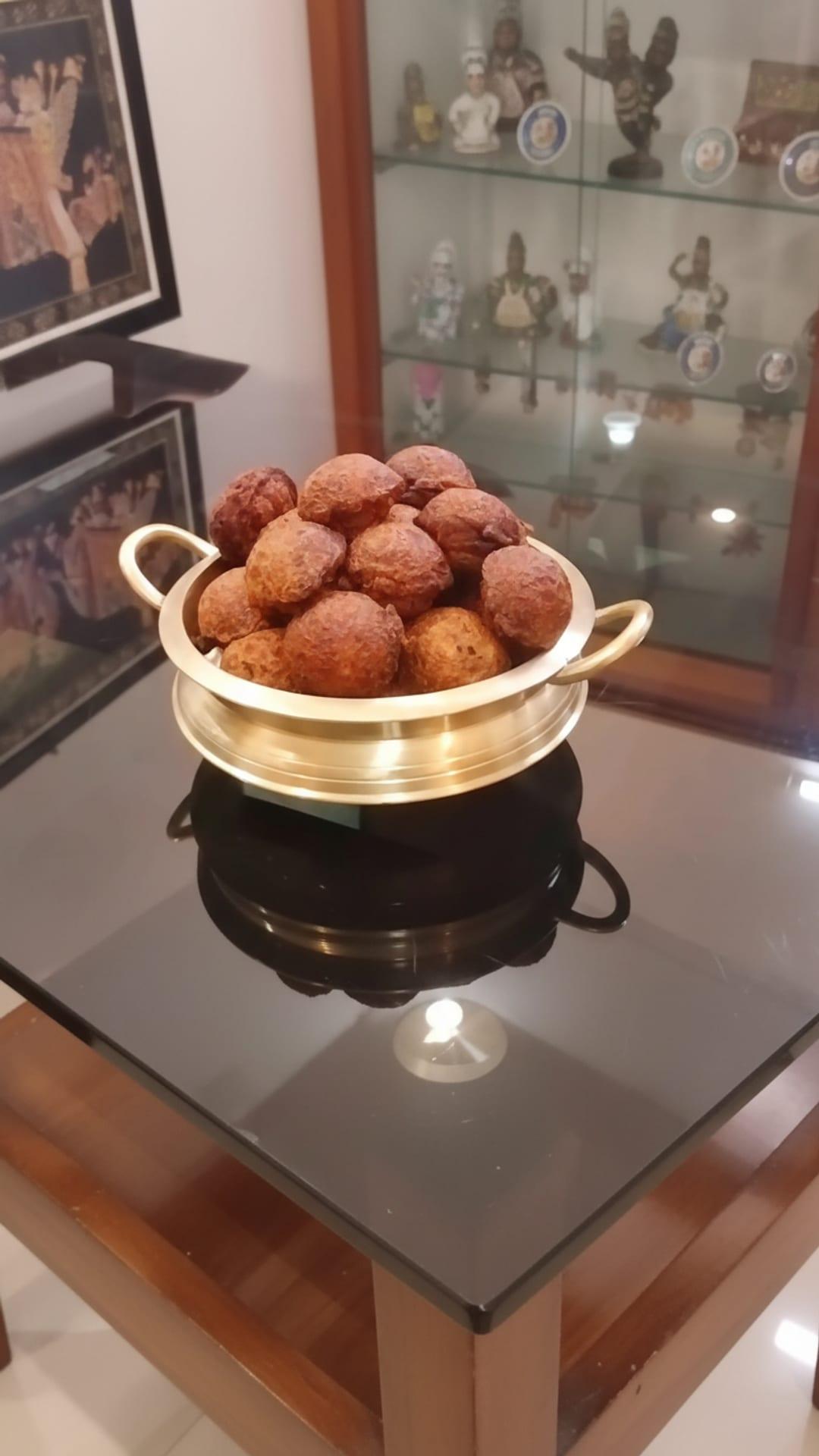
Mango Unniyappam
Recipe by Tastes and passions Sujitha
Ingredients
For Jaggery Syrup
- 1/2 kgJaggery
- 1/2 cupWater
For Mango-Jaggery Mixture
- 1/4 cupMelted Jaggery
- 1 medium-sized (sliced, non-fibrous preferred)Mango
- 2 tbspSugar
- a pinchSalt
- 1/4 tspGhee
For Roasted Toppings
- 1.5 tspGhee
- 3 tbsp (finely chopped)Coconut chunks
- 3 tbspBlack sesame seeds
For Batter
- 8 (ripe)Mysore Poovan bananas
- 12 (powdered with skin)Cardamom seeds
- 3 cupsAll-purpose flour (Maida)
- 1/2 cupSteamed white rice cake flour (Puttu podi)
- remaining from 1/2 kgMelted Jaggery
- 1/2 cup (or more, as needed)Water
- 1/4 tspBaking soda
For Frying
- as neededCoconut oil
- as neededGhee
Step-by-Step Instructions
- 1.Melt Jaggery
Add 1/2 kg jaggery to a pot. Pour 1/2 cup water and melt the jaggery over medium heat. Strain the melted jaggery to remove impurities and set aside.
- 2.Prepare Mango Pulp
Slice 1 medium-sized mango (preferably non-fibrous) and place it in a blender jar. Blend into a smooth paste. Add 2 tbsp sugar to the mango paste and blend again until well combined.
- 3.Cook Jaggery & Mango Mixture
Pour 1/4 cup of the melted jaggery into a clean pot. Add the blended mango pulp to the pot. Stir and cook the mixture over low heat until it thickens slightly and starts bubbling. Add a pinch of salt and 1/4 tsp ghee, mix well. Turn off the flame once it reaches a slightly thick, bubbling consistency. Set aside to cool.
- 4.Roast Coconut & Sesame Seeds
In a small pan, melt 1.5 tsp ghee. Add 3 tbsp finely chopped coconut chunks and roast until light golden brown. Turn off the flame and add 3 tbsp black sesame seeds. Mix well and set aside.
- 5.Prepare the Batter
Place 8 peeled Mysore Poovan bananas in a blender jar. Add the cooled jaggery and mango mixture. Add 12 powdered cardamom seeds (with skin). Blend into a smooth paste. Add 1 cup all-purpose flour (maida) and blend. Add another 1 cup all-purpose flour and the remaining melted jaggery, then blend. Add the third cup of all-purpose flour and 1/2 cup steamed white rice cake flour (puttu podi). Add any remaining melted jaggery. Blend everything until a smooth, thick batter is formed. Transfer the batter to a bowl. Add about 1/2 cup (or more, as needed) of water used to rinse the blender jar to adjust the consistency. Mix well. The batter should be slightly thicker than regular unniyappam batter. Add the roasted coconut chunks and sesame seeds mix to the batter. Add 1/4 tsp baking soda and mix thoroughly.
- 6.Fry Unniyappam
Heat an unniyappam pan (appam pan) over medium heat. Pour coconut oil into each mold, filling about halfway. Add a small amount of ghee to each mold for flavor. Once the oil is hot, pour the prepared batter into each mold, filling about 3/4 full. Fry until golden brown, flipping gently with a skewer or spoon to ensure even cooking on all sides. Once cooked, remove the unniyappam and drain excess oil. Repeat the process for the remaining batter, ensuring to remove any small fried bits from the oil between batches to prevent burning.

Comments (0)
Sign in to leave a comment on this recipe.
Loading comments...