Kuttu aur Dhaniya Panjiri - Traditional Indian
Recipe by Cook with Renu
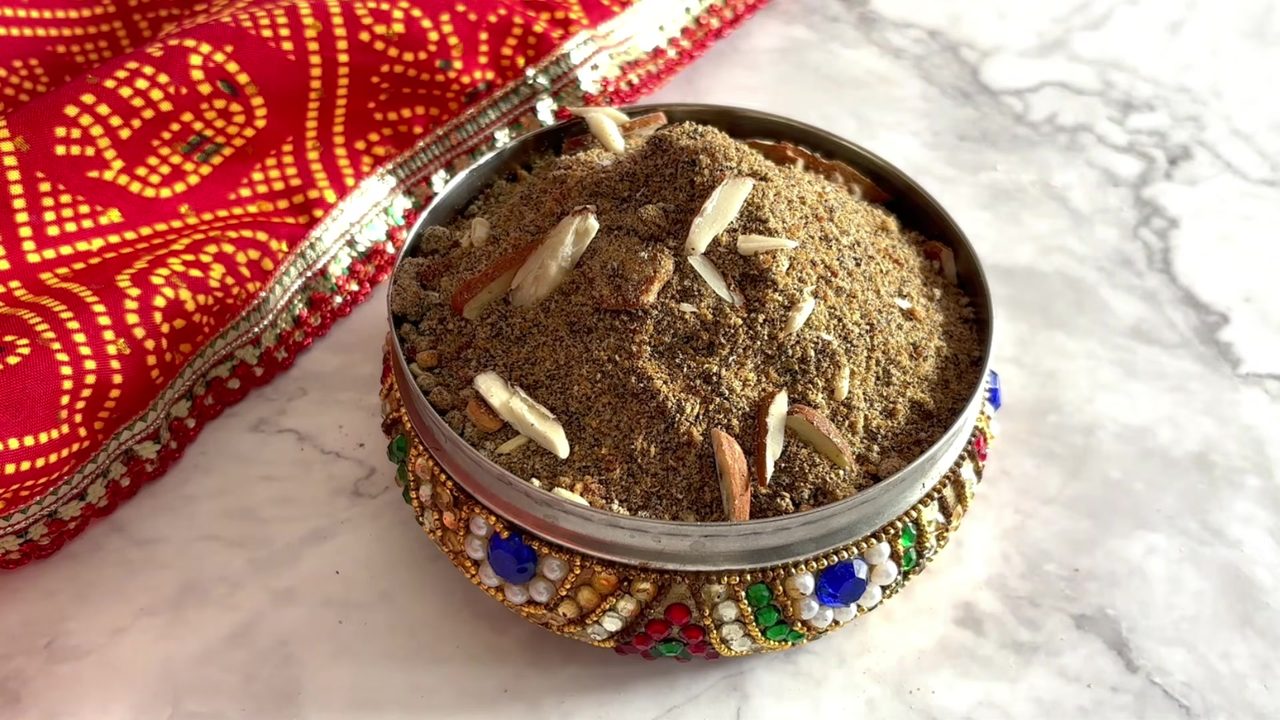
Ingredients
Main Ingredients
- 1/4 cupAlmonds
- 2 tablespoonsChironji (Cuddapah Almond)
- 2 tablespoonsMelon Seeds (Mingi)
- 2.5 tablespoonsGhee
- 1 cupCoriander Powder
- 1 cupBuckwheat Flour (Kuttu Atta)
- 1/2 teaspoonCardamom Powder
- 1 cupJaggery Powder (or Sugar)
Step-by-Step Instructions
- 1.Dry Roast Almonds
Heat a pan on medium gas. Add 1/4 cup almonds and dry roast them, stirring continuously, until they become slightly crisp and their moisture is gone.
- 2.Add Chironji and Melon Seeds
Once almonds start to roast, add 2 tablespoons of chironji (Cuddapah almonds) and 2 tablespoons of melon seeds (mingi) to the pan.
- 3.Continue Roasting Dry Fruits
Continue roasting all dry fruits together on medium heat. The melon seeds will puff up and start to crackle rapidly, indicating they are done.
- 4.Remove Roasted Dry Fruits
Once roasted, immediately transfer the dry fruits to a plate and set aside to cool.
- 5.Roast Coriander Powder
In the same pan, add 1 tablespoon of ghee. Once melted, add 1 cup of coriander powder. Roast on slow to medium heat, stirring continuously.
- 6.Continue Roasting Coriander
Continue roasting the coriander powder for about 3-4 minutes until a fragrant aroma is released and its color darkens slightly.
- 7.Transfer Roasted Coriander
Transfer the roasted coriander powder to a large mixing bowl.
- 8.Roast Buckwheat Flour
Add 1 to 1.5 tablespoons of ghee to the same pan. Once melted, add 1 cup of buckwheat flour (kuttu atta). Roast on slow to medium heat, stirring continuously.
- 9.Continue Roasting Buckwheat Flour
Continue roasting the buckwheat flour until it releases a pleasant aroma and its color changes slightly. If the mixture appears too dry, you can add a little more ghee.
- 10.Transfer Roasted Buckwheat Flour
Transfer the roasted buckwheat flour to the same mixing bowl as the coriander powder.
- 11.Sliver Almonds for Garnish
Take some of the roasted almonds and sliver them using a knife. Set aside for garnishing the panjiri.
- 12.Combine Dry Fruits with Flours
Add the remaining roasted dry fruits (almonds, chironji, melon seeds) to the bowl containing the roasted coriander powder and buckwheat flour.
- 13.Add Cardamom Powder
Sprinkle 1/2 teaspoon of cardamom powder into the mixture. This step is optional.
- 14.Add Jaggery Powder
Allow the mixture to cool slightly until it's just warm to the touch. Then, add 1 cup of jaggery powder (or sugar) to the bowl.
- 15.Mix All Ingredients
Mix all the ingredients thoroughly with a spoon until well combined. Ensure the mixture is not too hot when adding jaggery/sugar to prevent it from melting.
- 16.Cool and Store Panjiri
Let the panjiri cool completely to room temperature. Once cooled, transfer it to an airtight container for storage. Garnish with the reserved slivered almonds before serving. The panjiri stays good for 1-2 months at room temperature.





Comments (0)
Sign in to leave a comment on this recipe.
Loading comments...