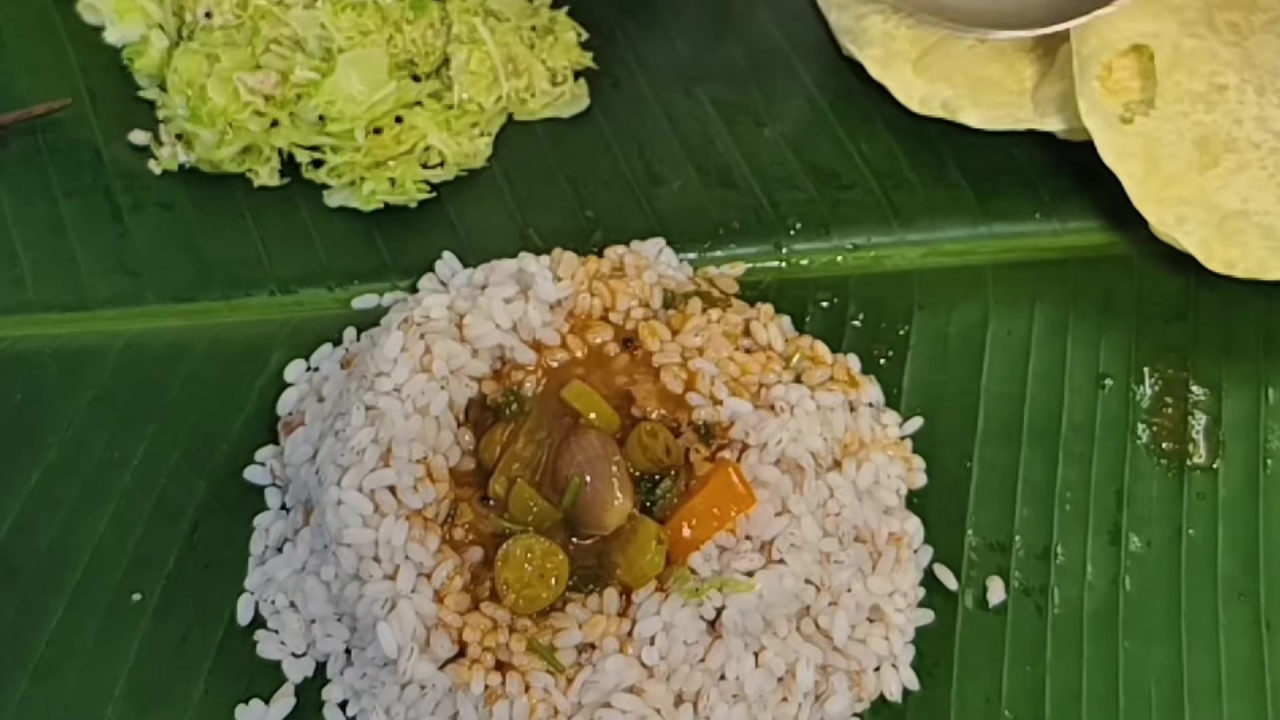
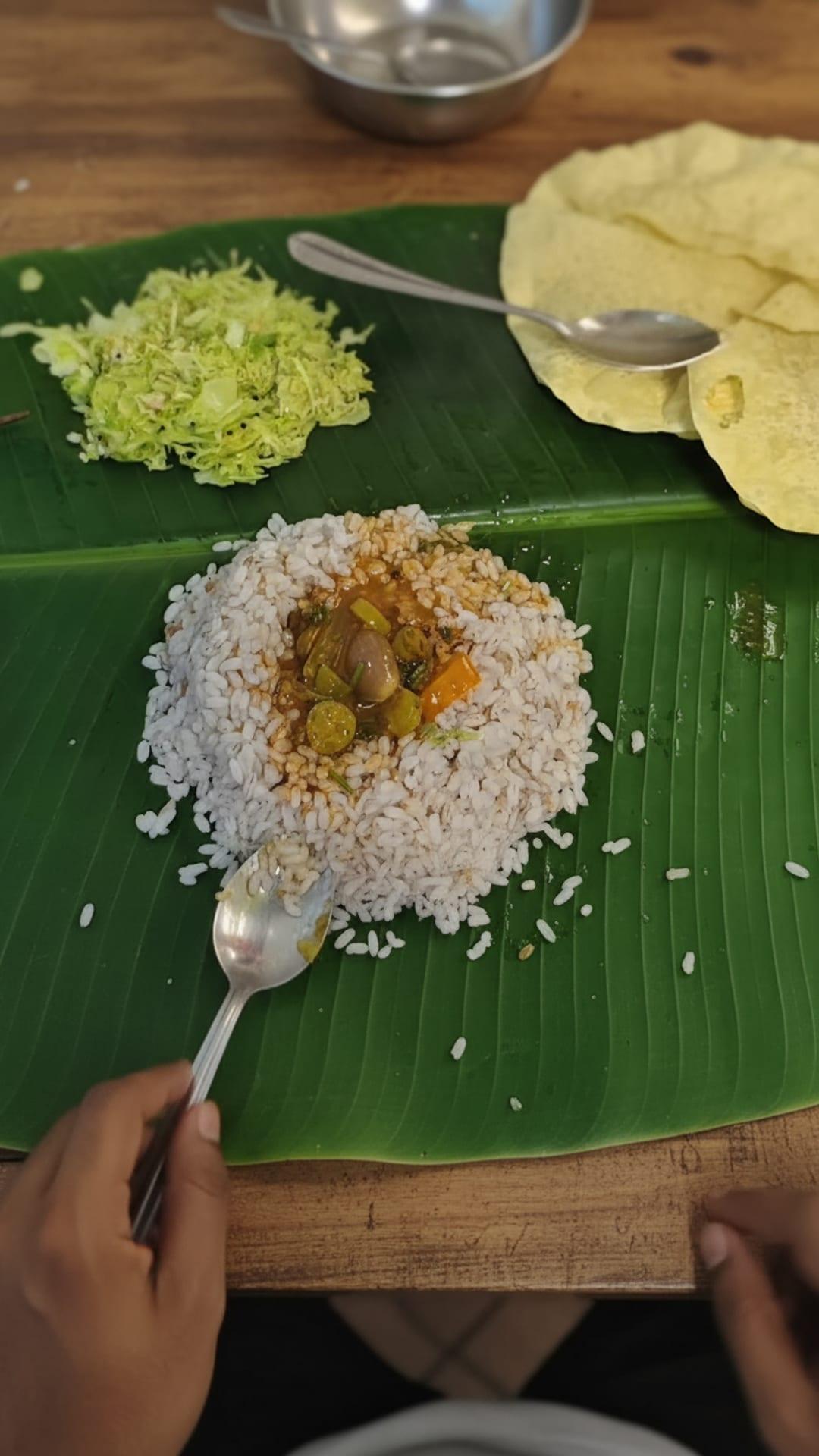
Kerala Sadya Sambar
Ready in
60 mins
Cuisine
Indian · South Indian
Prep Time
20 min
Cook Time
40 min
Serving
4 People
Difficulty
Medium
Calories / Serving
~450 kcal
Spicy Level

For Roasting and Grinding
Main Sambar Ingredients
Step-by-Step Instructions
Follow each step to make the recipe successfully.
Roast Spices for Paste
Heat 1 tablespoon of oil in a pan. Add 10-12 whole black pepper, 3-4 garlic cloves, 2-3 small onions, 0.5 tsp fenugreek seeds, 2-3 dried red chilies, and a sprig of curry leaves. until fragrant and onions turn light golden brown, about . Add 0.5 tsp asafoetida powder and mix well.
Prepare Spice Paste
Transfer the roasted spices to a blender and grind into a smooth paste. Set aside.
Temper and Sauté Vegetables
Heat 2 tablespoons of oil in a large pan. Add 0.5 tsp fenugreek seeds and let them splutter. Add a sprig of curry leaves and 0.5 tsp asafoetida powder. Immediately add 10-12 small onions and 5-6 chopped okra (bhindi). for until the okra is slightly tender and the onions are translucent.
Add Remaining Vegetables
Add the remaining mixed vegetables ( carrots, eggplant, pumpkin, radish, and beans) to the pan. Mix well with the onions and okra. Cover the pan and cook for until the vegetables are partially cooked but still retain some crunch.
Combine with Spice Paste
Uncover the pan and add the prepared spice paste to the vegetables. Mix thoroughly, ensuring all vegetables are coated with the paste. Cook for , stirring occasionally, until the raw smell of the spices disappears.
Add Daal and Drumsticks
Pour in the 1 cup of boiled and mashed tur daal. Add the cut drumsticks (moringa) to the Sambar. Stir gently to combine all ingredients.
Add Tamarind and Seasoning
Add 2 tablespoons of tamarind pulp and salt to taste. Mix well. Bring the Sambar to a boil, then heat and let it for , allowing the flavors to meld and the vegetables to cook through.
Garnish and Serve
Finally, add 0.25 cup of freshly chopped coriander leaves. Stir once and remove from heat. Serve the hot Kerala Sadya Sambar with rice and other traditional accompaniments.
Before You Cook
Helpful details before you startIngredient SubstitutionsMissing something? View suitable alternatives.View 6 swaps
No Garlic (fresh)?
- 1/4 tsp garlic powder (per clove)
- 1/2 tsp garlic granules (per clove)
No Onion?
- 1 tbsp onion powder (per medium onion)
- 3 tbsp dried minced onion
- Shallots or leeks (1:1)
No Curry leaves?
- 1 bay leaf + a pinch of lemon zest — Aroma only — flavor is unique.
No Asafoetida (hing)?
- 1/4 tsp garlic powder + 1/4 tsp onion powder
No Tamarind paste?
- 1 tbsp lime juice + 1 tbsp brown sugar (per 1 tbsp paste)
- Pomegranate molasses (1:1)
No Cilantro?
- Flat-leaf parsley (1:1, milder)
- Fresh mint (in chutneys, salads)
Variations
Simple ways to adapt this recipe.
- You can use other vegetables like potato
Cluster beans, or snake gourd.
- A pinch of jaggery can
A pinch of jaggery can be added to balance the tanginess of the tamarind.
Helpful Tips
Small details that can improve the final result.


Comments (0)
Sign in to leave a comment on this recipe.
Loading comments...